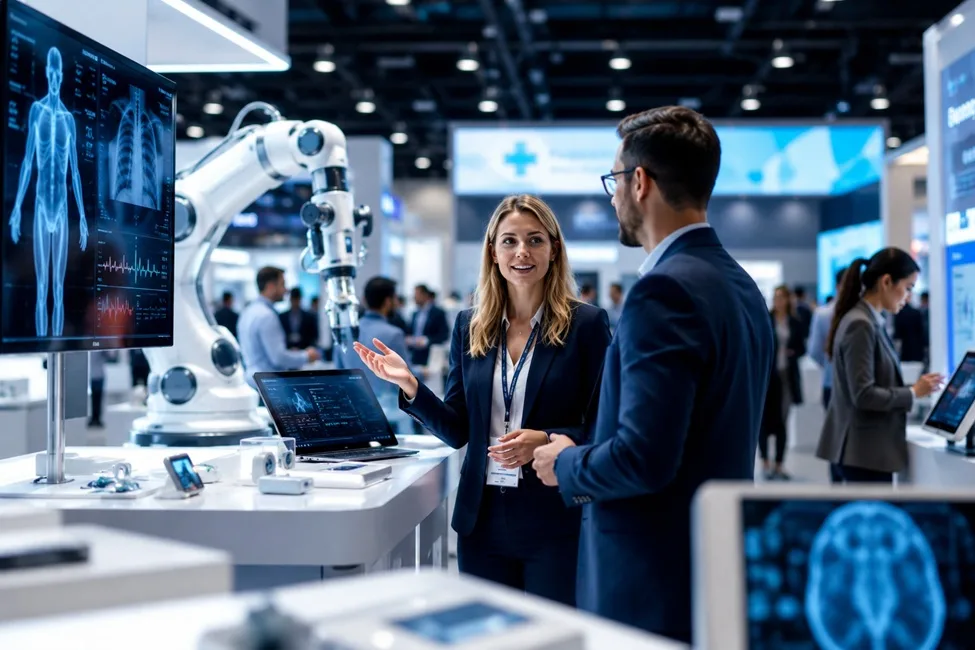
Medical technology continues to change the way healthcare is delivered. Every year, industry conferences bring together healthcare professionals, researchers, technology companies, and innovators to share new ideas and solutions. These events provide a first look at technologies that may shape the future of patient care.
Many healthcare tech events highlight innovations designed to improve efficiency, reduce costs, and help medical professionals deliver better care. From artificial intelligence to remote monitoring tools, these advancements are helping healthcare organizations meet growing demands while improving patient experiences.
The Growing Importance of Medical Technology Events
Medical technology conferences have become important platforms for showcasing new healthcare solutions. They allow companies to introduce products, demonstrate real-world applications, and connect with healthcare leaders.
According to industry reports, digital health adoption continues to increase as healthcare providers seek better ways to manage patient care and operations. This growth has encouraged more investment in healthcare technology and accelerated innovation across the industry.
Artificial Intelligence in Healthcare
Artificial intelligence (AI) is one of the biggest trends presented at medical technology gatherings. AI tools can analyze large amounts of data quickly and help healthcare professionals make more informed decisions.
Many healthcare organizations are now using AI to support clinical workflows, improve diagnosis accuracy, and identify health risks earlier. Industry surveys have shown that AI adoption continues to grow across hospitals and healthcare systems worldwide.
AI for Medical Imaging
One of the most exciting developments is the use of AI in medical imaging. Advanced software can help radiologists review X-rays, CT scans, and MRI images more efficiently.
These tools can identify patterns that may indicate diseases or abnormalities, helping doctors detect conditions earlier and improve patient outcomes.
AI-Powered Administrative Support
AI is also helping healthcare organizations reduce administrative workloads. New systems can automate scheduling, documentation, billing, and other routine tasks.
By reducing time spent on paperwork, healthcare professionals can focus more on patient care.
Remote Patient Monitoring
Remote patient monitoring continues to gain attention at industry conferences. These technologies allow healthcare providers to track patient health outside traditional clinical settings.
Wearable devices and connected sensors can collect information such as heart rate, blood pressure, oxygen levels, and activity patterns. This data is shared with healthcare providers in real time.
Benefits of Remote Monitoring
Remote monitoring offers several advantages:
- Improved management of chronic conditions
- Earlier detection of health issues
- Reduced hospital readmissions
- Greater convenience for patients
As healthcare organizations focus on preventive care, remote monitoring tools are becoming more valuable.
Telehealth Continues to Evolve
Telehealth experienced significant growth in recent years and remains a major topic at medical technology events. New telehealth platforms are offering improved video consultations, secure messaging, and digital care management.
Healthcare providers are using these tools to reach patients in rural and underserved communities. Telehealth also helps reduce travel time and improves access to specialists.
Many experts believe virtual care will remain an important part of healthcare delivery in the future.
Wearable Health Technology
Wearable devices continue to become more advanced and accurate. Medical technology conferences often feature new wearables designed to monitor health conditions and support wellness goals.
Modern devices can track:
- Heart rate
- Sleep quality
- Physical activity
- Stress levels
- Blood oxygen levels
Some newer devices can even help detect irregular heart rhythms and other health concerns.
As wearable technology improves, healthcare providers gain access to more valuable patient data between appointments.
Connected Healthcare Systems
Another important innovation is the development of connected healthcare systems. These platforms allow different healthcare technologies to communicate and share information more effectively.
Hospitals and clinics often use multiple software systems. Connected platforms help combine data from electronic health records, medical devices, and patient monitoring tools into one accessible environment.
Better Data Sharing
Improved data sharing offers several benefits:
- Faster access to patient information
- Better care coordination
- Reduced duplicate testing
- Improved decision-making
Healthcare leaders continue to prioritize solutions that improve interoperability across systems.
Cybersecurity Innovations
As healthcare becomes more digital, cybersecurity remains a top priority. Medical technology conferences frequently showcase solutions designed to protect sensitive patient information.
Healthcare organizations face growing cyber threats, making strong security measures essential. New technologies focus on:
- Advanced threat detection
- Secure data storage
- Identity verification
- Network protection
These solutions help organizations maintain patient trust while meeting regulatory requirements.
Robotics in Healthcare
Healthcare robotics continues to advance and attract attention at industry events. Robots are being used in various healthcare settings to support medical professionals and improve efficiency.
Surgical Robotics
Modern surgical robots help surgeons perform procedures with greater precision and control. These systems can support minimally invasive surgeries, which often result in shorter recovery times for patients.
Hospital Support Robots
Some healthcare facilities are also using robots to transport supplies, deliver medications, and assist with routine tasks. This allows healthcare workers to spend more time caring for patients.
Personalized Medicine
Personalized medicine is becoming an important focus area in healthcare innovation. Advances in genetics and data analysis allow healthcare providers to develop treatment plans tailored to individual patients.
By considering a person's genetic makeup, lifestyle, and medical history, providers can select treatments that may be more effective for specific patients.
This approach has shown promise in areas such as cancer treatment and chronic disease management.
The Rise of Predictive Analytics
Predictive analytics is another innovation gaining attention at medical technology gatherings. These tools analyze historical and real-time data to identify patterns and forecast future health outcomes.
Healthcare organizations use predictive analytics to:
- Identify high-risk patients
- Improve resource planning
- Reduce hospital readmissions
- Support preventive care strategies
As data collection continues to expand, predictive analytics is expected to play a larger role in healthcare decision-making.
Looking Ahead
Medical technology gatherings continue to showcase innovations that are transforming healthcare. Artificial intelligence, remote monitoring, telehealth, wearable devices, connected systems, cybersecurity solutions, robotics, personalized medicine, and predictive analytics are helping shape the future of patient care.
As healthcare challenges continue to evolve, technology will remain an important tool for improving outcomes, increasing efficiency, and expanding access to care. The innovations presented at these events demonstrate how the healthcare industry is embracing new solutions to meet the needs of patients and providers alike.
The future of healthcare will likely be more connected, data-driven, and patient-focused than ever before. Medical technology conferences provide a valuable glimpse into that future and the innovations that will help make it possible.