For years, eCommerce brands have relied on search engines to drive product discovery. They optimized pages, targeted keywords, built authority, and chased rankings. That still matters, but shoppers are changing how they discover, compare, and choose products as AI becomes part of the buying journey.
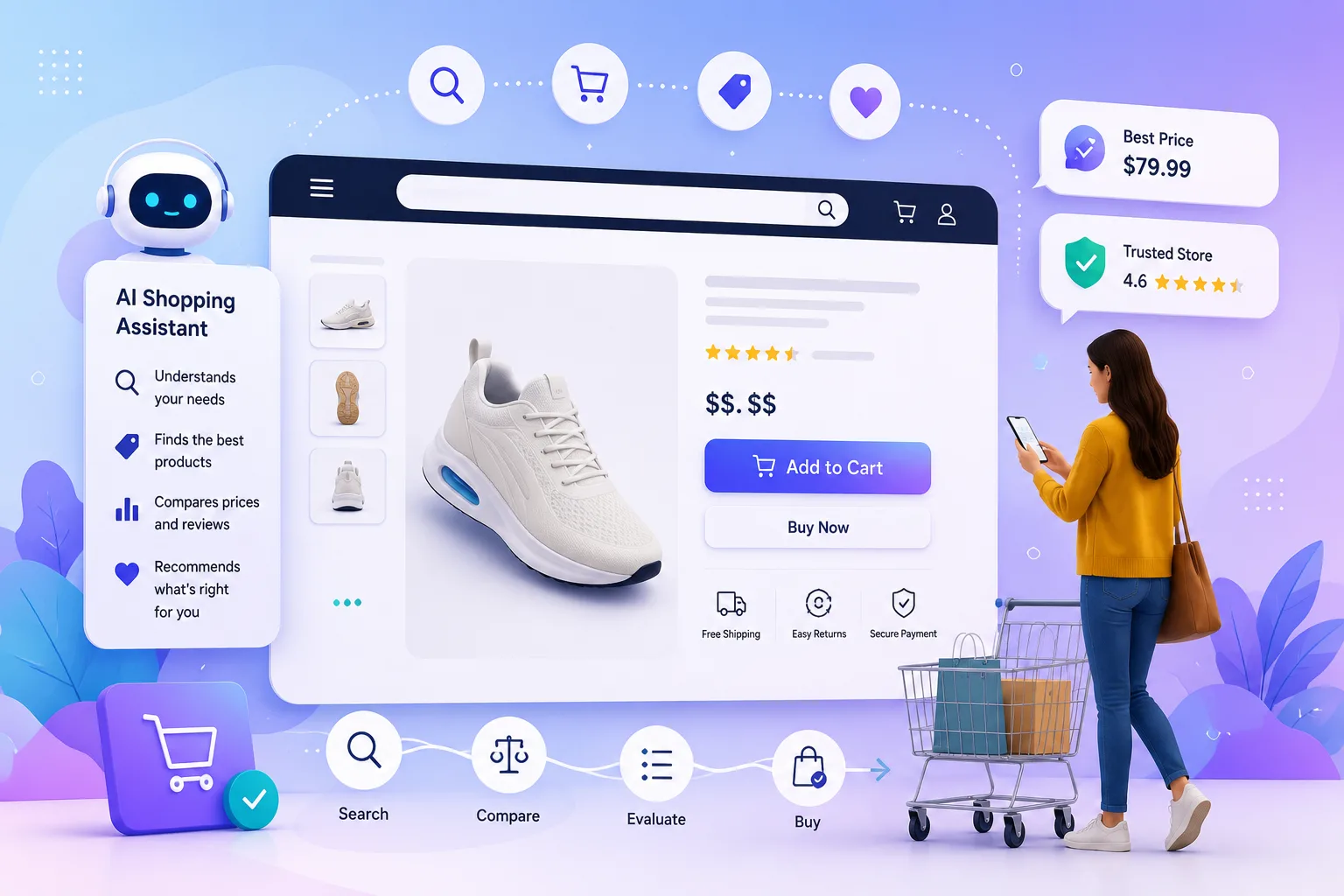
Shoppers are increasingly turning to AI assistants to help them make buying decisions. Instead of searching for ten products and opening multiple websites, they can ask an AI system which product is better for a particular need, what features they should look for, or which option offers the best value. The AI can then interpret the request, compare available information, and provide a smaller set of recommendations.
This creates a new kind of digital shelf where ranking is no longer the only thing that matters. A product can have strong search visibility and still be overlooked by an AI system if the information available about that product is incomplete, inconsistent, or difficult to interpret.
Search Visibility Is Only Part of Product Discovery
Traditional search is largely built around ranking web pages. When someone searches for a product or category, search engines determine which pages are relevant and display them in an ordered list. Brands have spent years optimizing their websites around this system because appearing near the top can bring valuable traffic and potential customers.
AI-driven product discovery works differently. An AI assistant may not simply return a list of pages based on keyword relevance. It can interpret what the shopper is actually trying to accomplish and then evaluate product information from different sources before recommending an option.
For example, someone might ask for a moisturizer suitable for dry and sensitive skin that does not contain a strong fragrance. The AI needs enough product information to understand whether each product actually meets those requirements. If important attributes are missing or unclear, the product becomes harder for the system to evaluate, even if the product page performs well in traditional search.
This means brands need to think beyond where their product ranks and start thinking about how well their product information can be understood.
AI Needs Complete Product Information
One of the biggest differences between traditional SEO and AI-driven product discovery is the importance of product information. Keywords can help search engines understand the general topic of a page, but AI shopping systems need detailed information to understand the product itself and determine whether it fits a particular shopper's requirements.
Product titles, descriptions, specifications, ingredients, dimensions, compatibility information, usage instructions, benefits, limitations, pricing, availability, FAQs, reviews, and structured data can all contribute to the overall understanding of a product.
If important information is missing, an AI system may not have enough confidence to recommend the product for a specific request. Even worse, if different sources provide conflicting information, the system may choose another product where the available information appears more consistent.
This is why product data is becoming an important part of digital commerce strategy. Brands are no longer creating content only for people who visit their websites. They are also creating information that machines need to interpret before they can help shoppers make decisions.
The Digital Shelf Is Becoming AI-Readable
The traditional digital shelf was mostly concerned with product visibility. Brands wanted their products to appear on category pages, marketplace listings, search results, shopping feeds, and other places where customers could discover them.
The new digital shelf adds another layer to this process. Your product needs to be understandable to AI systems that may evaluate it before a shopper ever reaches your website.
Consider a product page with a long description that sounds impressive but does not clearly explain important product attributes. A human shopper may be able to read through the page and figure out whether the product is suitable for them. An AI system, however, needs clear and structured information that allows it to connect the product with specific requirements.
This makes the quality of your product data increasingly important. Simply having more content is not enough. The information needs to be accurate, relevant, consistent, and easy to interpret.
Agentic Commerce Is Changing the Buying Journey
This shift is closely connected to the growth of agentic commerce. AI agents are moving beyond answering basic questions and are becoming more involved in product discovery, comparison, and purchasing decisions.
A shopper may eventually describe what they need without visiting multiple retailer websites themselves. The AI agent can interpret those requirements, identify suitable products, compare them, and help the shopper move toward a purchase.
For brands, this changes the nature of competition. Your product may not always be competing for the top position on a search results page. It may be competing to become one of the products an AI system considers suitable for a particular shopper.
That is a different challenge because the system needs to understand not only what your product is, but also when and why it should recommend it.
This Is Where ACO Becomes Important
Agentic Commerce Optimization, or ACO, focuses on making product information easier for AI-driven shopping systems to understand and use. While SEO is concerned heavily with search visibility, ACO looks at whether the underlying product information is sufficiently complete, relevant, structured, and understandable for AI-based product discovery.
A strong ACO strategy starts by examining the information available for important products and identifying the gaps that could affect AI recommendations. This can include missing product attributes, unclear descriptions, inconsistent specifications, weak use-case information, and content that does not answer common pre-purchase questions.
The purpose is not to replace SEO. Search visibility remains important because search engines continue to influence how products are discovered. ACO adds another layer by preparing product information for an environment where AI systems increasingly participate in discovery and decision-making.
A Lower-Ranking Product Can Still Win the Recommendation
One of the more interesting changes is that traditional search rankings do not necessarily predict which product an AI system will recommend.
Imagine that your product ranks third for an important search term while a competitor ranks seventh. From a traditional SEO perspective, your product appears to have an advantage. However, if an AI assistant receives a very specific request from a shopper, it may evaluate the actual product information rather than simply following search position.
Your competitor might have clearer specifications, more complete attributes, better information about use cases, and stronger answers to the questions shoppers commonly ask. If that information makes the competitor easier for the AI system to evaluate, it could be recommended even though it ranks below your product in traditional search.
This is why brands need to start measuring more than search rankings. Visibility in search is useful, but understanding how prepared your product information is for AI-driven discovery is becoming equally important.
Product Feeds Are Becoming More Valuable
Product feeds have traditionally been treated as a technical requirement for marketplaces and shopping platforms. Brands provide information such as product names, prices, availability, images, and other attributes so platforms can display their products correctly.
As AI becomes more involved in shopping, the importance of this structured product information increases. AI systems need reliable information to understand what products are available and how those products differ from one another.
A missing attribute might seem like a small data issue, but it can become important when a shopper specifically asks about that attribute. If your product does not clearly provide the information while a competitor does, the competitor may be easier for the system to evaluate.
For this reason, brands should treat product feeds and structured product data as strategic assets rather than simply technical requirements.
Brands Need to Optimize for Shopper Needs
People do not always describe their needs using the exact keywords that brands target. They often describe a problem, situation, preference, or desired outcome.
Someone looking for running shoes might ask which shoes are suitable for long-distance running. A shopper looking for a laptop might ask which model is suitable for video editing. Someone buying skincare might ask which product is appropriate for sensitive skin.
These are decision-making requests rather than simple keyword searches. To respond accurately, AI systems need product information that connects features and attributes with real shopper needs.
This means product content should answer the questions customers are likely to ask before buying. Brands should explain who the product is for, what it does, where it can be used, what makes it different, and what limitations shoppers should know about.
The better this information is presented, the easier it becomes for AI systems to understand where the product fits.
There Is No Longer One Digital Shelf
Another major change is that the digital shelf is becoming increasingly distributed. A brand's product information can appear across its own website, marketplaces, retailer websites, shopping feeds, review platforms, social channels, and AI-powered discovery experiences.
This means there is no single place where a brand can optimize its presence and consider the job finished.
The information needs to remain consistent across the wider ecosystem. Product names, specifications, attributes, pricing information, descriptions, and other important details should not contradict each other across different sources.
When information is inconsistent, both shoppers and AI systems can have a harder time determining which information is reliable.
What Brands Should Do Now
Brands do not need to abandon their existing SEO strategies. Instead, they should start looking at product discovery from a wider perspective.
A good starting point is to audit the products that matter most to the business. Look at the information available for each SKU and consider whether an AI system would have enough information to answer common pre-purchase questions about the product.
Check whether important attributes are missing, whether descriptions clearly explain the product's purpose, and whether the information is consistent across different channels. It is also useful to compare your product data with competitors to understand where they provide information that your product currently lacks.
The goal should not be to simply add more text to product pages. The goal is to provide better information that helps both shoppers and AI systems understand the product.
The Digital Shelf Is Entering a New Phase
Search engines will continue to play an important role in eCommerce, but they are no longer the only systems influencing product discovery. AI assistants and shopping agents are becoming another layer between brands and customers, and their role is likely to become more significant as AI-driven shopping develops.
For brands, this means the definition of digital visibility is changing. It is no longer enough to ask whether a product can be found through search. Brands also need to ask whether their product can be clearly understood, evaluated, and recommended by AI.
The brands that prepare their product data for this shift will have a stronger foundation for the next stage of digital commerce.
Enaiblex helps eCommerce brands improve their product content and structured product data through Agentic Commerce Optimization (ACO), helping products become easier for AI shopping systems to understand and recommend.