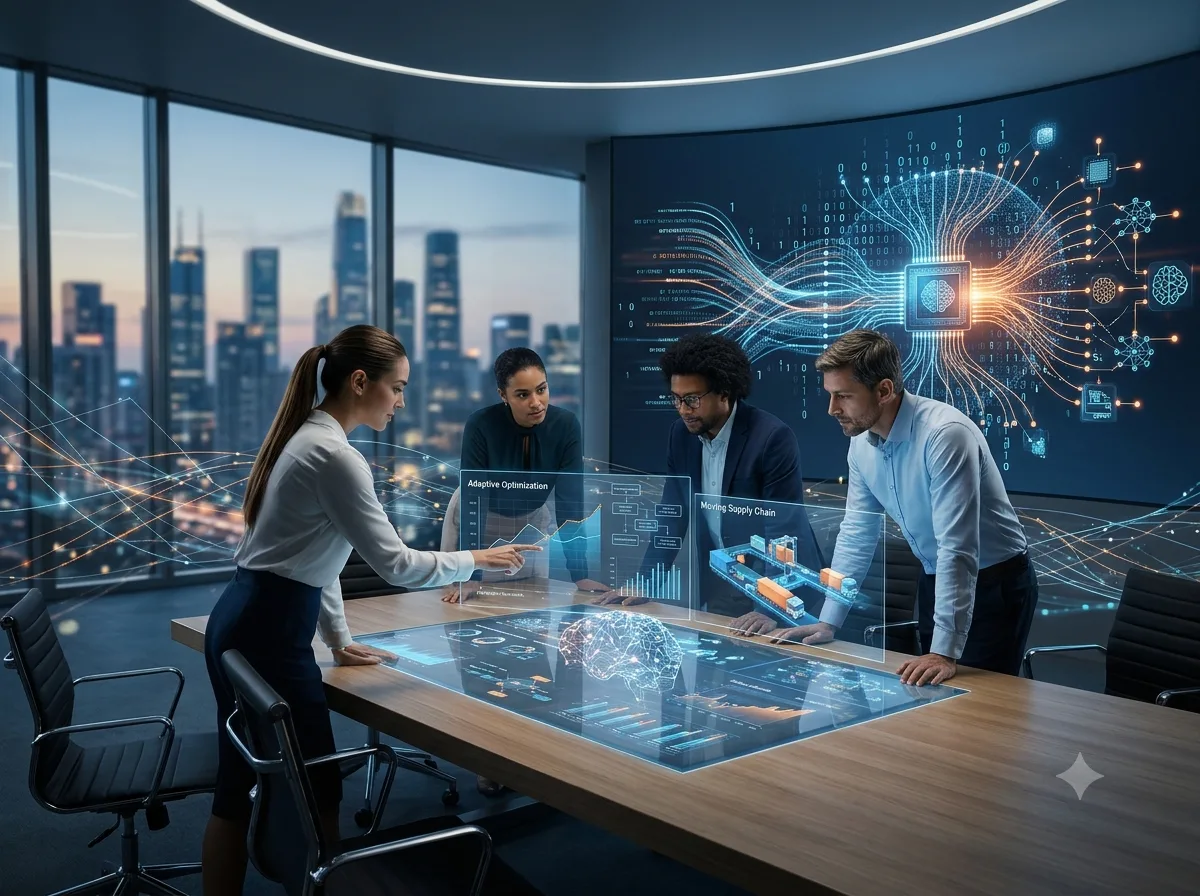
Polls show that almost 50% of people surveyed believe that within their lifetime, greater advances in technology have already occurred than all the advances that were made in the previous 300 years of human existence put together. Many businesses are recognizing the benefits of using AI in their operations. Companies are implementing AI technologies to facilitate customer support and provide businesses with the means to create and execute targeted marketing strategies and develop predictive analytics.
The biggest impact of AI on business operations is the benefit of processing data at a larger scale and at a faster rate. Traditionally analyzing customer patterns and behaviors would consume a significant amount of time, require extensive manual work, and often involve a large workforce. Modern AI technologies are equipped to identify patterns and provide businesses with recommendations and predict future trends and outcomes in a matter of minutes.
Generative AI is redefining content creation. A surge in the use of AI technologies by creators and businesses to produce a broad range of content and media is well underway. The use of AI technology within the marketing field is also developing rapidly in the divison of customer support and service. AI technologies are entering the fields of writing, design, and video production. In recent industry developments, OpenAI has commercialized advanced technologies, making AI technologies accessible for all creators and businesses.
AI has changed how we interact with technology. AI now creates tailored consumer experiences. For instance, AI suggests music for players based on their preferences. Streaming services create a playlist for each user. AI helps navigate traffic so you know the quickest route to take, and AI helps you purchase items you may otherwise forget.
With good AI comes the challenges of privacy issues, job loss, and ethical concerns.
Automation will likely cause a disruption in the job market. It may accelerate the job loss of administrative and data entry positions. However, the emphasis should be on the responsible development of AI. We should work towards developing systems that are unbiased in order to avoid negative consequences.
AI will continue to be an integral part of cybersecurity. The use of AI will help identify threats and fundamental changes to digital security. Cyber attacks will continue to evolve beyond our defenses. We must protect our sensitive data and cyber networks.
AI is creating tastemaker experiences for each individual user. From personalized shopping to learning experiences tailored to students’ needs and interests, AI is driving individualized experiences in a wide variety of industries. In healthcare, AI enhances medicine and patient experiences through predictive data and analysis of imaging and other diagnostic data.
A.I. will soon be used in almost every aspect of life. The businesses and individuals who best understand how to integrate A.I. into their work will likely be much more successful in the future. Some skills like creativity, emotional intelligence, and critical thinking will still matter despite all of the technological advancements. There will always be a place for human intelligence.
Where we let technology take us is up to us. With the right balance of automation and human oversight, artificial intelligence can optimize efficiency and inspire creativity in every sector.