Opening the Classroom Door to Tomorrow
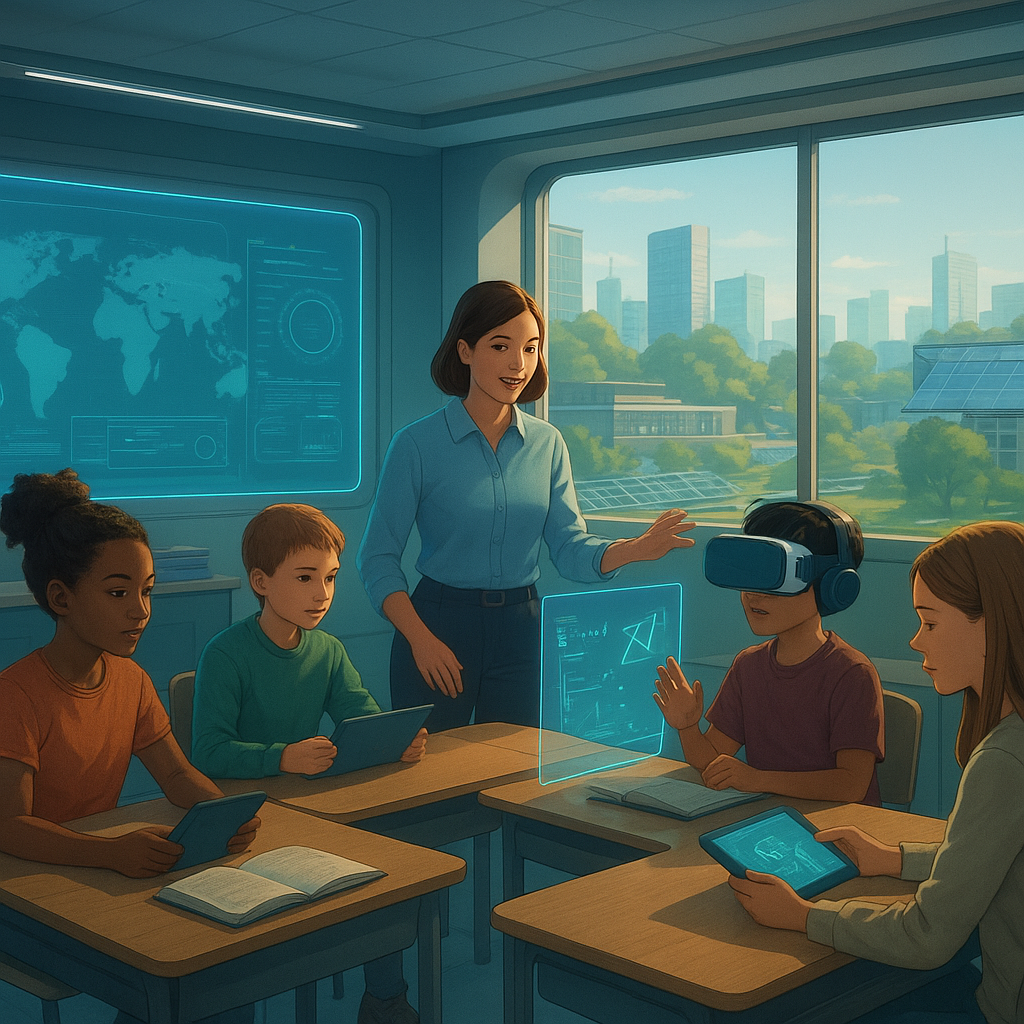
On a brisk April morning in 2026, a classroom in Helsinki is buzzing—not with the usual hum of chalk on blackboards, but with the quiet focus of students wearing lightweight augmented reality glasses. These devices overlay interactive 3D models of planetary systems and molecular structures directly into the students’ field of vision, enabling immersive lessons that adapt to each learner’s pace and style. This scene is becoming increasingly common as education embraces technologies and pedagogical shifts that redefine how knowledge is acquired and applied.
Education systems worldwide are grappling with profound changes driven by technological innovation, shifting societal expectations, and global challenges. The post-pandemic acceleration of digital tools, the rise of artificial intelligence, and a renewed focus on equity and lifelong learning are converging to reshape education in unprecedented ways. According to UNESCO’s 2026 Global Education Monitoring Report, over 70% of countries have integrated AI-powered personalized learning platforms into their national curricula, signaling a widespread transformation.
“The classroom of 2026 is less a place and more a dynamic learning ecosystem responsive to individual needs and global realities,” says Dr. Felicia Nguyen, an education futurist and consultant.
Tracing the Roots: How We Arrived at 2026’s Educational Crossroads
The seeds of today’s educational metamorphosis were sown over the past decade, shaped by rapid advances in digital infrastructure and shifts in societal priorities. The COVID-19 pandemic between 2020 and 2022 forced an unprecedented global experiment in remote learning, revealing both the potential and pitfalls of technology-enabled education. This period exposed glaring inequalities but also catalyzed innovation, prompting educators and policymakers to rethink traditional schooling models.
By 2024, hybrid learning environments had become the norm in many parts of the world. Governments and private sectors invested billions in upgrading digital infrastructure, ensuring broader access to high-speed internet and smart devices. Meanwhile, artificial intelligence and machine learning matured to offer more sophisticated adaptive learning systems, capable of tailoring content to individual cognitive profiles.
Simultaneously, the global labor market’s demand for skills such as critical thinking, creativity, and digital literacy intensified. The World Economic Forum’s Future of Jobs report from 2025 highlighted that by 2026, over 60% of new jobs would require skills not traditionally emphasized in standard curricula. This gap underscored the urgency for education systems to pivot from rote memorization to competency-based learning.
Five Pillars Driving Education Trends in 2026
Today’s educational landscape is shaped by five core forces that interact dynamically to redefine learning:
- Artificial Intelligence and Personalized Learning: AI-driven platforms analyze vast data on student performance, engagement, and preferences, enabling hyper-personalized learning paths. In countries like South Korea and Canada, adaptive learning systems increase knowledge retention rates by up to 40%, according to Ministry of Education reports.
- Hybrid and Immersive Learning Environments: Blending physical classrooms with virtual and augmented reality creates multi-sensory experiences. Students can conduct virtual chemistry experiments or explore historical sites through VR without leaving their desks.
- Competency-Based and Lifelong Learning Models: Education is shifting from age-based progression to mastery of skills, with credentials earned through demonstrated competencies. Online micro-credentialing platforms have seen a 120% growth in enrollments over the past two years.
- Equity and Inclusion Initiatives: Programs addressing accessibility, neurodiversity, and socio-economic disparities are central. Governments in the EU and parts of Africa have implemented policies ensuring education technologies cater to diverse learners.
- Global Collaboration and Cross-Cultural Learning: Digital connectivity enables students worldwide to collaborate on projects, fostering intercultural competence and global citizenship.
Each of these pillars is supported by data-driven strategies and innovative policies, reflecting a systemic transformation.
“We’re witnessing a paradigm where education is personalized, inclusive, and globally connected, breaking down traditional boundaries,” notes Professor Elena Vasquez, Chair of Global Education Innovation at the University of Buenos Aires.
2026’s Breakthrough Innovations and Policy Shifts
This year has seen several transformative developments that highlight how the education sector is evolving:
- AI Tutors and Assistants Become Ubiquitous: Platforms like EduMind and ScholarAI now serve millions globally, providing instant feedback and customized lesson adjustments. In the UK, the Department for Education reports a 35% improvement in student engagement using AI tools.
- Immersive Content Integration: Schools in Singapore and Japan have incorporated VR modules aligned with national standards, enabling experiential learning in STEM and humanities. The Singapore Ministry of Education cites a 25% increase in STEM subject interest among secondary students.
- Policy Emphasis on Digital Literacy and Ethics: Recognizing AI’s growing role, curricula have integrated digital citizenship and AI ethics, preparing students for a digital society. Finland’s new national framework mandates AI literacy by grade 8.
- Expanded Access through Public-Private Partnerships: Collaborations between governments and EdTech companies have reduced the digital divide. The African Union’s Education 2063 initiative reports that 80% of rural schools now have internet access.
- Credentialing Innovations: Blockchain-based certificates ensure verifiable, tamper-proof records. Universities in the United States and Germany have adopted these for diplomas and micro-credentials, enhancing portability and employer trust.
These innovations are not isolated; they form an interconnected ecosystem geared toward more effective, inclusive learning experiences.
Real-World Impact: Case Studies from Leading Educational Systems
Examining specific implementations offers insight into how these trends manifest in practice.
Finland’s AI-Enhanced Classroom Model: Finland, often lauded for its progressive education system, has integrated AI tutors into nearly all public schools by 2026. These systems monitor student progress continuously, offering personalized challenges and support. A recent study by the Finnish National Agency for Education found that students in AI-supported classes scored 15% higher in problem-solving assessments compared to traditional cohorts.
Kenya’s Digital Leap in Rural Education: Leveraging mobile technology and solar-powered learning hubs, Kenya has dramatically expanded access. The Ministry of Education’s 2026 report highlights that rural literacy rates have increased by 18% since 2023, attributed partly to interactive e-learning modules tailored to local languages and contexts.
Singapore’s VR-Driven STEM Curriculum: Singapore’s Ministry of Education launched the "Immersive STEM" initiative in 2025, incorporating VR labs into secondary schools. Feedback from teachers indicates enhanced student engagement and deeper conceptual understanding. The initiative is slated for expansion to primary schools in 2027.
These case studies illustrate the tangible benefits of integrating technology with thoughtful policy and pedagogy.
“Technology alone is not a panacea; success depends on aligning it with pedagogical goals and cultural contexts,” emphasizes Dr. Raj Patel, Director of the Global Education Innovation Network.
Looking Ahead: What Educators and Policymakers Should Watch
As education continues to evolve, several developments warrant close attention:
- Balancing AI Automation with Human Connection: While AI enhances personalization, maintaining human mentorship and social-emotional learning remains critical.
- Data Privacy and Ethical Governance: The increasing use of student data necessitates robust policies to protect privacy and prevent bias.
- Bridging Global Digital Divides: Despite progress, disparities persist, particularly in low-income regions and marginalized communities.
- Integrating Sustainability Education: Climate change urgency compels embedding sustainability literacy across curricula.
- Expanding Recognition of Non-Traditional Learning Pathways: Lifelong learning and informal education require validation through recognized credentials.
Future educational success hinges on dynamic frameworks that adapt to technological advances while centering equity and human development.
For further insight on the broad transformations underway, see our detailed analysis in Education in 2026: Transformations, Challenges, and the Road Ahead and explore how digital innovations are reshaping pedagogy in Rethinking Learning: How 2026 Is Transforming Online Education Forever.