
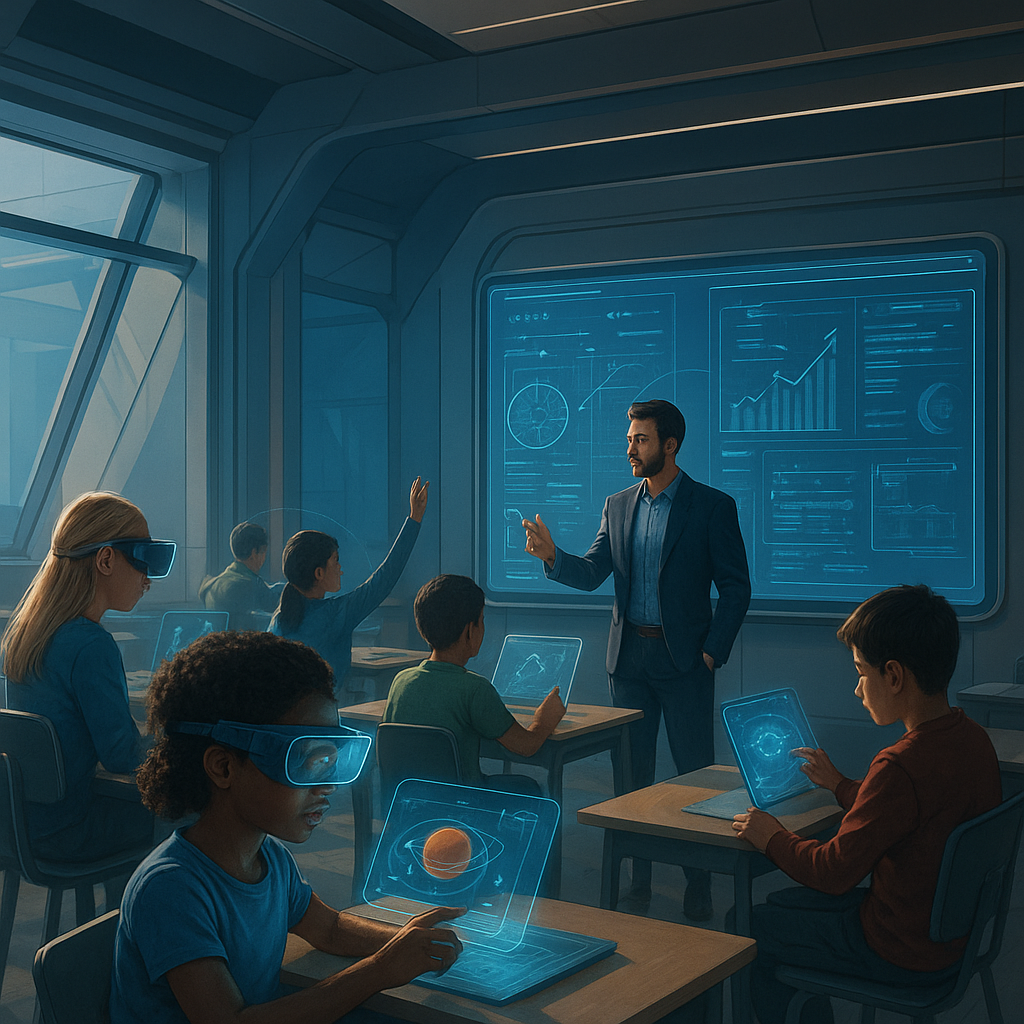
Reimagining Education: A Snapshot from 2026
On a brisk morning in April 2026, classrooms across the globe are no longer confined to brick-and-mortar buildings. In an urban school in Seoul, students engage simultaneously with peers from Nairobi and São Paulo, collaborating on environmental science projects through immersive virtual reality environments. This scene epitomizes the profound transformation education has undergone in recent years, shaped by technological innovation, shifting socio-economic demands, and evolving pedagogical philosophies.
Education today is at a critical juncture, balancing the promise of unprecedented access and personalization with the persistent challenge of equity and quality. According to UNESCO reports, global literacy rates have improved, but disparities remain stark between regions and socio-economic groups. This introduction sets the stage for a comprehensive exploration of how education systems have evolved, the core drivers behind these changes, and what the future holds as we navigate the complexities of learning in 2026.
“Education in 2026 is no longer a static process but a dynamic, interconnected ecosystem that transcends borders and traditional modalities.” — Dr. Lila Hammond, Education Futurist
Historical Context: From Industrial-Era Models to Digital Ecosystems
The journey to the current educational landscape is rooted in centuries of evolution. Traditional education systems primarily developed during the Industrial Revolution emphasized standardization, discipline, and rote learning to prepare a workforce for factory jobs. However, the late 20th and early 21st centuries introduced disruptive forces—globalization, the digital revolution, and shifts in labor markets—that necessitated a rethinking of these models.
By the early 2000s, the proliferation of internet access sparked initial experiments with online learning platforms, but limitations in technology and pedagogy restricted widespread adoption. Over the past decade, however, advances in artificial intelligence, adaptive learning algorithms, and augmented and virtual reality have revolutionized how education is delivered and consumed.
Importantly, the COVID-19 pandemic of the early 2020s accelerated this transition, forcing institutions to rapidly adopt remote learning technologies. This crisis exposed both the potential and the inequities of digital education, highlighting the need for systemic reforms. The intersection of these historical milestones has led to the hybrid, tech-enabled, and increasingly personalized educational ecosystems we see today.
“The pandemic was a catalyst, not the cause, of educational transformation—it revealed what was possible and what had to change.” — Education policy analyst, Maria Nguyen
Core Analysis: Data-Driven Insights into Education Trends in 2026
Understanding education in 2026 requires diving into the data that illuminate its progress and persistent challenges. According to the latest World Bank and OECD datasets, global enrollment in primary education has reached over 90%, a marked improvement compared to a decade ago. Yet, completion rates for secondary and tertiary education vary dramatically by region.
Technology adoption in education is another critical metric. Recent surveys indicate that over 75% of schools worldwide integrate AI-powered adaptive learning tools, with higher penetration in developed economies. These tools enable customized learning paths, real-time feedback, and data analytics for educators to track student progress more effectively.
Despite these advances, inequalities endure. The digital divide remains a significant barrier, especially in rural and low-income areas of Africa, South Asia, and parts of Latin America. UNESCO's 2025 Global Education Monitoring Report highlights that nearly 300 million children remain out of school or receive substandard education due to lack of infrastructure and trained educators.
Economic factors also shape educational outcomes. The cost of advanced technologies places pressure on public budgets, prompting debates about privatization and public-private partnerships. Furthermore, evolving labor markets demand new skill sets, emphasizing STEM, digital literacy, and socio-emotional competencies, challenging curricula to keep pace.
- Global primary school enrollment: 92% (2026)
- Use of AI in classrooms: 75% worldwide integration
- Children out of school globally: Approx. 300 million
- Investment in EdTech globally: $150 billion annually
- Gap in rural vs. urban education quality: 35% lower access in rural areas
Comparative studies show countries like Finland, Singapore, and Canada leading in educational outcomes due to balanced investment in technology, teacher training, and equitable access. Conversely, regions struggling with infrastructure and political instability lag behind, reinforcing global disparities.
Current Developments in 2026: Innovations and Policy Shifts
The year 2026 has witnessed several pivotal developments reshaping education worldwide. One significant trend is the widespread adoption of immersive learning environments. Schools and universities now commonly use virtual reality (VR) and augmented reality (AR) to simulate complex scenarios—from historical reenactments to scientific experiments—enhancing engagement and comprehension.
Simultaneously, AI-driven personalized learning platforms have matured, incorporating emotional recognition to adapt content delivery according to student mood and attention, a breakthrough that has improved retention rates by an estimated 18%, according to recent studies from the International Education Association.
On the policy front, governments are increasingly emphasizing lifelong learning frameworks. With the rapid obsolescence of skills, continuous education is being integrated into social welfare systems. Countries such as Germany and Japan have launched national retraining programs supported by public funding and corporate partnerships, aiming to reskill millions over the next decade.
Equity remains a focus, with international coalitions working to bridge the digital divide through infrastructure investment and affordable internet initiatives. The Global Education Connectivity Pact, ratified in late 2025 by over 60 nations, pledges to provide high-speed internet access to all schools by 2030.
- VR/AR integration in 65% of secondary schools globally
- National lifelong learning initiatives in 30+ countries
- Global Education Connectivity Pact signed by 60+ nations
- AI platforms with emotional recognition in 50% of classrooms
- Public-private partnerships in EdTech funding increased by 40%
These developments signal a concerted effort to harness technology and policy to create more adaptive, inclusive, and future-ready education systems.
Expert Perspectives: How Thought Leaders View Education's Trajectory
Leading education experts and policymakers offer nuanced views on the sector’s direction. Dr. Anil Mehta, a renowned educational psychologist, stresses that while technology is a powerful enabler, the human element remains paramount. “Emotional intelligence, critical thinking, and creativity cannot be replaced by algorithms—they must be cultivated through empathetic teaching and social interaction,” he notes.
Meanwhile, tech innovators like Clara Rodriguez, CEO of LearnNext, an AI-driven education platform, argue that technology can democratize learning if implemented ethically and inclusively. “Our goal is to make quality education accessible to every child, regardless of location or background. AI helps us tailor learning to individual needs, but the challenge is ensuring equitable access,” she explains.
Policy analysts emphasize the importance of governance and regulation to safeguard data privacy and prevent algorithmic biases. The rise of AI in education introduces new ethical questions, necessitating frameworks that protect students while promoting innovation.
Educators also advocate for hybrid models combining digital and face-to-face instruction to foster both cognitive and social-emotional development. This balanced approach reflects insights from recent studies showing students in blended learning environments outperform those in purely online or traditional settings.
“The future of education hinges on harnessing technology responsibly while preserving the irreplaceable value of human connection.” — Dr. Anil Mehta
“Equity in education is no longer aspirational; it is imperative for global stability and prosperity.” — Clara Rodriguez, EdTech CEO
Future Outlook: What to Watch in Education Beyond 2026
Looking ahead, several trends and challenges will shape education’s next decade. First, the integration of AI is expected to deepen, with predictive analytics enabling early identification of learning difficulties and tailored interventions. This could revolutionize special education and reduce dropout rates.
Second, the concept of credentialing is evolving. Traditional degrees are increasingly supplemented or replaced by micro-credentials and digital badges recognized by employers worldwide, reflecting specific skills and competencies. This shift aligns education more closely with labor market needs.
Third, global collaboration in education is likely to intensify. Cross-border virtual classrooms, international project-based learning, and shared resource platforms will expand cultural exchange and collective problem-solving.
However, challenges persist. The digital divide, privacy concerns, and the mental health impact of technology overuse remain critical issues needing attention. Policymakers and educators must prioritize inclusive policies, robust data protection, and holistic student well-being.
For parents, educators, and students, staying informed about technological tools and policy changes will be crucial. Investing in digital literacy and lifelong learning skills will prepare individuals to thrive in a rapidly changing educational environment.
- Growth of AI-driven predictive learning tools
- Expansion of micro-credentialing and skills-based certifications
- Increased international virtual collaboration platforms
- Policy focus on data privacy and student mental health
- Efforts to close the persistent digital divide
For those interested in the intersection of technology and education, you might enjoy exploring more on TheOmniBuzz, such as Science in 2026: Breakthroughs, Challenges, and the Path Forward and SEO in 2026: Evolving Strategies for Digital Marketing Success, which also touch on digital innovation trends shaping multiple sectors.