
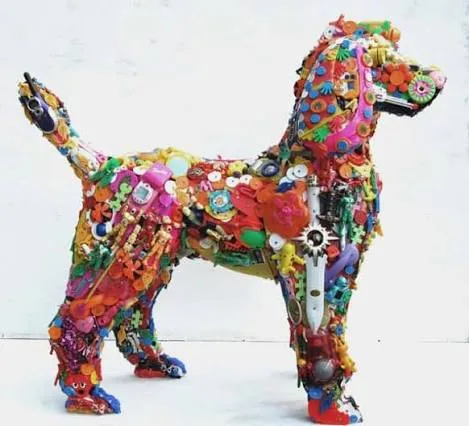
When most people look at discarded metal, old objects, or forgotten materials, they may see something that has reached the end of its useful life. An artist can see something very different: shape, texture, movement, color, and the possibility of a completely new form. This transformation is at the heart of Davingy’s approach to sculpture, where upcycled and repurposed materials become expressive works of contemporary outdoor art.
Davingy’s Orchard of Art showcases more than 50 sculptures placed throughout a rural property featuring an orchard and a restored historic farmhouse. The artwork demonstrates how unconventional materials can be transformed into colorful and visually engaging sculptures that interact with their surroundings.
Seeing Artistic Potential in Discarded Materials
The process begins long before welding, shaping, painting, or installation. It starts with looking at materials differently. Scrap metal and other discarded objects often contain interesting curves, edges, surfaces, openings, and imperfections. Instead of removing these characteristics, an artist can use them as part of the creative language of a sculpture.
For a reclaimed material artist, the material itself can become part of the inspiration. An unusual piece of metal may suggest the shape of an animal, an abstract figure, a geometric form, or a playful character. Rather than forcing every material into a predetermined design, the artist can allow the existing shape to influence the final sculpture.
This approach gives each work an individual character. Two pieces made from similar materials can look completely different because their forms, proportions, textures, and combinations create different visual possibilities.
From Scrap to a Sculptural Concept
Once materials have been selected, the next stage is developing an idea. Sculpture requires more than simply assembling discarded objects. The artist must consider how individual components will work together as a complete three-dimensional form.
At Davingy, colorful sculpture and unconventional materials come together to create artwork with a strong sense of personality. The sculptures are designed to be experienced in three dimensions, allowing viewers to notice different shapes and details as they move around the work.
The creative process can involve experimenting with proportions, arranging components, considering balance, and determining how the finished piece will interact with its environment. Some forms may become recognizable while others remain abstract, leaving room for the viewer to interpret the artwork personally.
This experimentation is an important part of transforming scrap into art. What once appeared unrelated or ordinary can become visually connected through composition and artistic intent.
Shaping, Combining, and Building the Sculpture
After the concept develops, the physical transformation begins. Metal and repurposed components may need to be cut, shaped, joined, reinforced, or arranged before they become a finished sculpture.
The construction stage requires both artistic thinking and practical decision-making. A sculpture intended for an outdoor setting must work visually while also being suitable for its environment. The artist has to think about structure, proportions, stability, placement, and the relationship between the artwork and the surrounding landscape.
Davingy’s work demonstrates this relationship particularly well. The Orchard of Art places sculptures throughout a rural landscape, allowing the artwork to become part of the experience of the property rather than existing separately from it.
The result is not simply a collection of reused materials. The original purpose of each object becomes less important as the artist gives it a new role within the sculpture.
Color Adds a New Dimension
Color can completely change how reclaimed and repurposed materials are perceived. A weathered piece of metal might initially appear industrial or ordinary, but a carefully selected color palette can give it energy, personality, and visual movement.
Davingy’s sculptures are particularly associated with vibrant and colorful pieces made from upcycled materials. This combination creates artwork that can stand out against natural surroundings while still becoming part of the landscape.
Color also helps guide the viewer's attention. Different surfaces can become visual accents, while contrasting tones can emphasize curves, shapes, and individual components. In this way, finishing becomes part of the artistic process rather than simply the final step.
For outdoor sculpture, color can also influence how a piece changes throughout the day. Sunlight, shadows, weather, and surrounding greenery can create different visual impressions depending on the time and viewing position.
Giving Old Materials a New Identity
One of the most interesting aspects of working with reclaimed materials is that the finished sculpture can carry traces of its previous life while becoming something entirely new.
Scratches, bends, worn surfaces, and irregular forms can contribute to the personality of the artwork. Instead of hiding every imperfection, the artist can incorporate those characteristics into the design.
This philosophy makes each sculpture feel individual. The material does not need to be completely uniform to become beautiful or meaningful. Its history can become part of the visual story.
Davingy’s work reflects this creative relationship between repurposed materials and contemporary sculpture. The artwork found throughout the Orchard of Art demonstrates how discarded or unconventional materials can be reimagined into colorful sculptural forms within a natural environment.
Sculpture Designed to Be Experienced
A sculpture is not only about what it looks like in a photograph. Three-dimensional artwork changes as viewers move around it. From one angle, a particular shape may dominate the composition. From another, hidden spaces, overlapping forms, textures, or colors may become more noticeable.
This is especially important for outdoor sculpture. The surrounding landscape becomes part of the viewing experience. Trees, pathways, buildings, sky, sunlight, and changing seasons can all influence how the artwork is perceived.
At Davingy’s Orchard of Art, more than 50 sculptures are thoughtfully placed throughout the property, creating an environment where visitors can experience artwork alongside the orchard and restored historic farmhouse.
This approach turns sculpture into an experience rather than simply an object. Visitors can explore the setting, discover individual pieces, and see how each work responds to its surroundings.
Why Reclaimed Sculpture Feels Different
A reclaimed material artist does more than reuse old objects. The real transformation happens when those materials receive a new artistic purpose.
The process combines imagination, construction, composition, color, and environmental awareness. A discarded component can become part of a larger form, while a collection of unrelated pieces can develop into a sculpture with its own identity.
For viewers, this creates an opportunity to see familiar materials differently. Something that might normally be overlooked can become the central feature of an artwork.
That perspective is an important part of contemporary sculpture. It encourages people to look beyond an object's original function and consider what else it could become.
Explore Davingy’s World of Sculpture
Davingy’s work offers a distinctive look at how upcycled materials can become colorful contemporary sculpture. From individual sculptural forms to the broader experience of the Orchard of Art, the work reflects an ongoing exploration of material, color, shape, and outdoor space.
If you appreciate unconventional materials, vibrant outdoor artwork, and sculpture with a strong individual character, take time to explore Davingy’s collection and discover the different forms created from repurposed materials.
Conclusion
Transforming scrap into original sculpture requires much more than collecting discarded objects. It requires the ability to recognize artistic potential, develop a concept, combine materials, create structure, introduce color, and place the finished work within an environment where it can be experienced.
Davingy demonstrates how upcycled materials can move beyond their original purpose and become expressive works of contemporary art. The combination of reclaimed elements, vibrant colors, sculptural forms, and natural surroundings gives the artwork a distinctive visual identity.
Ultimately, the work of a reclaimed material artist shows that materials do not have to remain defined by their original function. With creativity and craftsmanship, something overlooked can become something worth stopping to see, explore, and remember.