
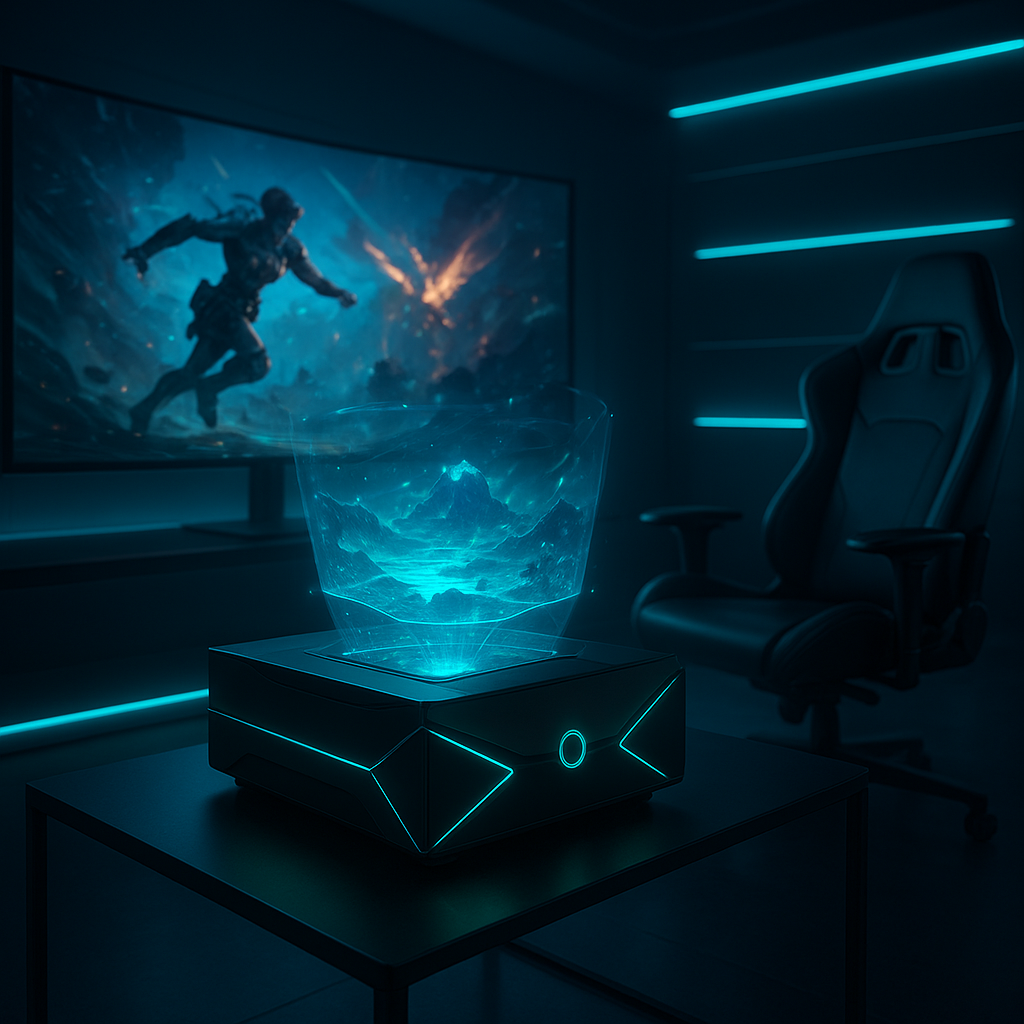
Revolutionizing Play: The Hardware Behind Immersive Gaming
Imagine entering a virtual world so vivid and responsive that the line between reality and game blurs entirely. This is not a scene from science fiction, but a glimpse into the state of gaming hardware in 2026. With the global gaming market surpassing $320 billion according to industry estimates, the demand for cutting-edge hardware that can deliver unparalleled experiences is at an all-time high. Central to this evolution is the relentless innovation in gaming hardware components—from graphics processing units (GPUs) and processors to peripherals and immersive devices.
Today’s gaming setups are more than just machines; they are sophisticated platforms enabling new forms of interaction and storytelling. Take, for instance, the rise of ultra-high refresh rate displays paired with AI-driven upscaling, which have dramatically reduced latency and enhanced visual fidelity. This leap has been critical for competitive gamers and those seeking cinematic immersion alike.
"Advancements in gaming hardware are not simply about power; they’re about creating seamless, believable experiences that engage players on a deeper level," explains Dr. Lisa Morrow, a leading hardware engineer specializing in immersive tech.
This article unpacks the trajectory of gaming hardware innovation, analyzing how recent breakthroughs are reshaping player engagement. We’ll explore the technological catalysts behind these advancements, current market leaders, and what the future holds for gamers and developers worldwide.
Tracing the Hardware Evolution: From Pixels to Photorealism
The journey of gaming hardware has been a relentless pursuit of realism and responsiveness. The 1990s introduced the first consumer 3D graphics accelerators, revolutionizing game visuals from flat sprites to textured polygons. By the early 2010s, multi-core CPUs and GPUs enabled detailed open-world environments. However, the last five years have witnessed an unprecedented acceleration in hardware capabilities, driven by several key trends.
One pivotal moment was the widespread adoption of real-time ray tracing technology, which simulates light behavior with high accuracy. Initially exclusive to high-end GPUs, by 2024 even mid-tier devices incorporated ray tracing, vastly improving shadows, reflections, and overall scene realism.
The integration of dedicated AI cores in GPUs represents another critical milestone. These cores facilitate real-time neural network tasks such as DLSS (Deep Learning Super Sampling), which intelligently upscales lower-resolution frames to near-native quality, dramatically boosting frame rates without compromising visuals.
Moreover, the evolution of storage solutions from traditional hard drives to NVMe SSDs with PCIe Gen5 interface has eliminated loading bottlenecks, enabling near-instantaneous world streaming. This shift has empowered developers to design larger, more intricate worlds that load seamlessly, elevating player immersion.
Peripheral technology has also advanced. High-DPI mice with customizable weights, mechanical keyboards with ultra-fast actuation, and haptic feedback controllers now deliver tactile responses that synchronize perfectly with in-game events, enhancing sensory engagement.
Core Components Powering 2026’s Gaming Experiences
The backbone of any gaming rig lies in its core components. In 2026, these pieces have been refined to unprecedented levels of performance and efficiency, creating a new baseline for gaming hardware.
Graphics Processing Units (GPUs)
Leading GPU manufacturers, notably NVIDIA and AMD, have launched their latest architectures this year—NVIDIA's RTX 70 series and AMD's Radeon RX 9000 series, both offering breakthroughs in power efficiency and AI integration. The RTX 7090, for example, boasts 25,600 CUDA cores and a 400W power envelope, delivering 4K gaming at 240+ frames per second with full ray tracing enabled.
AMD’s RDNA 4 architecture emphasizes heterogeneous computing, combining traditional shader cores with dedicated AI accelerators to boost performance in complex physics simulations and enhanced NPC behavior.
Central Processing Units (CPUs)
On the CPU front, Intel’s 16th Gen Core processors and AMD’s Ryzen 9000 series dominate the market. Both series leverage increased core counts and hybrid architecture designs to balance power and efficiency. The Ryzen 9 9950X, for instance, features 24 cores optimized for gaming and multitasking, ensuring smooth gameplay even during background streaming or recording.
Memory and Storage
DDR6 RAM modules have become standard, with speeds reaching 12,800 MT/s. Fast, low-latency memory is crucial for feeding data-hungry GPUs and CPUs during high-fidelity gaming sessions.
NVMe SSDs using PCIe Gen5 interfaces offer sequential read speeds over 15 GB/s, shrinking loading times to mere seconds even in massive open-world games. This advancement supports the trend toward expansive, uninterrupted gameplay experiences.
Displays and Peripherals
Display technology now centers around 8K OLED panels with refresh rates exceeding 360 Hz. Adaptive sync technologies eliminate screen tearing, while ultra-low latency modes reduce input lag to under 1 ms.
Peripherals increasingly incorporate AI-driven customization. For example, some mice now adjust DPI dynamically based on in-game context, enhancing precision without manual intervention.
"The convergence of AI and hardware is making devices that adapt to the player's style, creating a more intuitive and responsive gaming environment," states Marcus Nguyen, CTO of a leading gaming peripherals company.
2026’s Groundbreaking Developments in Gaming Hardware
This year has been pivotal in pushing the boundaries of what gaming hardware can achieve. Among the most notable trends are the rise of modular hardware designs, enhanced cloud and edge computing integration, and the widespread adoption of immersive devices.
Modular GPUs and CPUs have gained traction, allowing gamers to upgrade individual components without replacing entire systems. This shift reduces electronic waste and lowers the cost barrier for accessing top-tier performance.
Edge computing, combined with 5G and emerging 6G networks, is enabling hybrid gaming models where local hardware works seamlessly with cloud resources to deliver ultra-low latency multiplayer experiences. Services like NVIDIA GeForce Now and Xbox Cloud Gaming have evolved to leverage these capabilities, offering near-console-quality gaming on lightweight devices.
Immersive hardware has taken center stage as well. Full-body haptic suits and advanced VR headsets with eye tracking and facial expression recognition are mainstream, creating social gaming experiences that transcend screens. Companies like Meta and Sony have released headsets with resolutions exceeding 10K per eye and refresh rates above 300 Hz, drastically reducing motion sickness and increasing presence.
In addition, AI-powered game optimization tools embedded within hardware allow automatic tuning of settings based on user preferences and ambient conditions, maximizing performance and visual quality.
Industry Impact and Expert Perspectives
The gaming hardware revolution impacts not only players but the entire industry ecosystem. Developers are now designing games that leverage hardware capabilities that were inconceivable a few years ago, leading to richer narratives and more complex mechanics.
Industry experts emphasize that hardware advancements democratize high-fidelity gaming. "Affordable high-end hardware brings AAA experiences to a broader audience," notes Elena Garcia, a senior analyst at GameTech Insights.
Moreover, esports has benefitted greatly. Professional players demand the lowest possible latency and highest frame rates. The latest hardware facilitates these demands, contributing to the surge in viewership and sponsorship deals in competitive gaming circuits.
There is also a growing conversation around sustainability. Hardware manufacturers are increasingly adopting eco-friendly materials and energy-efficient designs in response to consumer and regulatory pressure.
"Sustainability and performance are no longer conflicting goals in gaming hardware design," says Dr. Raj Patel, head of sustainability at a major chipmaker.
Looking Ahead: What to Watch in Gaming Hardware’s Future
As we look beyond 2026, several exciting developments are poised to redefine gaming hardware further.
- Quantum Computing Integration: Early-stage research suggests that quantum processors could revolutionize AI-driven game logic and procedural generation within the next decade.
- Neural Interface Devices: Brain-computer interfaces are progressing rapidly, with prototypes already enabling limited direct neural control of in-game avatars, promising a new dimension of immersion.
- Ultra-Compact Form Factors: Advances in chip design and cooling solutions will produce powerful yet compact gaming devices, broadening access and portability.
- Advanced AI Companions: Hardware optimized for AI companions that can learn and adapt in real-time will transform single-player and multiplayer experiences.
- Environmental Adaptation: Devices capable of dynamically adjusting performance based on room lighting, acoustics, and user stress levels will emerge, enhancing comfort and engagement.
For gamers and developers alike, staying informed and adaptable to these changes is essential. Resources like our Mastering Gaming Hardware: Pro Tips for Ultimate Performance and Longevity guide offer valuable insights for maximizing current setups. Meanwhile, exploring the broader industry trends in Why Cutting-Edge Gaming Hardware Is Redefining Player Experience Today helps contextualize these hardware advances within the evolving gaming culture.
In conclusion, gaming hardware in 2026 stands at a thrilling crossroads where innovation meets accessibility and immersion. The relentless push for realism, responsiveness, and customization is transforming how games are played and experienced, setting the stage for a future where the digital and physical worlds merge more seamlessly than ever before.