Every pharma sales manager knows this moment. The month closes. The target is missed. And nobody can say exactly why.
The DCRs say every key doctor was visited. The stockist says secondary sales stayed flat. Somewhere between those two reports, the truth got lost.
This is the gap an MR reporting app is built to close. It replaces late, unverifiable reports with clean field data. More importantly, it connects what happens in the doctor's chamber to what moves off the chemist's shelf.
In this guide, you will learn how these apps work, which KPIs matter most, and what to check before your team adopts one.
What Is an MR Reporting App?
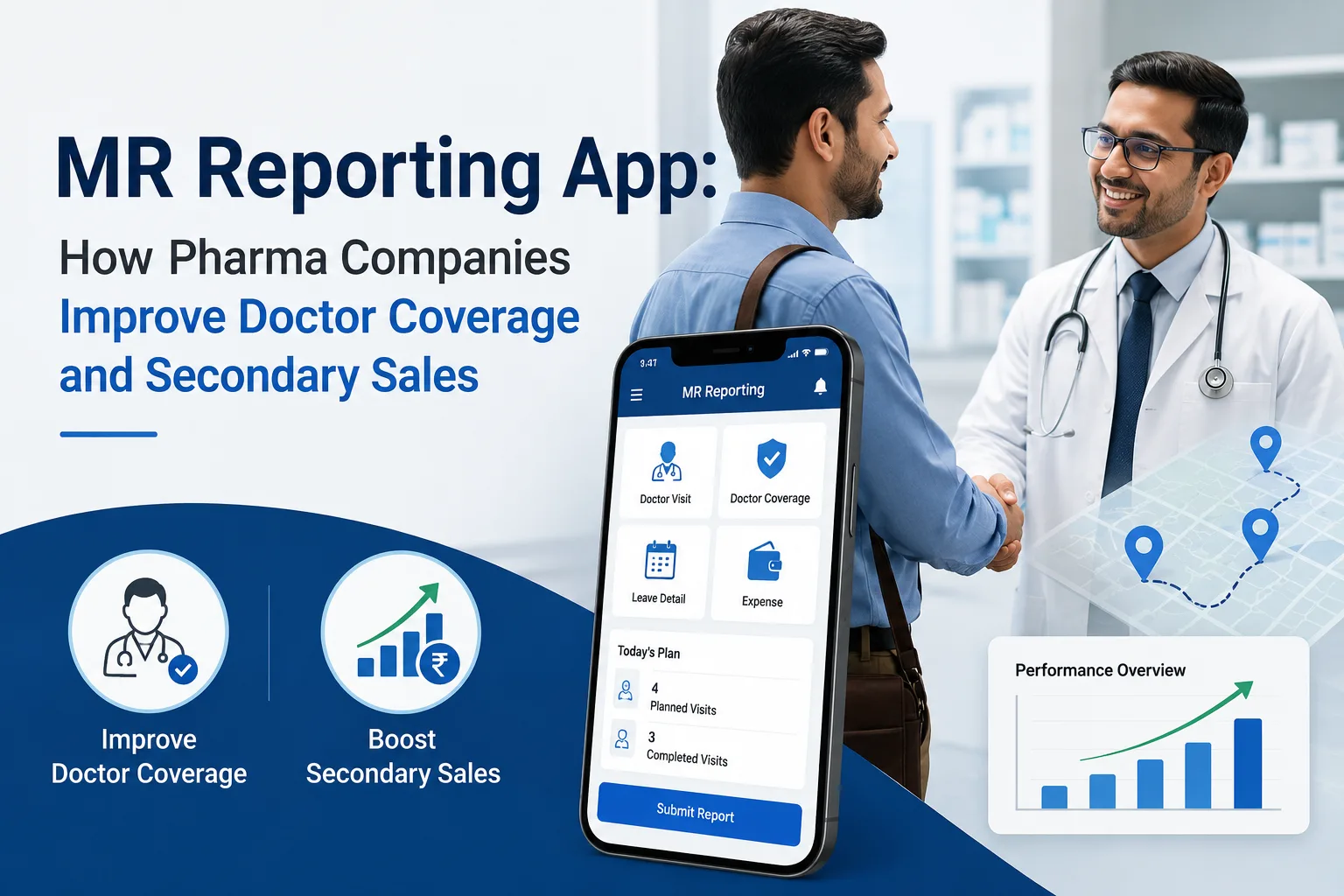
An MR reporting app is a mobile tool that medical representatives use to plan, record and report their daily field work. It captures doctor calls, chemist visits, samples given, orders booked and expenses in one place.
Think of it as sales force automation built around pharma workflows. A generic CRM tracks leads and deals. An MR app tracks doctor lists, tour plans, daily call reports and stockist data. That difference matters.
Why Manual MR Reporting Fails Pharma Teams
Paper and spreadsheet DCRs worked when teams were small. They break down at scale. Here is where it goes wrong.
Calls cannot be verified
A DCR filled late at night from memory is hard to trust. Backdated entries and inflated call counts creep in. Managers have no easy way to check.
High-value doctors slip through
Without a clear plan, MRs drift toward friendly or convenient clinics. Key prescribers can go unvisited for weeks. Nobody notices until prescriptions fall.
Field effort sits apart from sales
Doctor visits live in one report. Stockist sales live in another. Linking the two takes days of manual work, if it happens at all.
Samples go untracked
Samples are costly and regulated. Without proper records, it is hard to prove who received what, and when.
How an MR Reporting App Improves Doctor Coverage
Doctor coverage is the share of listed doctors an MR meets as planned. Digital reporting lifts it in five practical ways.
1. Structured tour plans
MRs submit a monthly tour plan (TP) in the app. Managers approve or adjust it before the month starts. Daily work then follows a plan, not habit.
2. Doctor categorisation and visit norms
Doctors are grouped by potential, often as A, B and C. Each group gets a visit frequency. A common norm is three or four visits a month for A-class doctors and one for C-class. The app shows who is due and who is overdue.
3. Location-verified call reporting
Each call is logged with time and location at the point of visit. This works much like geo-tracking for field sales teams. The goal is not surveillance. It is data that managers can trust and act on.
4. Missed-doctor alerts
Live dashboards flag doctors who have not been met. MRs can recover coverage in the third week, not explain it in the fifth.
5. Joint working visibility
Area managers log joint calls and coaching notes in the same system. Feedback becomes specific to real visits, not general advice.
How MR Apps Drive Secondary Sales
In pharma, primary sales are company to stockist. Secondary sales are stockist to chemist. Strong primary with weak secondary means stock is piling up in the channel. That is a warning sign, not a win.
Order booking at the chemist counter
MRs can record personal order bookings (POB) during chemist visits. Orders reach the stockist faster. Fewer requests get lost on paper or in chat threads.
Stockist sales and stock visibility
When stockist data flows into the same system, managers see secondary sales and closing stock by territory. They can spot slow brands and near-expiry stock early.
RCPA closes the loop
Retail chemist prescription audit (RCPA) checks which brands nearby chemists are actually dispensing against doctors' prescriptions. Logged in the app, it shows whether detailing is turning into prescriptions.
Effort finally meets outcome
With calls, orders and stockist sales in one view, you can ask sharper questions. Did territories with better coverage grow faster? Which doctors respond to which brands? That is where real field strategy begins.
Sample and Input Management for Compliance
Samples need a clear audit trail. In India, the Uniform Code for Pharmaceutical Marketing Practices (UCPMP) 2024, issued by the Department of Pharmaceuticals, requires companies to keep proper records of free samples and limits their total value.
A good reporting app records sample issues against each doctor and tracks balance stock with each MR. When an audit arrives, the records already exist.
Key KPIs to Track in Pharma Field Sales
These seven metrics give a balanced view of effort, quality and results.
KPIWhat it measuresWhy it mattersDoctor coverage %Listed doctors met at least once in the monthShows the reach of field effortFrequency coverage %Doctors met as often as their category requiresProtects your highest-value prescribersCall averageDoctor calls per MR per working dayTracks daily productivityDCR timelinessReports submitted on the same dayKeeps data fresh and believablePOB valueOrders booked at chemists during visitsLinks field work to real demandSecondary sales vs targetStockist sales to chemists against planReveals true market offtakeRCPA conversionPrescriptions written for your brand vs competitorsProves whether detailing worksMust-Have Features Checklist
Before you choose a tool, check that it covers these basics:
- Offline mode so calls save without network and sync later. This is vital in rural territories.
- Quick DCR entry that takes under two minutes per call.
- Tour plan and approval flow for MRs and managers.
- Sample and input tracking linked to each doctor.
- Chemist and stockist modules for POB and secondary sales.
- Expense claims based on the actual route travelled.
- Role-based dashboards for MRs, area managers and leadership.
- ERP integration so primary and secondary data match.
How to Roll Out Without Pushback
Technology fails when people resist it. Keep the rollout simple.
- Start with one division as a pilot.
- Train first-line managers before the MRs.
- Show MRs what they gain, such as faster expense approvals.
- Track adoption weekly and fix friction quickly.
Frequently Asked Questions
What is DCR in pharma?
DCR stands for daily call report. It records the doctors, chemists and stockists an MR met in a day, along with products detailed and samples given.
How do pharma companies track medical representatives?
Most use mobile reporting apps with tour plans, location-verified calls and live dashboards. These replace paper DCRs and manual spreadsheets.
What is a good call average for an MR?
It varies by company and therapy area. Many companies expect around 10 to 12 doctor calls a day, plus chemist calls. Specialist-focused teams usually run lower.
Can an MR reporting app work without internet?
Yes, if it supports offline mode. Calls are saved on the phone and synced once the network returns.
What is the difference between primary and secondary sales in pharma?
Primary sales are from the company to stockists. Secondary sales are from stockists to chemists and hospitals. Secondary sales reflect real market demand.
Related Recommendations for Pharma Sales Leaders
- Review your doctor list every quarter. Remove inactive doctors and re-categorise by current potential.
- Track frequency coverage, not just overall coverage. Meeting a doctor once is not the same as building recall.
- Run RCPA regularly in your top territories to measure prescription conversion.
- Compare primary and secondary sales monthly to catch channel stuffing early.
- Use field data in reviews to coach MRs, not only to police them.
Conclusion
Doctor coverage and secondary sales are not separate problems. They are two ends of the same chain. An MR reporting app connects them with data your team can trust.
The shift is not about adding another app. It is about moving from reporting what happened to acting on what is happening. Pharma teams that make this shift will coach better, plan smarter and grow faster.