
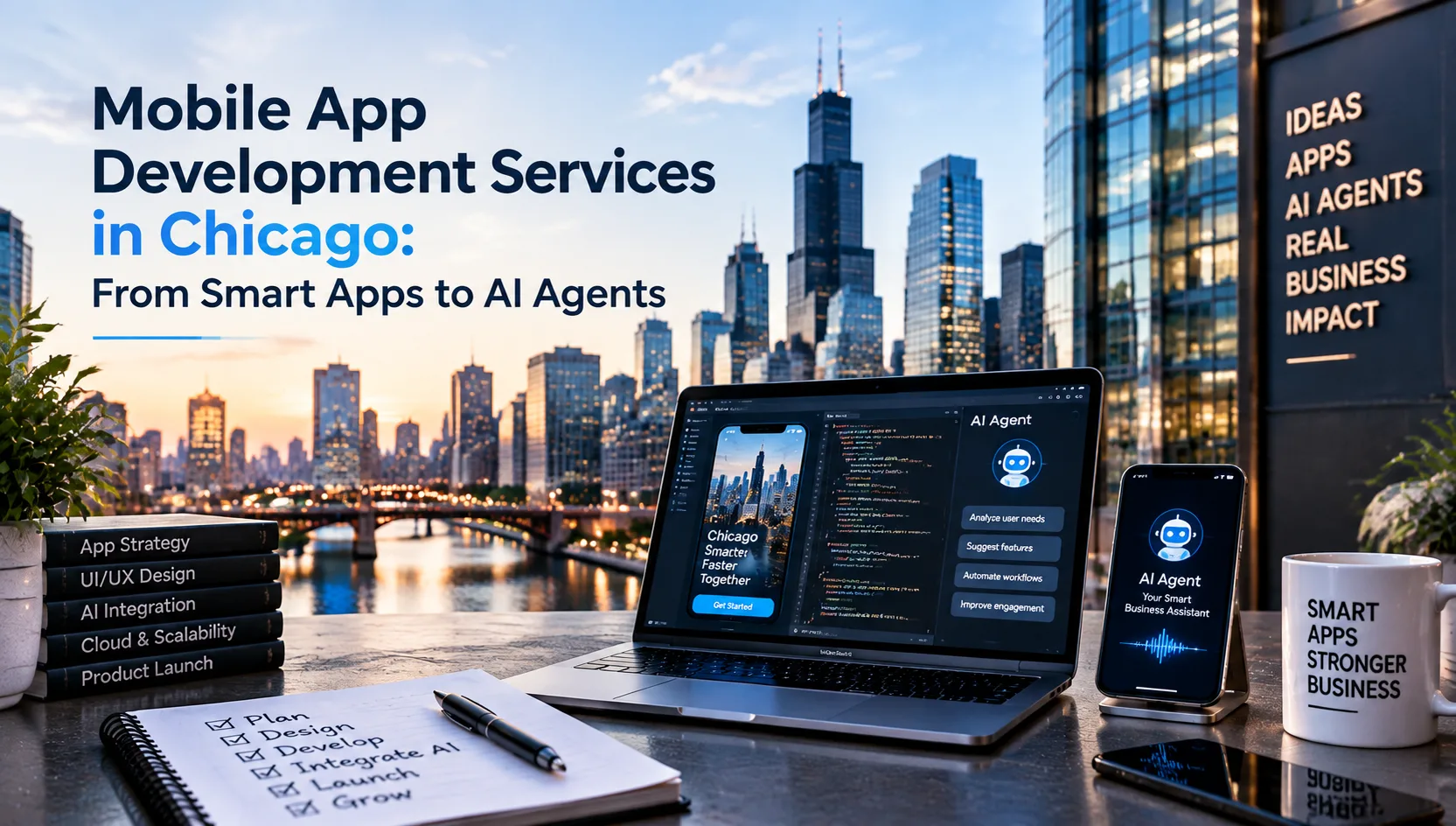
Something's changed in Chicago's tech circles over the past year. Sit in on a founder meetup downtown and you'll notice fewer people talking about "apps" and more about "agents" — tools that don't just wait for a tap but actually go do something on their own.
That's the backdrop for why Mobile App Development Services in Chicago look nothing like they did even three years ago. Nobody wants a glorified digital brochure sitting on their home screen anymore. They want something that learns how they work, handles the boring parts automatically, and quietly gets smarter the longer it's used.
You can see it across industries here — retail chains, clinics, freight companies, even a few city offices are rethinking their apps from the ground up. It's not really about "having an app" anymore. It's about whether that app still makes sense five years from now.
Key Takeaways
- Apps built in 2026 are less about showing information and more about acting on it — think automation, not just display.
- Chicago businesses care more about scalability and security than they do about flashy screens.
- The development partner you pick matters more than which framework they use.
- AI features, privacy compliance, and real post-launch support aren't optional add-ons anymore.
- Local know-how paired with solid technical standards is what actually separates good apps from forgettable ones.
The Hard Part Isn't Writing Code — It's Knowing What to Build
Most people assume the tough part of app development is the coding itself. It's usually not. The real difficulty is figuring out what problem the app is even supposed to solve.
A lot of projects go sideways because teams rush into wireframes and screens before anyone's nailed down the actual problem. A gorgeous interface doesn't matter much if it's solving the wrong thing.
This is exactly where solid mobile app development services in Chicago earn their keep — good teams slow clients down long enough to get the goal right before touching any code.
Why AI Agents Are Quietly Becoming the Default
An AI agent isn't just a fancier feature list. It acts with a bit of independence — it doesn't sit around waiting for you to tell it what to do next.
Take a grocery delivery app: instead of you manually reordering the same items every week, it notices the pattern and does it for you. Or it reroutes a delivery on the fly, or flags something odd on your account before you'd ever catch it yourself.
A few years back, pulling this off needed a massive engineering team and a fat budget. Now, thanks to cloud-based AI frameworks, even a mid-sized business can realistically build this in.
Features Worth Actually Caring About in 2026
Not every shiny feature is worth your budget. A handful genuinely move the needle:
Personalization that adapts to each user rather than showing everyone the same thing. Offline functionality, because connectivity is still spotty in plenty of places. Voice and conversational interfaces for the moments someone can't (or doesn't want to) type. Real-time dashboards so business owners can actually see what's happening, not guess. And modular architecture, so adding new features later doesn't mean tearing the whole thing apart.
Chasing trends before locking down the basics tends to backfire. Speed and stability still beat novelty most days.
Agency, Company, or a Solo Freelancer — Who Should You Actually Hire?
This choice shapes everything that comes after it. A freelancer can handle a simple app just fine, but once AI and complexity enter the picture, you generally need a real team behind it.
Go with an established mobile application development company in Chicago and you typically get dedicated QA testers, project managers, and support that sticks around after launch — things one person working alone just can't offer.
A specialized mobile app development agency in Chicago, on the other hand, often brings sharper design instincts and a more hands-on creative process, which tends to matter more for brands facing consumers directly.
What Organizations Should Actually Do Before Building
If you're an institution or business weighing your options here, a few practical habits go a long way:
Start with the actual problem, not a wishlist of features you saw somewhere else. Build security in from day one instead of patching it on later. Get real users testing an early prototype, not just your internal team. Design for growth so you're not rebuilding from scratch the moment things scale. And budget for maintenance, because the work doesn't stop the day the app goes live.
Skip these and you're pretty much signing up for an expensive redo down the line.
Conclusion
If your current app feels stuck in 2020, or your team is still doing by hand what software could easily handle, this is probably the moment to move. The distance between businesses running on AI-driven tools and everyone else still using static apps is only growing.
Don't sit back and watch competitors get there first with something faster and smarter. Get in touch with a team that understands both the tech and the local market here — contact us and let's figure out what your next app could actually do for you.
Chicago's got no shortage of skilled developers, but not many combine real technical depth with the kind of long-term partnership that actually matters. Esferasoft Solutions has built its name around exactly that — walking businesses from a rough app idea to a fully working, AI-ready product, without cutting corners along the way. Whether this is your first app or a rebuild of something that's outgrown itself, working with a team that treats your product like it's their own tends to make all the difference.
A Few Questions People Keep Asking
What actually counts as "mobile app development services"?
It's a broad bucket — design, coding (native or cross-platform), backend work, connecting APIs, building AI features, and sticking around afterward to keep things running.
Why is everyone suddenly obsessed with AI-based apps instead of regular ones?
Because a normal app waits for you to do everything manually. An AI-driven one starts predicting what you need and just... does it, without you tapping five buttons first.
Okay, but what does this cost in Chicago? Honestly, it depends. A lean MVP might run you far less than an enterprise platform that needs ongoing AI training and updates — the range is wide on purpose.
Native app or cross-platform — which one should I pick?
If you need heavy performance for complex features, native wins. If budget and speed matter more, something like Flutter or React Native usually gets the job done.
How long before I actually have something to launch?
A simple app can be ready in a few months. Anything with real AI baked in usually needs six months or more if it's going to be tested properly.
What security stuff should I actually be worried about in 2026?
Encryption end-to-end, solid authentication, regular vulnerability checks, and staying compliant with whatever data laws apply to your users — none of that is negotiable anymore.
Can I just bolt AI onto my existing app instead of starting over?
Usually, yes. Most apps can pull in AI features through APIs without a full rebuild — cheaper and a lot less painful than starting from scratch.
How do I even choose the right team for this?
Look past the pitch deck. Check their actual portfolio, how deep their AI and cloud experience really goes, how they communicate, and whether they'll still answer your calls after launch.