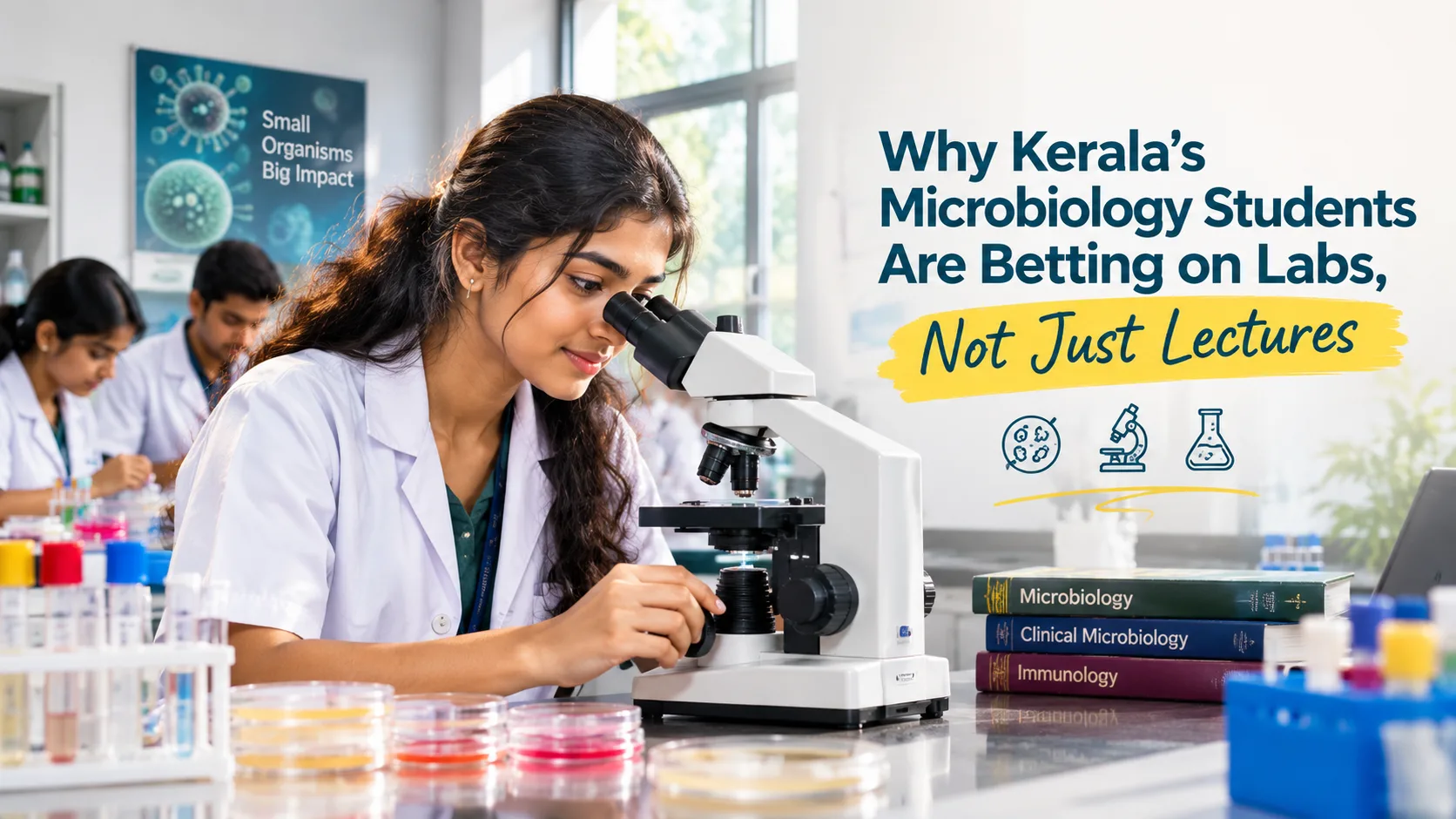
Walk into any microbiology classroom and the subjects look familiar: bacteriology, virology, immunology. Now listen to final-year students in career fairs, LinkedIn posts, and WhatsApp groups. The question has changed. It's no longer "which university has the best syllabus?" but "where can I actually get hands on a sequencer?"
Kerala's students have worked out something important. A degree opens the door, but practical skills get you through it.
The Internship Reality Check
Sooner or later, every student hits the same truth: classroom knowledge and job-ready skills aren't the same thing. A microbiology internship in Kerala is often where that gap first shows up, and where it starts to close.
What students usually take away:
- Real comfort with equipment they've only seen in diagrams
- A feel for how labs run day to day: documentation, protocols, timelines
- Clarity on what excites them most: clinical, research, or industrial work
- A reference and a professional contact who can vouch for their work ethic
This mix of technical exposure and professional seasoning is why internships are now non-negotiable for serious students.
The Clinical Edge
Hospitals and diagnostic chains are hiring, but selectively. That's where clinical microbiology training programs help. They're built around what diagnostic labs actually expect from new recruits.
Graduates of these programs can typically:
- Identify and differentiate pathogens from clinical samples
- Run and interpret antibiotic sensitivity testing
- Follow strict quality control and biosafety protocols
- Settle quickly into real hospital or diagnostic lab settings
For anyone aiming at a healthcare-adjacent career, targeted training like this often counts for more than one extra semester of general coursework.
Sequencing Is No Longer Optional
Ask recruiters in genomics, pharma, or agri-biotech which skill is hardest to find, and sequencing experience comes up again and again. Sequencing training has quietly become one of the most career-defining additions a microbiology student can make.
Why it's everywhere now:
- Genomic data drives decisions in medicine, agriculture, and environmental science
- Employers want people who understand the full workflow, not just the theory
- It leads naturally into data analysis and bioinformatics
- Early exposure often decides who gets shortlisted for research roles
Sequencing has stopped being a bonus. It's the baseline fluency employers expect.
Finding the Right Place to Learn It
Not every institute offers both depth and practicality, so where you train matters. A strong training institute in Kochi brings microbiology, sequencing, and data skills together in one structured program. That beats patching together training from scattered short courses.
For many students, this one choice shapes everything that follows.
Where Biology Meets the Computer Screen
The last piece is data. Bioinformatics training in Kerala gives students the tools to make sense of what sequencing produces, and it's reshaping career paths across the field.
It opens doors to:
- Genomic and pharmaceutical research roles
- Hospital and public health data interpretation
- Agricultural and environmental genomics projects
- Postgraduate study in computational biology and related areas
Choosing a Place That Gets It Right
Skills don't build themselves, and the right training environment makes the difference. Veta Genomics is a DSIR-recognised biotechnology and life sciences training company with centres in Thrissur and Ernakulam (Kochi). Its programs combine internships, sequencing, and bioinformatics in one structured path, so students work on real lab workflows, not just theory.
Kerala's students aren't merely adapting to where microbiology is heading. Many are already there, with the hands-on, data-literate skills the field now demands.