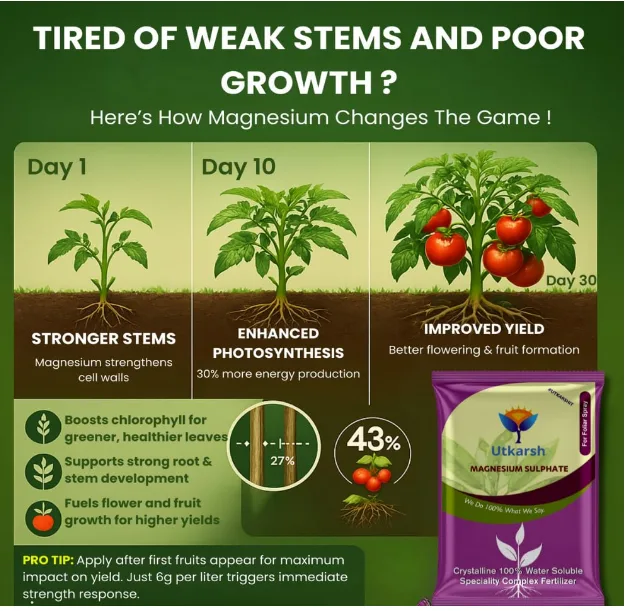
Magnesium is an essential nutrient that supports plant growth, leaf development, and crop productivity. The use of Mg fertilizer for crops is becoming more common as farmers aim to improve yield and correct nutrient deficiencies. At the same time, epsom salt gardening India is widely practiced by gardeners for enhancing plant health and flowering. Many Indian soils are low in magnesium due to continuous farming and lack of balanced fertilization. This leads to yellow leaves, weak growth, and poor yield. Epsom salt, which contains magnesium sulfate, provides a simple and effective solution. Understanding its benefits and correct application methods can help both farmers and gardeners achieve better results. This article explains the importance and practical use of magnesium in agriculture.
Is Mg good for plants?
Magnesium is very important for plants because it is directly involved in photosynthesis. It forms the core of chlorophyll, allowing plants to convert sunlight into energy. Without enough magnesium, plants cannot grow properly and show symptoms like yellowing leaves and reduced vigor. This is common in crops like maize, vegetables, and pulses. Magnesium also activates enzymes that help in nutrient absorption and plant metabolism. It supports the movement of sugars within the plant, which improves growth and yield. Plants with adequate magnesium are stronger and more resistant to stress conditions. Therefore, magnesium is essential for maintaining healthy and productive crops.
Why is Mg used?
Magnesium is used to improve plant nutrition and correct deficiencies in soil. In many farming areas, continuous use of major fertilizers without secondary nutrients leads to magnesium deficiency. This affects plant growth and reduces crop productivity. Magnesium improves nitrogen efficiency, helping plants grow faster and healthier. It also supports root development and enhances flowering and fruiting. In fruits and vegetables, magnesium improves size, color, and taste. Farmers use magnesium fertilizers to prevent leaf yellowing and improve crop uniformity. It is also important for maintaining soil fertility and supporting long-term agricultural productivity.
How to use mg fertilizer for crops?
Correct application of Mg fertilizer for crops is important to achieve good results. Magnesium can be applied through soil, foliar spray, or irrigation systems depending on crop needs.
Common methods include:
- Soil application during land preparation
- Foliar spraying for quick correction
- Fertigation through irrigation systems
Foliar spraying with magnesium sulfate solution is effective for immediate improvement in plant health. Soil application provides long-term benefits by maintaining nutrient levels. Farmers should avoid excessive use to prevent nutrient imbalance. Soil testing helps determine the correct amount required. Expert advice from UTKARSH AGRO can help farmers choose the right products and application methods.
Epsom salt gardening benefits
In epsom salt gardening India, Epsom salt is used for improving plant growth and health. It supplies magnesium and sulfur, which are essential nutrients. One major benefit is improved chlorophyll production, resulting in greener leaves. It also enhances nutrient absorption, helping plants grow faster. Epsom salt supports root development and strengthens plants. Gardeners use it to improve flowering and fruiting in crops like tomatoes and roses. It is easy to apply and provides quick results, making it popular for home gardening.
How to use Epsom salt for flowering plants?
Using Epsom salt correctly can improve flowering and plant growth. In epsom salt gardening India, it is applied during the flowering stage.
Effective methods include:
- Mixing Epsom salt with water for foliar spray
- Applying every 10 to 15 days
- Adding small amounts to soil near roots
This helps improve flower size, number, and color. Proper use ensures better plant health and flowering results.
Is Epsom salt actually good for plants?
Epsom salt is beneficial when used correctly and when plants need magnesium. It helps correct deficiencies and improves plant growth. However, it should not replace balanced fertilizers. Overuse can lead to nutrient imbalance. It works best for crops like tomatoes and peppers that require more magnesium. Soil testing helps determine its need. When used properly, it supports healthy plant development and better yield.
Conclusion
Magnesium is a vital nutrient that supports plant growth and productivity. Using Mg fertilizer for crops helps improve yield and correct deficiencies in Indian soils. At the same time, epsom salt gardening India provides a simple and effective solution for gardeners. Proper application, correct dosage, and balanced nutrition are essential for achieving the best results. By using magnesium wisely, farmers and gardeners can maintain healthy plants and improve overall productivity.