Setting the Stage: The Evolution of Competitive Gaming Strategies
In the mid-2020s, the video gaming landscape has matured from casual indulgence to a complex ecosystem where strategic mastery defines success. Consider the intense final moments of the 2025 Global Esports Championship, where Team Sentinels clinched victory in NeuroSphere through a daring, unorthodox resource allocation strategy that stunned their opponents and commentators alike. This single maneuver encapsulates a broader trend: players and teams now deploy advanced, data-driven tactics that transcend traditional gameplay mechanics.
Gone are the days when raw reflexes and memorization sufficed. The rise of AI analysis, real-time telemetry, and machine learning-enhanced coaching tools has pushed strategy development into a new realm. This progression mirrors shifts in other competitive domains like chess and poker, where algorithmic insights have reshaped playstyles. Gamers today harness a blend of psychological warfare, meta-game manipulation, and predictive modeling to gain an edge.
"The strategic depth available in modern video games rivals that of classic strategic board games, if not surpassing them," notes Dr. Helena Chen, a cognitive scientist specializing in gaming behavior. "Players are essentially conducting complex operations in real-time, requiring adaptability, foresight, and collaboration."
This article explores the advanced strategies shaping video games in 2026, blending historical context, current innovations, and expert insights, to equip ambitious gamers and analysts with critical understanding.
From Pixels to Protocols: Tracing the Roots of Modern Gaming Strategy
The seeds of advanced gaming strategies were planted decades ago with the emergence of competitive multiplayer titles like StarCraft and Counter-Strike, where map control, economy management, and team coordination first emerged as vital tactical pillars. Over time, these foundational concepts expanded with technological advances.
By the late 2010s, the integration of streaming platforms and real-time data tracking enabled communities to dissect gameplay at an unprecedented level. Strategy guides evolved into dynamic databases of situational tactics informed by vast repositories of match data. The introduction of AI-driven coaching software around 2023 accelerated this shift, allowing players to receive personalized feedback on decision-making, positioning, and timing.
Equally influential was the rise of games designed with deeper strategic layers, such as NeuroSphere and Echoes of Dominion, both released in 2024. These titles incorporate elements like asymmetric player roles, emergent environments, and layered resource systems that demand nuanced strategic planning beyond traditional kill-death ratios.
Industry veterans often cite the 2024 release of NeuroSphere as a watershed moment. "It forced the community to rethink what strategy means in a video game," recalls competitive analyst Marcus Vega. "Players had to balance tactical aggression with system-wide resource management across multiple dynamic fronts."
Understanding this evolutionary trajectory contextualizes today’s advanced strategies as the product of technological innovation, player creativity, and competitive pressures converging over decades.
Decoding Core Advanced Strategies: Data, Psychology, and Meta-Game Mastery
At the heart of advanced video game strategies lie three intertwined pillars: data analytics, psychological tactics, and meta-game manipulation. Successful players and teams integrate these to exploit opponents’ weaknesses and optimize their own decision-making processes.
Data Analytics: In 2026, players routinely employ performance telemetry to analyze patterns at micro and macro levels. For instance, heatmaps tracking enemy movement combined with predictive algorithms enable anticipatory positioning. Teams use cloud-based analytic platforms to simulate countless scenarios, refining strategies for map control, resource allocation, and engagement timing.
Psychological Tactics: Advanced strategies often exploit cognitive biases and pressure points. Feints, misinformation, and timing disruptions are orchestrated to induce errors in opponents. For example, in Echoes of Dominion, players deploy deceptive resource gathering to bait attacks, then swiftly counterattack exploiting overcommitment. Mind games extend beyond the screen, with pre-match rituals and communication styles designed to unsettle rivals.
Meta-Game Mastery: The meta-game—the evolving dominant strategies shaped by community trends and patch updates—is a dynamic battlefield itself. Leading players monitor patch notes, community forums, and tournament outcomes to anticipate shifts, then innovate to stay ahead. This requires balancing exploitation of current meta strengths with pioneering novel tactics that can redefine the competitive landscape.
- Key Components of Data-Driven Strategy: Real-time telemetry, AI-assisted replay analysis, scenario simulations
- Psychological Techniques Employed: Deception, timing disruption, communication manipulation
- Meta-Game Practices: Patch note analysis, meta-trend forecasting, innovation cycles
These pillars are not static; they interact continuously. For example, psychological tactics are enhanced by data insights revealing opponent tendencies, while meta-game shifts often arise from collective adaptations to new psychological ploys.
2026 Innovations: AI, Immersive Tech, and the New Frontier of Strategy
The year 2026 marks a significant leap in how advanced strategies develop and are executed, fueled primarily by breakthroughs in artificial intelligence and immersive technologies. Unlike prior generations, AI now functions not only as a coaching assistant but as an in-game strategic partner.
Leading esports organizations have integrated AI-driven co-pilots that analyze live match data and provide tactical suggestions in real-time, factoring in complex variables beyond human processing capabilities. This trend is evident in the latest iterations of popular competitive titles, where AI companions assist in resource management and opponent behavior prediction.
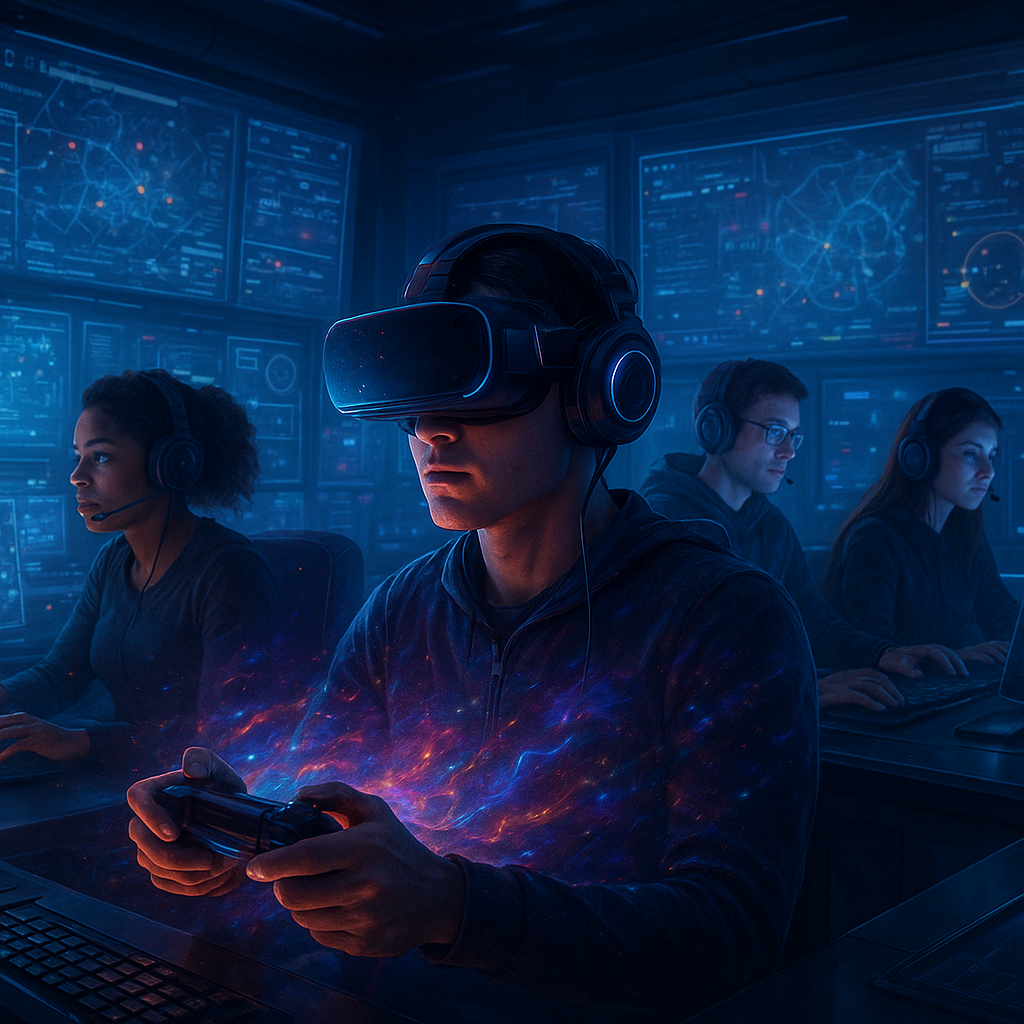
Simultaneously, augmented reality (AR) and haptic feedback advancements have enhanced player situational awareness. AR overlays provide tactical readouts, enemy cooldown timers, and spatial positioning cues directly within players’ visual fields, reducing cognitive load and enabling faster, more precise decision-making.
These technologies also democratize access to advanced strategies. Amateur and semi-professional players now have tools comparable to top-tier teams a few years ago, raising the overall competitive standard dramatically.
- AI Tactical Assistants: Real-time decision support, opponent pattern recognition, adaptive strategy suggestions
- Immersive Enhancements: AR overlays, advanced haptic feedback, spatial audio cues
- Community Impact: Widespread access to high-level strategy tools, accelerated skill development
For a deeper understanding of how AI and immersive technologies are transforming the gaming landscape, readers can explore this comprehensive analysis from TheOmniBuzz. Additionally, the broader cultural and technological shifts in gaming that create fertile ground for these strategies are detailed in another insightful article.
Expert Insights and Industry Impact: Shaping the Future of Competitive Play
Industry leaders and competitive analysts emphasize that advanced strategies are not merely about winning matches but about evolving the entire ecosystem of gaming. According to Elena Ramirez, Head Coach of the reigning NeuroSphere World Champions, "Strategy is the language through which players communicate with their games and each other. The better you speak it, the more you can shape outcomes."
Esports organizations invest heavily in strategic R&D departments, employing data scientists, psychologists, and AI specialists. This multidisciplinary approach reflects recognition that strategic excellence requires more than mechanical skill; it demands holistic understanding of human behavior, technology, and game theory.
From a commercial perspective, advanced strategies drive spectator engagement and viewership. Complex, layered gameplay produces memorable moments and narratives that fuel fan loyalty and media coverage. Platforms like Twitch and YouTube Gaming report increased average watch times during tournaments where tactical innovation is high.
"Strategic depth is the cornerstone of esports’ maturation as a spectator sport," explains esports analyst David Cho. "It creates suspense, unpredictability, and stories that resonate beyond the screen."
Moreover, traditional sports franchises that have entered esports cite strategic sophistication as a key reason for investment, seeing parallels between coaching in physical sports and tactical preparation in gaming.
Looking Ahead: Trends and Takeaways for Aspiring Strategists
As we move further into 2026 and beyond, several trends are poised to redefine advanced strategies in video games. The increasing integration of AI as a teammate rather than just a tool will reshape how players train and compete. Expect emergent strategies that leverage AI’s computational strengths to execute split-second micro-decisions previously impossible for humans alone.
Another critical development is the expansion of cross-title strategic knowledge transfer. Players and coaches are beginning to apply successful tactics from one genre or game to another, facilitated by AI-driven pattern recognition and meta-analysis. This cross-pollination accelerates innovation and challenges conventional genre boundaries.
For ambitious players aiming to elevate their game, the following takeaways are essential:
- Embrace data analytics tools early to inform your strategic decisions with objective insights.
- Study psychological tactics and communication patterns to disrupt opponents effectively.
- Monitor meta-game developments continuously and experiment with novel strategies to stay ahead.
- Leverage immersive technologies to enhance situational awareness and reaction times.
- Engage with multidisciplinary communities to broaden your strategic perspective.
"Strategic mastery in gaming is no longer about isolated skill—it's a synthesis of intellect, technology, and social insight," summarizes Dr. Chen. "Those who master this synthesis will define the next era of competitive play."
For newcomers, a foundational understanding is crucial; beginning players can benefit from resources like TheOmniBuzz’s beginner’s roadmap, which lays out the essential steps toward strategic competence.
In sum, advanced strategies in video games represent a vibrant, evolving frontier. Far beyond simplistic tactics, they embody sophisticated, data-informed, and psychologically nuanced approaches that are reshaping competition and culture alike. As technology continues to progress, so too will the depth and diversity of strategies, promising exciting challenges and opportunities for gamers worldwide.