
A New Dawn: May 2026's Gaming Landscape Unveiled
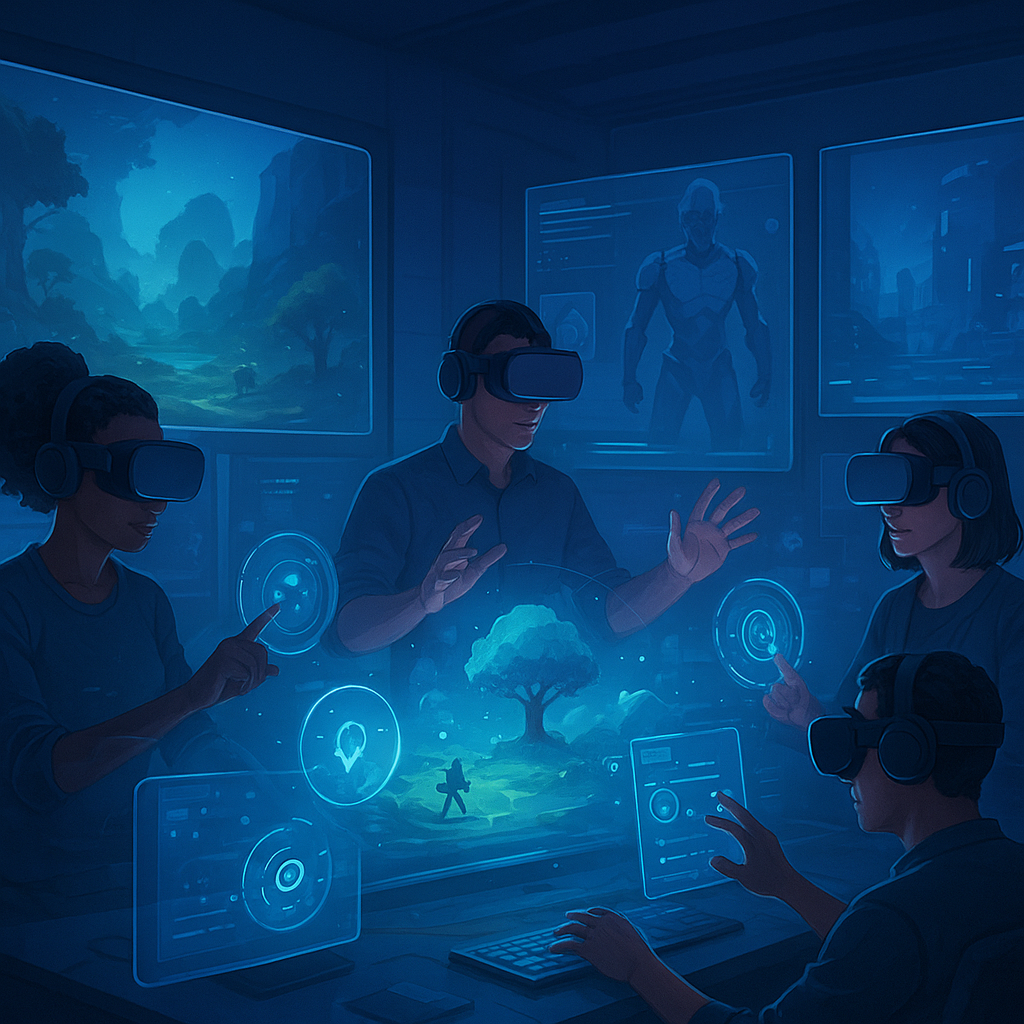
On a crisp spring morning in May 2026, gamers worldwide logged into their consoles, PCs, and VR rigs to experience a wave of transformative releases and innovations that have reshaped the industry’s trajectory. The video game sector—once dominated by traditional mechanics and linear narratives—has now embraced artificial intelligence (AI) and immersive technologies at an unprecedented scale, marking a pivotal moment in digital entertainment. This month alone, headline-grabbing launches and technological breakthroughs have redefined what players expect from interactive media.
Consider the recently launched "Ethereal Frontier," a sprawling open-world RPG that uses next-gen AI to generate dynamic storylines and NPC interactions tailored uniquely to each player. Industry analysts reported that within its first week, the title amassed over 12 million players globally, with average session lengths increasing by 40% compared to comparable releases in 2025. This surge exemplifies a broader shift where player experiences are no longer static but evolve continuously, driven by deep learning algorithms and procedural content generation.
“May 2026 represents a convergence of advances that make games smarter, more responsive, and deeply immersive, pushing the boundaries of player agency,” says Dr. Helena Rasmussen, lead AI researcher at QuantumPlay Studios.
Such developments underscore a profound transformation, not only in gameplay but also in the ecosystem that supports game creation, distribution, and consumption.
Tracing the Path: How We Arrived at This Technological Crossroads
To understand the significance of May 2026, it’s essential to trace the technological and cultural shifts that paved the way. The past half-decade has witnessed rapid growth in AI capabilities, with generative models and natural language processing becoming integral tools in game development. Early experiments with AI-driven NPCs and adaptive difficulty gave way to more sophisticated systems capable of nuanced storytelling and player behavior prediction.
Simultaneously, immersive technologies such as augmented reality (AR), virtual reality (VR), and mixed reality (MR) matured considerably. Hardware advancements—lighter headsets, higher refresh rates, and improved haptic feedback—have enhanced user comfort and realism. Cloud streaming platforms expanded, leveraging 6G networks to reduce latency, thus enabling seamless high-fidelity experiences on otherwise modest devices.
The confluence of these trends culminated in a gaming environment where developers could craft worlds that learn and adapt, and players could engage with content in ways previously relegated to science fiction. Industry giants and indie studios alike embraced these tools, fostering an ecosystem rich in innovation and diversity.
Moreover, cultural acceptance of gaming as a mainstream entertainment and social platform accelerated during this period. The integration of gaming with social media, esports, and virtual economies created new avenues for player engagement and monetization. This cultural shift was critical in driving investment and research into next-generation gaming technologies, setting the stage for the breakthroughs witnessed in May 2026.
Core Innovations Defining the May 2026 Gaming Boom
The heart of May 2026’s gaming revolution lies in several key innovations that collectively enhance immersion and replayability. Among these, AI-powered procedural content generation stands out. By harnessing expansive datasets and real-time player analytics, games can now craft environments, quests, and dialogues that evolve dynamically, ensuring no two playthroughs are alike.
For instance, "Ethereal Frontier" employs a proprietary AI engine named "NarratIQ," which analyzes player choices, play style, and emotional responses to recalibrate story arcs and character relationships on the fly. This has led to an unprecedented depth of personalization, drawing players deeper into the game world.
Another breakthrough is the integration of advanced haptic and sensory feedback systems. The new "SenseLayer" gloves and suits—released by the hardware giant Syntek—translate game interactions into tactile sensations with millisecond precision, simulating textures, impacts, and environmental conditions. This technology has been rapidly adopted in VR titles, enhancing immersion beyond visual and auditory stimuli.
Cloud-based AI companions have also gained prominence. These intelligent agents assist players by learning their strategies and preferences, offering hints, tactical advice, or even co-op support. Unlike scripted NPC sidekicks of the past, these companions adapt and improve through machine learning, fostering a more organic player relationship.
- AI-driven procedural generation creates unique, player-responsive worlds.
- Advanced haptic technology delivers unprecedented sensory immersion.
- Cloud AI companions personalize gameplay assistance and social interaction.
- 6G-enabled cloud streaming facilitates high-fidelity gaming on varied devices.
- Cross-platform AI analytics optimize player experience and matchmaking.
“The blend of AI and immersive tech has shifted game design from fixed experiences to living, breathing ecosystems,” notes industry analyst Marcus Lee from PlayMetrics Research.
May 2026: Key Releases and Industry Movements
The month has been marked by several high-profile game launches and strategic industry moves that reflect these innovations. Apart from "Ethereal Frontier," the indie darling "Loom of Dreams" has captivated audiences with its AI-generated narrative poetry and surreal landscapes, winning accolades for artistic innovation. Its success highlights how AI tools have democratized creativity, enabling smaller studios to compete on narrative complexity and artistic expression.
Hardware manufacturers have also reported record sales. Syntek’s SenseLayer peripherals sold out within days of release, prompting an expansion of production lines. Meanwhile, Sony and Microsoft announced a collaborative initiative to develop shared AI standards for cross-platform compatibility, aiming to streamline developer workflows and enhance player interoperability across consoles.
On the economic front, the gaming market continues to expand robustly. According to industry estimates cited by Newzoo, global video game revenues reached $220 billion in Q1 2026, with AI-enhanced titles accounting for nearly 35% of that figure—a steep increase from 18% in 2024.
The esports sector, closely tied to these technological advances, witnessed a surge in viewer engagement for tournaments featuring AI-assisted competitive modes. These new formats introduce hybrid gameplay where human skill is augmented by AI decision-support, drawing both traditional esports fans and tech enthusiasts.
- Launch of AI-adaptive titles like "Ethereal Frontier" and "Loom of Dreams".
- Breakthrough hardware sales with SenseLayer haptic devices.
- Cross-industry collaborations for AI standards by Sony and Microsoft.
- Surge in AI-driven gaming revenues to 35% of global market.
- Esports embracing AI-augmented competitive formats.
These developments underscore a broader industry momentum, positioning May 2026 as a watershed moment.
Expert Insights: Industry Leaders Weigh In on the Transformative Trends
Leading voices within the gaming community have expressed strong opinions on the trajectory marked by May 2026. Dr. Helena Rasmussen of QuantumPlay Studios highlighted how AI is not merely an enhancement but a fundamental redesign of game narratives and player engagement.
“AI enables us to move beyond linear storytelling into realms where player choices ripple across the entire game universe, creating emergent narratives that feel truly personal,” Rasmussen explains.
Meanwhile, Syntek’s CTO, Javier Morales, emphasized the importance of sensory feedback in bridging the gap between virtual and physical experiences.
“Our SenseLayer technology represents a quantum leap in immersion, allowing players to feel the game world as tangibly as they see and hear it,” Morales says.
Critics and ethicists have also weighed in, raising concerns around AI’s role in gaming. Issues of data privacy, algorithmic bias, and player addiction have been debated intensely. Industry bodies are responding by crafting new ethical guidelines and transparency standards to ensure responsible AI use.
From a business perspective, executives at major studios acknowledge the steep learning curve and investment required but remain optimistic about AI’s potential to reduce development costs and shorten production cycles. The ability to rapidly prototype and refine content using AI tools is seen as a competitive advantage.
These expert perspectives highlight a mature industry grappling with both extraordinary opportunities and complex challenges.
Looking Forward: What May 2026 Signals for the Future of Gaming
As May 2026 draws to a close, it is clear that the gaming sector stands on the cusp of further transformation. The rapid adoption of AI and immersive technologies is expected to accelerate, with several key trends already emerging on the horizon.
Developers are increasingly investing in multi-sensory experiences that incorporate smell and taste simulation, aiming to deepen immersion. AI-driven content moderation and player wellbeing tools will become standard, balancing engagement with ethical considerations.
Cross-industry collaborations will likely expand, integrating gaming with education, healthcare, and virtual workspaces. The rise of AI companions hints at future roles for personalized digital assistants that transcend entertainment.
For players, the future promises even greater agency and customization. Procedural generation will evolve to include social and emotional dimensions, creating worlds that respond to player moods and social contexts.
However, sustaining this growth will require addressing challenges around computational resource demands, equitable access to technology, and safeguarding player privacy.
- Expansion of multi-sensory immersive technologies.
- Standardization of AI ethics and player safety protocols.
- Growth of cross-sector applications blending gaming with real-world utility.
- Enhanced personalization through emotional AI and behavioral analytics.
- Focus on sustainable and inclusive access to next-gen gaming experiences.
In summary, May 2026 not only reflects a moment of breakthrough but also sets the stage for an era where video games become increasingly indistinguishable from living worlds. For those eager to understand these shifts in depth, our related analysis in Video Games in 2026: Innovation, Impact, and Industry Evolution offers further insights into the industry’s rapid evolution. Beginners interested in exploring this dynamic space can consult How to Get Started with Video Games: A Beginner’s Roadmap for practical guidance.