
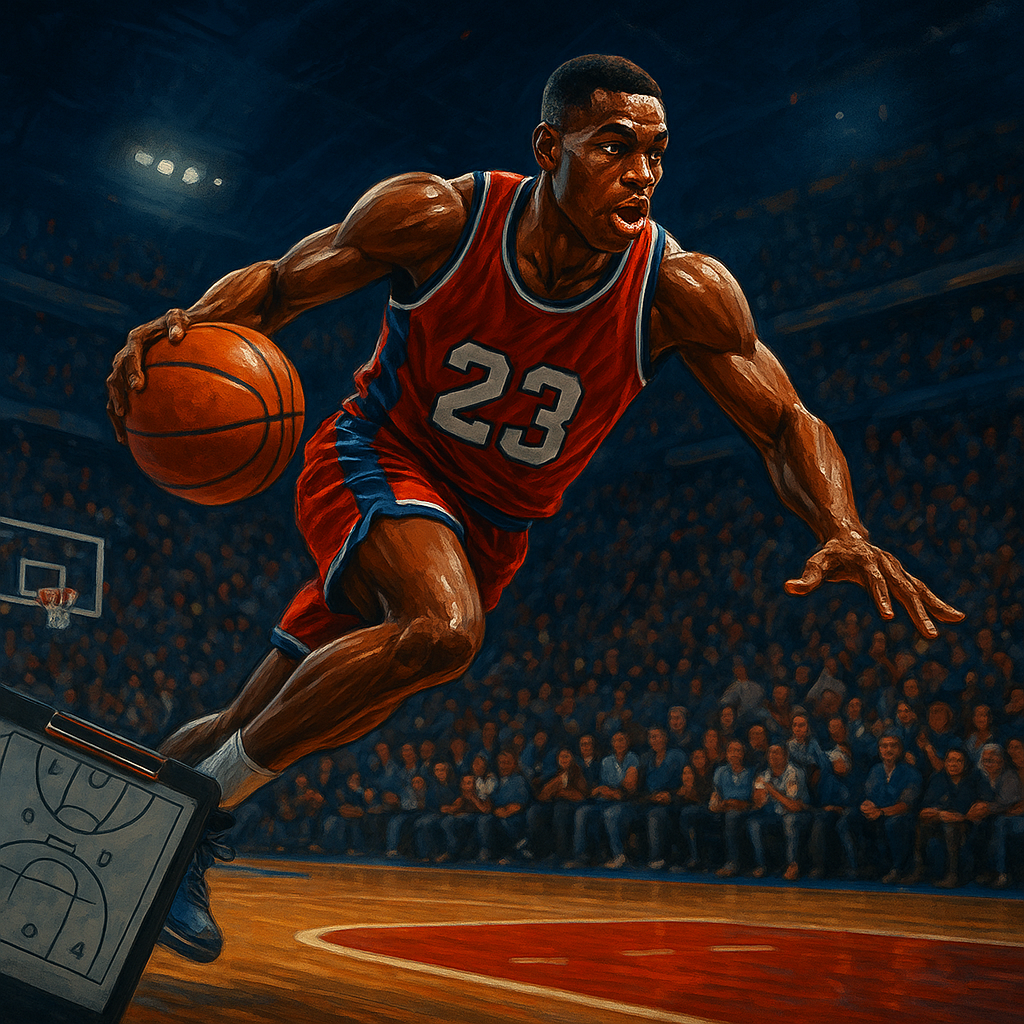
From Hardwood to Headlines: The NBA’s Evolution and the Demand for Expertise
As the 2026 NBA season unfolds, the league stands at an unprecedented intersection of technology, athleticism, and strategy. The modern NBA player is no longer just a physical specimen; they are a chess player on the hardwood, leveraging data analytics, biomechanics, and global scouting to outperform opponents. This transformation demands not only exceptional talent but a mastery of nuanced, expert-level tactics.
Consider this: in the 2025–26 season, the average pace of play has increased by 8% compared to a decade ago, while three-point attempts have surged by 23%, according to league statistics. These figures underscore a game that is faster, more perimeter-oriented, and intensely data-driven. To thrive, players, coaches, and even fans must deepen their understanding of the sport’s evolving strategic fabric.
This article distills the latest expert insights, blending historical context, cutting-edge trends, and actionable advice for those aiming to elevate their NBA understanding or performance. Whether you’re a rising player, a seasoned coach, or an avid analyst, these tips are essential for navigating the league’s current and future landscape.
Building Blocks: How Modern NBA Strategies Have Emerged
The NBA’s strategic revolution did not happen overnight. Its roots trace back to the early 2000s, when analytics pioneers began challenging traditional basketball wisdom. The "Moreyball" era, named after former Houston Rockets GM Daryl Morey, championed three-point shooting and shot efficiency, setting the stage for today’s perimeter-heavy offenses.
Fast forward to the present, and the game has embraced a multi-dimensional approach combining pace, space, and versatility. Players like Luka Dončić and Jalen Green exemplify the hybrid skill sets coveted today—capable of creating their own shot, facilitating offense, and defending multiple positions. Meanwhile, coaching staffs harness advanced video breakdowns and AI-powered scouting tools to craft game plans that adjust in real time.
Defensively, teams have shifted towards switch-heavy schemes and zone hybrids to counteract the barrage of three-point attempts and dynamic offenses. This requires players to possess both physical agility and high basketball IQ to anticipate and react effectively.
"The game’s evolution is a testament to how innovation shapes success. Understanding the why behind each strategy is as crucial as the execution itself." — Jason Michaels, NBA Analyst
Data-Driven Decisions: Leveraging Analytics to Gain a Competitive Edge
The infusion of analytics into basketball strategy is now ubiquitous. Teams invest millions in data scientists and performance analysts who translate raw numbers into actionable insights. Here are the core areas where data is reshaping NBA expertise:
- Shot Selection Optimization: Players are coached to focus on high-value shots—three-pointers, shots at the rim, and free throws—while minimizing mid-range attempts, which have statistically lower expected points per shot.
- Load Management and Injury Prevention: Wearable technology tracks player exertion and biomechanics, informing rest schedules that maximize longevity without sacrificing competitive edge.
- Defensive Matchups: Advanced metrics assess opponents’ tendencies, allowing coaches to deploy defenders who neutralize key scorers based on historical data.
- In-Game Adjustments: Real-time data feeds enable coaching staff to tweak rotations, plays, and defensive schemes dynamically.
For players aspiring to reach elite levels, understanding these data principles is vital. Beyond raw talent, a player’s ability to interpret and act on data-driven feedback can accelerate growth and impact.
"Analytics have democratized excellence. Players who embrace data are no longer just athletes; they’re strategists on the court." — Dr. Emily Harper, Sports Scientist
2026 Innovations: How Technology is Shaping NBA Performance
The 2026 NBA season is marked by breakthroughs in technology-driven training and game preparation. Teams now employ virtual reality (VR) simulations to immerse players in game scenarios without physical strain. This allows for mental reps on opponent tendencies, play recognition, and improving decision-making speed.
Biomechanical sensors embedded in uniforms provide continuous feedback on player movement efficiency, enabling precision tweaks to shooting form or defensive stance. Moreover, AI-powered video analysis platforms parse thousands of hours of game footage, highlighting subtle tendencies such as micro-movements that precede a drive or shot fake.
Off the court, nutrition and recovery science have advanced with personalized diet plans based on genetic markers, optimizing energy levels and recovery times. This holistic approach to athlete management is contributing to historically high levels of performance and career longevity.
Notably, the integration of these technologies is not limited to star players or top franchises. Even mid-tier teams are leveraging affordable tech solutions, narrowing competitive gaps.
According to league insiders, these developments are part of a broader shift that will redefine talent evaluation and player development in the coming years.
Expert Techniques: Mastering Skills That Define NBA Success
Beyond technology and analytics, certain fundamental skills remain cornerstones of NBA excellence. Experts highlight five critical areas that players should focus on to elevate their game in 2026:
- Spatial Awareness and Court Vision: Elite players anticipate teammates’ and opponents’ movements, creating scoring opportunities and disrupting defenses.
- Versatility in Offense and Defense: The ability to guard multiple positions and score from various spots on the floor is increasingly valuable.
- Shooting Consistency Under Pressure: Maintaining form and composure in clutch moments is a hallmark of championship-level players.
- Physical Conditioning with a Focus on Agility: Quick lateral movements and explosive first steps differentiate starters from role players.
- Effective Communication: Vocal leadership on defense and in transition enhances team cohesion and responsiveness.
Training regimens now incorporate cognitive drills alongside physical workouts, fostering mental toughness and rapid decision-making. Coaches emphasize film study, encouraging players to learn from both their own performances and opponents’ tendencies.
For young athletes and coaches, adopting these expert techniques can accelerate development and increase the likelihood of success at the highest level.
Case Studies: Teams and Players Exemplifying Expert-Level Mastery
The 2026 NBA season offers vivid illustrations of expert strategies in action. The Boston Celtics, for example, have revolutionized their defensive approach by integrating AI-driven matchup analytics with veteran leadership. This hybrid strategy has led to a league-best defensive rating and a top seed in the Eastern Conference.
On the player front, Phoenix Suns’ guard DeAndre Sutton exemplifies the modern NBA guard archetype—combining high basketball IQ with versatile skill sets. Sutton’s mastery of pick-and-roll scenarios, coupled with elite three-point shooting, has made him a focal point of Phoenix’s offense and a nightmare for defenders.
The Miami Heat’s championship run in 2025 serves as another compelling example. Their core values of discipline, resilience, and adaptability, paired with advanced tactical preparation, propelled them past more athletically gifted opponents. This story is profiled in depth in our article How Core Values Propelled an NBA Team to Championship Glory. It underscores the synergy between intangible leadership and concrete strategic planning.
These case studies demonstrate that expertise in the NBA is multi-faceted, blending data, skill, mindset, and culture.
Looking Ahead: What NBA Experts Predict for the Game’s Future
The trajectory of the NBA suggests a continued fusion of technology, analytics, and human skill. Experts forecast the following trends shaping the next decade:
- Enhanced Player Personalization: Tailored training programs and AI-driven coaching will become standard, optimizing individual strengths and mitigating weaknesses.
- Expanded Global Talent Pipeline: Continued international scouting and development academies will diversify playing styles and tactical approaches.
- Augmented Fan Engagement: Interactive technologies and deeper analytics will transform how fans consume and understand the game.
- Rule Innovations: To balance entertainment and competitive integrity, the league may introduce changes that further emphasize pace and scoring.
For those committed to mastering NBA basketball, staying abreast of these developments and cultivating adaptability will be essential.
Players and coaches who integrate holistic skill development with data literacy and technological tools will define the future of the game.
Those interested in a comprehensive view of these ongoing changes can explore our coverage in Inside the NBA’s 2026 Revolution: Tech, Talent, and Tactical Shifts, which offers extensive expert commentary and analysis.