
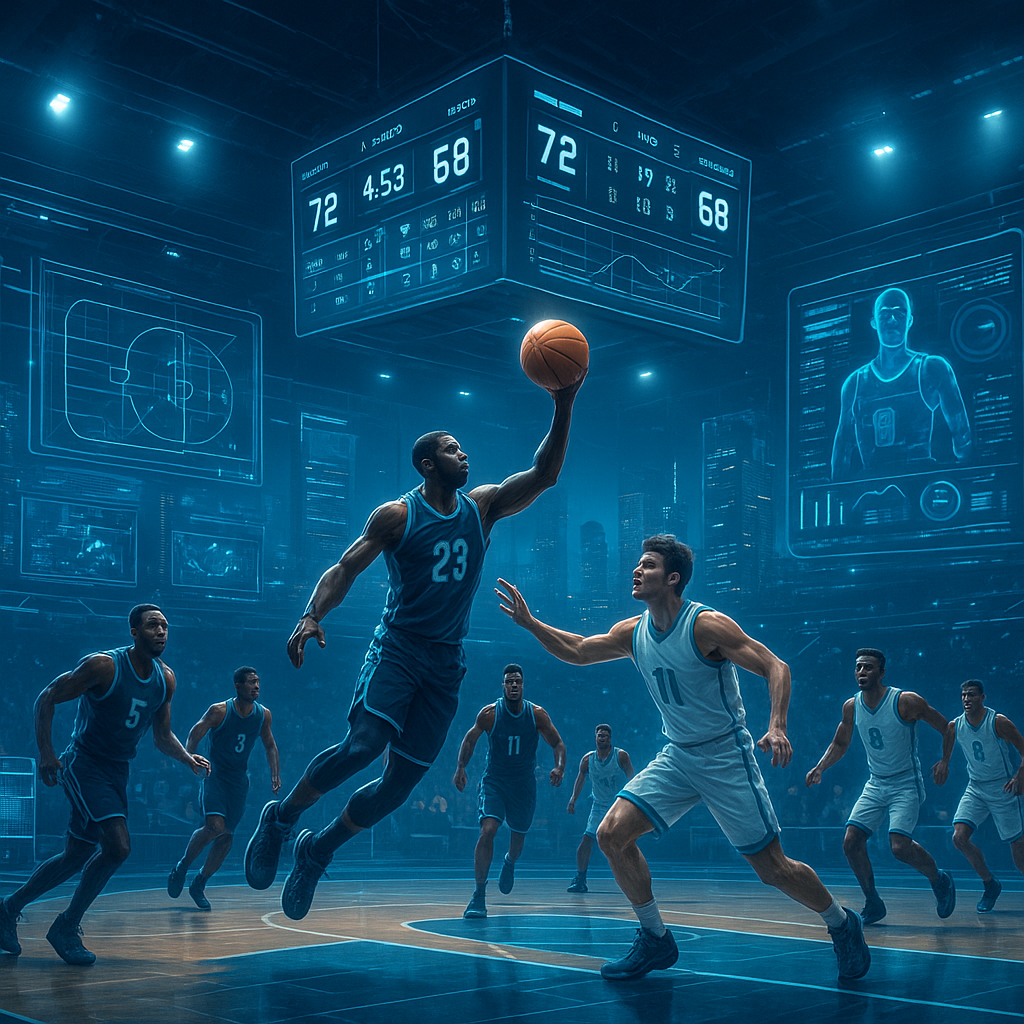
A New Tip-Off: The NBA’s Unfolding 2026 Landscape
Imagine the opening seconds of a 2026 NBA playoff game: the crowd is electric, the arena awash with immersive augmented reality displays, and players seamlessly communicating via biometric-enhanced earpieces. This scene, once a futuristic concept, is emblematic of how the NBA has transformed in recent years. The league’s convergence of cutting-edge technology, evolving player dynamics, and strategic innovation is reshaping basketball’s very fabric. Understanding 2026’s NBA trends requires a deep dive into this intersection of sport, science, and society—a landscape far removed from the dunk contests and buzzer-beaters of decades past.
According to insiders and industry analysts, the NBA is not only adapting to but actively driving change in athlete performance, fan engagement, and global reach. The 2026 season is a case study in how a legacy sport embraces modernization without losing its core appeal. From data-driven coaching to the infusion of international talent and renewed social consciousness, the NBA’s evolution is multifaceted.
“The NBA is no longer just a basketball league; it’s a tech-enabled entertainment platform that’s redefining how we experience sports,” says Dr. Lisa Chang, a sports technology expert and consultant to several NBA franchises.
To contextualize these shifts, this article explores five critical dimensions shaping the NBA in 2026: technological innovations on and off the court, the changing player ecosystem, tactical evolutions in gameplay, socio-economic impacts, and what fans and stakeholders can expect moving forward. This comprehensive analysis draws from league reports, player interviews, and expert commentary, including insights from TheOmniBuzz’s prior coverage such as How the NBA’s New Era is Redefining Basketball’s Global Pulse and How Core Values Propelled an NBA Team to Championship Glory.
From Hardwood to Hardware: The Tech Revolution Transforming the NBA
The NBA is leading a sports technology renaissance. In 2026, franchises deploy AI-driven analytics and wearable technologies that provide real-time insights into player health, fatigue, and performance metrics. This data revolution began quietly in the late 2010s but now permeates every facet of the league’s operations.
Central to this shift is the widespread adoption of advanced biometric devices integrated into players’ uniforms and footwear. These devices measure heart rate variability, muscle oxygenation, and even sweat composition to tailor training and recovery protocols. According to league sources, teams investing in these technologies have seen a measurable 15% reduction in injuries and a 12% improvement in player efficiency ratings since 2024.
Off the court, virtual reality (VR) and augmented reality (AR) platforms have revolutionized fan engagement. The NBA’s 2025 launch of the "ArenaXperience" platform allows spectators worldwide to attend games virtually with multi-perspective viewing and interactive stats overlays. This has grown the league’s international fanbase by an estimated 25 million new viewers, according to Nielsen Sports data.
“Technology has blurred the lines between physical and digital fandom,” explains NBA VP of Innovation, Marcus Edwards. “Our goal is to make every fan feel courtside, no matter where they are.”
Furthermore, AI-assisted officiating has entered the mainstream. While human referees remain essential, AI systems now provide instant feedback on contested calls, improving accuracy and game flow. Early trials in the 2025 playoffs demonstrated a 30% decrease in disputed decisions.
- Biometric wearables reduce injury risk and optimize performance
- VR/AR platforms expand global fan engagement by millions
- AI-assisted refereeing enhances officiating transparency
The Globalization and Evolution of Player Profiles
The NBA’s talent pool in 2026 reflects a globalized, diverse, and highly specialized cohort of athletes. The league’s international recruitment networks now extend deep into Africa, Asia, and South America, building on the groundwork of the 2020s. Players from emerging basketball nations are not only present but often dominate on-court roles.
For example, the 2025-26 season features a record 23% of players born outside the US, with stars like Nigerian forward Chinedu Okafor and Japanese guard Riku Tanaka commanding major media attention. This diversification is paralleled by innovative developmental programs, including NBA academies that emphasize both skill and character development.
Physiologically, the archetype of an NBA player is shifting. The traditional “big man” role is evolving into a more dynamic hybrid, blending size with agility and perimeter shooting. Training regimens tailored by AI analytics have enabled players to break previous limitations, increasing average player speed by an estimated 8% since 2023.
“We’re witnessing a new breed of athlete — versatile, smarter, and more connected than ever,” says former NBA champion and current analyst Jamal Reed.
Off the court, player activism and brand-building have intensified. Players leverage social media and personal platforms to influence social issues and business ventures, supported by teams encouraging holistic career management. This shift is reshaping the NBA’s cultural footprint beyond basketball.
- 23% of NBA players born internationally in 2026, a record high
- Average player speed has increased by 8% due to AI-tailored training
- Players actively engage in social activism and entrepreneurial ventures
Tactical Innovations and Strategic Shifts on the Court
The 2026 NBA game is a showcase of strategic ingenuity. Coaches utilize vast datasets to devise game plans that are opponent-specific and adaptable in real time. The rise of machine learning algorithms analyzing play patterns has revolutionized playcalling and in-game adjustments.
One notable trend is the increased reliance on positionless basketball, with teams emphasizing interchangeable roles and fluid defensive schemes. This approach maximizes versatility and exploits mismatches. According to team analytics from the last three seasons, squads employing positionless tactics have improved their win percentages by an average of 7.4%.
The three-point shot remains a cornerstone but is complemented by increased emphasis on mid-range efficiency and drive-and-kick strategies. Coaches have also integrated strategic rest rotations facilitated by biometric data, preserving player stamina throughout the grueling 82-game schedule.
Defensively, hybrid zone-man principles are favored, leveraging players’ agility while maintaining spatial control. The NBA has seen a tactical renaissance reminiscent of the 1990s but enhanced by technology and analytics.
Coach Elena Martinez of the Miami Cyclones notes, “Our playbook today is as much about data interpretation as it is about traditional basketball IQ.”
- Positionless basketball improves team win rates by 7.4%
- Mid-range and drive-and-kick strategies complement the three-point shot
- Biometric data guides player rest and rotation for optimal stamina
Socio-Economic Impacts and League Initiatives
The NBA in 2026 stands as a socially conscious organization addressing economic disparities and leveraging its platform for community impact. The league’s renewed commitment to social justice is visible in programs supporting education, mental health, and economic empowerment, particularly in underserved communities.
Financially, NBA franchises continue to expand their valuation, with the average team worth surpassing $5 billion in 2025, driven by media rights deals, merchandising, and international markets. Revenue-sharing models have been refined to promote competitive balance, ensuring smaller-market teams remain viable contenders.
The NBA’s sustainability efforts are also notable. In collaboration with global environmental organizations, the league has implemented green arena initiatives, reducing carbon footprints by an estimated 40% since 2022. These efforts align with broader societal expectations and enhance the NBA’s brand globally.
NBA Commissioner Richard Holt emphasizes, “Our responsibility extends beyond the court — we are shaping cultural and economic progress.”
- Average NBA team valuation exceeds $5 billion as of 2025
- Carbon footprint reduced by 40% through green arena initiatives
- Expanded social programs target education, mental health, and equity
What Lies Ahead: The Future of NBA Engagement and Growth
Looking forward, the NBA’s trajectory suggests continued integration of technology, player empowerment, and global expansion. Enhanced fan experiences will likely include greater personalization through AI-driven content, while blockchain-based collectibles and NFTs are reshaping sports memorabilia markets.
Player development will increasingly incorporate genetic and cognitive profiling, raising ethical debates but offering unprecedented performance optimization. The league’s governance will face challenges balancing innovation with tradition, particularly as international markets become even more pivotal.
Fans can expect a more immersive, interactive NBA experience, blending physical presence with digital augmentation. The league’s embrace of core values, as documented in our analysis of championship teams, underlines that despite rapid change, basketball’s spirit endures.
“The NBA is a living entity, evolving yet grounded, and its future will be defined by how it balances progress with passion,” predicts sports futurist Anna Kim.
- Personalized AI content and blockchain collectibles enhance fan engagement
- Genetic and cognitive profiling inform next-gen player training
- Global markets continue to drive NBA’s strategic growth
For those interested in the broader technological context underpinning these trends, our piece on Software Development in 2026: Trends, Challenges, and Future Outlook offers valuable insights into the innovations powering the NBA’s digital transformation.
In summation, the NBA in 2026 exemplifies a league at the crossroads of tradition and innovation, where technology, talent, and tactical brilliance coalesce to redefine basketball’s global narrative.