If your wrists ache during push-ups, curls, or a plank, you already know how quickly a workout can turn into a chore. Many people in the USA push through the discomfort, or they quit the exercises they enjoy. Neither is a good long-term plan.
Leather workout gloves with wrist support are one option people often try. They combine grip protection with a gel pad and an adjustable wrap, so they cushion the hand and steady the joint at the same time. But are leather gloves with a gel pad and wrist wrap good for weak or injured wrists? The honest answer is “often yes, but not for every condition.”
This guide explains how these gloves work, what features matter, who they suit, and who should look at other options. If your pain is severe or getting worse, please see a doctor or physical therapist first.
Understanding Leather Workout Gloves with Wrist Support
Standard gym gloves mostly protect your palms from calluses. Leather workout gloves with wrist support are built for a different job: they reduce strain on the joint itself.
A typical supportive design has three parts:
- A gel pad that cushions the palm and heel of the hand
- A wrist wrap that you tighten to your comfort level
- A leather palm and body that resists wear and gives a firm grip
Together, these help limit extreme wrist bending and take pressure off sore spots. That matters during weight-bearing moves, where your wrist is stretched back while carrying your body weight.
Weak wrists vs. injured wrists
These are not the same problem, and the right solution depends on which one you have.
- Weak or sore wrists often come from overuse, limited mobility, or being new to exercise. Light support and cushioning can make workouts more comfortable.
- Injured wrists (sprains, tendonitis, arthritis flare-ups) need more care. Gloves can be part of the plan, but a professional should guide your recovery.
Important Features to Consider
Not every wrist wrap workout glove is built the same. Here is what is worth checking before you buy.
Gel Pad Shape and Thickness
A thick pad gives more cushioning but can keep your palm away from the bar or floor. A slimmer, contoured pad allows more palm contact, which many people prefer for gripping equipment or for yoga and Pilates.
Adjustable Wrist Wrap
An adjustable wrap lets you decide how snug the support feels. On heavy days you can tighten it, and on lighter days you can loosen it. That flexibility is far more useful than a fixed fit.
Material and Comfort
Leather is durable and gives a secure grip. Pairing it with stretch fabric helps the glove move with your hand instead of feeling stiff. A moisture-absorbing liner is also a practical extra, since sweaty palms make any glove annoying to wear.
Correct Sizing
A glove that is too loose will not support anything, and one that is too tight can become uncomfortable fast. Always check the manufacturer’s size chart before ordering.
Different Types of Wrist Support Options
Gloves are only one way to support a sore wrist. Here is how the common options differ.
- Wrist wraps and straps: Simple and inexpensive, but they do nothing for palm pressure or grip.
- Rigid braces: Offer strong restriction, which is useful in some medical situations, but they limit movement and are awkward during workouts.
- Padded gloves without a wrap: Protect your palms but give little joint stability.
- Gel-padded gloves with a wrist wrap: Combine cushioning and adjustable support in one piece.
- Yoga wedges: Raise the heel of the hand to reduce wrist extension, though they are a separate accessory and not a glove.
Comparison Table: Which Support Style Fits You?
| Option | Palm Cushioning | Adjustable Wrist Support | Best For |
|---|---|---|---|
| Basic wrist wrap | No | Yes | Light joint support during lifting |
| Rigid brace | No | Limited, restrictive | Medical situations guided by a professional |
| Standard gym gloves | Light | No | Calluses and grip |
| Leather gloves with gel pad and wrist wrap | Yes | Yes | Everyday workouts with mild wrist discomfort |
| Yoga wedges | Indirect | No | Yoga and floor-based poses |
How to Choose the Right Option
Start with your actual problem, not the product.
- Identify your main trigger. Is it weight-bearing, gripping, or repeated motion?
- Think about your workout style. Lifting, yoga, Pilates, and bodyweight training all load the wrist differently.
- Check what the product is not recommended for. Honest brands tell you this. If a glove is wrong for your condition, move on.
- Get the size right. Measure your hand and compare it against the size chart.
- Ask a professional if you are unsure. A physical therapist can tell you whether support is enough or whether you need further treatment.
Why Choose Wrist Assured Gloves?
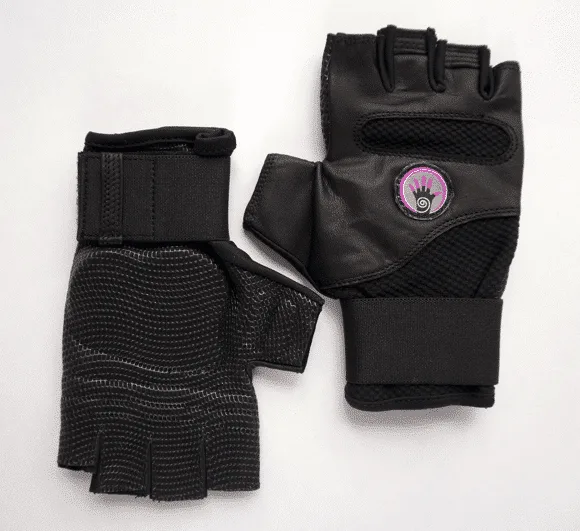
Wrist Assured Gloves (WAGs) makes workout gloves designed around wrist and thumb comfort. One of its products, the WAGs Fusion, matches the topic of this article closely.
According to the product page, the WAGs Fusion is made from leather and Lycra. It pairs a slimmer contoured gel pad with an adjustable wrist wrap, plus extra padding at the palm, knuckles, and thumb. The shorter, thinner pad allows more palm contact when you grip equipment or bear weight on your hands. It also includes an absorbent liner and comes in black, in small, medium, and large. The price listed at the time of writing is $64.95.
The brand lists the Fusion as a good choice for:
- General wrist pain or discomfort
- Joint protection and prevention
- Basal thumb joint pain
- Tendonitis
- Arthritis
- Joint laxity (pre- and post-partum)
It is not recommended for carpal tunnel syndrome or chronic swelling, because of the elastic compression around the wrist. That clarity is useful, because the right glove for one wrist problem can be the wrong one for another.
Practical Tips for Using Supportive Gloves Safely
- Warm up first. Gentle wrist circles and light stretches prepare the joint.
- Do not overtighten the wrap. It should feel supportive, not restrictive.
- Start lighter than usual. Let the wrist adapt before returning to full loads.
- Adjust your technique. Keep your wrist stacked over your forearm during presses and planks when you can.
- Stop if pain sharpens. Support is not a license to push through an injury.
- Rest and recover. Gloves help during activity, but healing still needs time.
Final Thoughts
So, are leather gloves with a gel pad and wrist wrap good for weak or injured wrists? For mild to moderate discomfort, tendonitis, arthritis, or general joint protection, they can make exercise noticeably more comfortable. The combination of cushioning and adjustable support is what makes them more practical than a basic wrap alone.
They are not a cure-all, though. Conditions such as carpal tunnel syndrome or chronic swelling may call for a different approach, and any ongoing pain deserves a professional opinion.
Frequently Asked Questions
1. Can leather workout gloves with wrist support help with wrist pain?
They can help reduce strain and pressure during exercise, especially for general discomfort, tendonitis, and arthritis. They do not treat the underlying cause, so persistent pain should be checked by a healthcare professional.
2. Are wrist wrap workout gloves good for carpal tunnel syndrome?
Not always. The WAGs Fusion page specifically says the glove is not recommended for carpal tunnel syndrome or chronic swelling because of the elastic compression around the wrist. Ask your doctor before choosing any glove if you have either condition.
3. What is the difference between a gel pad glove and a standard gym glove?
A standard gym glove mainly protects the palm and improves grip. A gel pad glove with a wrist wrap also cushions the hand and adds adjustable support to the joint.
4. Will a gel pad make it harder to grip weights?
It can with very thick pads. A slimmer, contoured gel pad, like the one described for the WAGs Fusion, is designed to allow more palm contact when gripping equipment.
5. How do I know which size to order?
Use the manufacturer’s size chart and measure your hand carefully. The WAGs Fusion comes in small, medium, and large, with a size.