Setting the Stage: A Packed Convention Center and a Race Against Time
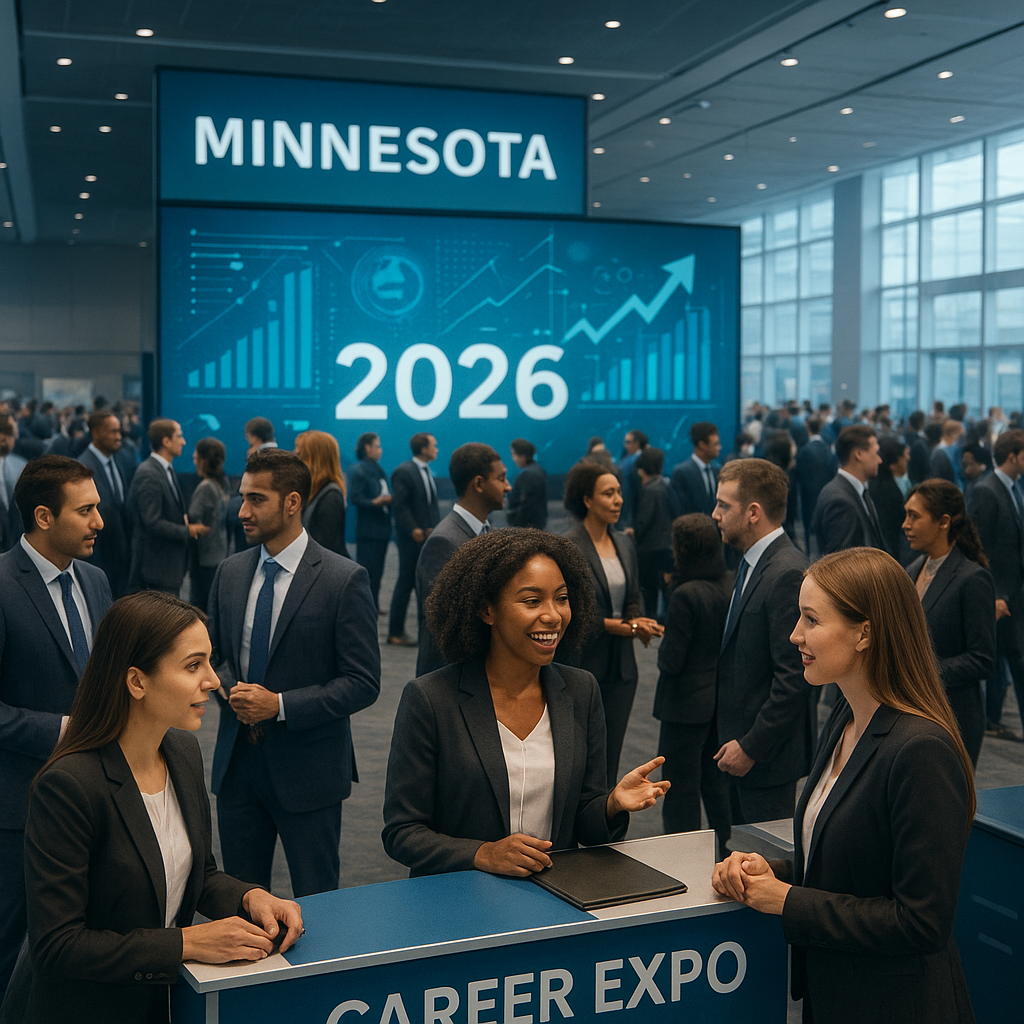
On a crisp November morning in Minneapolis, the sprawling halls of the Minnesota Career Expo buzzed with palpable urgency. Thousands of eager job seekers lined up at the doors hours before opening, clutching resumes and digital portfolios in hand. Employers from sectors as diverse as healthcare, manufacturing, technology, and education had set up booths, ready to engage in rapid-fire interviews. The scene was a vivid microcosm of the 2026 job market’s intense competitiveness.
With the national unemployment rate hovering near a historic low of 2.8%, according to recent Bureau of Labor Statistics figures, Minnesota’s labor market reflected a microcosm of this tightness. Employers face unprecedented challenges filling roles, while candidates are overwhelmed by choices yet struggle to find the right fit. The Minnesota Career Expo, now in its seventh year, has emerged as a vital conduit to streamline these connections and accelerate hiring decisions.
“The expo is not just a job fair; it’s a strategic matchmaking platform designed for speed and precision in hiring,” explained Sarah Jensen, Director of Workforce Development at the Minnesota Department of Employment and Economic Development.
Roots of the Hiring Crunch: Economic Shifts and Workforce Evolution
To understand the expo’s growing significance, one must trace the economic currents driving Minnesota’s labor market dynamics. Over the past decade, Minnesota has experienced a transformation fueled by emerging technologies, demographic shifts, and evolving industry demands. The state’s historically robust manufacturing base has been supplemented—and in some cases supplanted—by tech-driven sectors like renewable energy, AI development, and advanced healthcare services.
Yet the workforce pipeline has struggled to keep pace. A 2025 report from the Minnesota Chamber of Commerce highlighted a critical skills gap: nearly 40% of employers reported unfilled vacancies due to the lack of qualified applicants. Compounding this, the aging Baby Boomer population’s retirement wave accelerated in early 2026, intensifying competition for mid-level and skilled workers.
Additionally, the post-pandemic hybrid work culture reshaped candidate expectations. Job seekers prioritize flexibility, career growth, and purpose-driven roles, forcing employers to rethink traditional recruitment and retention strategies. The Minnesota Career Expo has adapted accordingly, incorporating virtual engagement tools alongside in-person events to bridge these gaps.
“Employers who fail to innovate their hiring approaches risk falling behind in attracting top talent,” noted workforce strategist David Lin at the 2026 Minnesota Economic Forum.
Data-Driven Success: Expo’s Impact on Accelerating Hiring Processes
The Minnesota Career Expo’s strategic design leverages data analytics, targeted outreach, and streamlined interview scheduling to maximize hiring efficiencies. According to the expo’s 2026 impact report, over 75% of participating companies filled at least 60% of their open positions within three months following the event. This contrasts sharply with the statewide average time-to-fill metric of 45 days for similar roles.
Key features driving these outcomes include:
- Pre-event AI Matching: Candidates and employers submit profiles that an AI algorithm analyzes to recommend optimal interview pairings, reducing irrelevant interactions.
- On-site Rapid Interviews: Employers conduct back-to-back 15-minute interviews, facilitating quick assessments and immediate next-step decisions.
- Integrated Skill Assessments: Real-time testing booths allow candidates to demonstrate competencies, providing objective data to employers.
- Post-event Follow-ups: The expo’s digital platform supports ongoing communication, scheduling in-depth interviews or onboarding steps.
These innovations resonate with Minnesota’s diverse economy. For instance, the healthcare sector, which accounts for nearly 20% of the state’s employment, has utilized the expo to combat nursing shortages through accelerated credential verification and targeted outreach to recent graduates.
Similarly, Minnesota’s burgeoning clean energy industry has tapped into the expo to attract specialized engineers and technicians, a critical factor in meeting the state’s ambitious 2030 carbon neutrality goals.
2026 Innovations: Tech Integration and Expanded Outreach
This year’s expo incorporated several cutting-edge innovations responding to evolving labor market demands. Notably, the integration of augmented reality (AR) career simulations allowed candidates to experience job environments virtually before interviews. This feature proved especially popular among younger job seekers exploring unfamiliar industries.
Outreach efforts expanded to include underrepresented communities, with dedicated tracks for veterans, Indigenous workers, and individuals re-entering the workforce. Partnerships with local nonprofits and educational institutions amplified these initiatives, ensuring inclusivity remained central.
Moreover, hybrid event capabilities enabled remote participation for those unable to attend in person, broadening the talent pool. Employers reported a 30% increase in qualified candidates through virtual channels compared to 2025.
“The future of hiring lies in blending human connection with technology,” asserted expo coordinator Maria Lopez. “Our goal is to create accessible pathways for all candidates while giving employers precise tools to find the right fit quickly.”
These developments align with wider national trends documented by recent studies from the National Association of Workforce Boards, spotlighting the importance of experiential and inclusive hiring practices.
Voices from the Frontline: Employer and Candidate Perspectives
Insights from participants illuminate the expo’s transformative impact on recruitment. John Meier, Talent Acquisition Lead at a Minneapolis-based biotech firm, shared his experience: “The expo condensed what would have taken months into days. We connected with candidates who were not only qualified on paper but enthusiastic about our mission.”
From the candidate side, Anika Shah, a recent computer science graduate, praised the expo’s efficiency: “I had multiple interviews lined up, and the AR simulations helped me understand roles better than any job description could. It made deciding where to focus my energy much easier.”
These testimonies underscore the expo’s dual value proposition: speeding hiring cycles while enhancing the quality of matches.
Experts emphasize that such events contribute to the broader health of the labor ecosystem by reducing friction and uncertainty in job searches and talent acquisition.
“Career expos like Minnesota’s are vital in this hyper-competitive market; they catalyze connections that traditional platforms often miss,” said labor economist Dr. Renee Thomas.
Looking Ahead: What Minnesota’s Career Expo Signals for 2027 and Beyond
As 2026 draws to a close, the success of Minnesota’s Career Expo offers strategic lessons for workforce stakeholders nationwide. The event’s ability to adapt rapidly to market conditions, embrace technology, and foster inclusivity creates a replicable model for other regions facing similar hiring challenges.
Key trends to watch include:
- Increased reliance on hybrid event formats to maximize reach and flexibility
- Enhanced AI-driven candidate-employer matching powered by richer data inputs and behavioral analytics
- Growing emphasis on skill-based hiring over traditional credentials, supported by on-the-spot assessments
- Expansion of sector-specific expos tailored to niche industries with acute talent needs
For Minnesota, sustaining this momentum will require continued investment in workforce development and collaboration across public and private sectors. The expo’s role as a nexus connecting talent and opportunity positions the state favorably as companies compete globally for skilled workers.
The transformative strategies at play here resonate with key insights from How Minnesota’s Career Expo Is Accelerating Hiring in a Cutthroat Job Market and Fast-Tracking Careers: How Minnesota’s Expo Tackles 2026’s Hiring Crunch. These analyses detail how this event is not merely reactive but proactively shaping the future of work in Minnesota and beyond.
In an era defined by rapid economic change, such innovative hiring platforms are indispensable for ensuring that talent finds its rightful place — swiftly, fairly, and effectively.