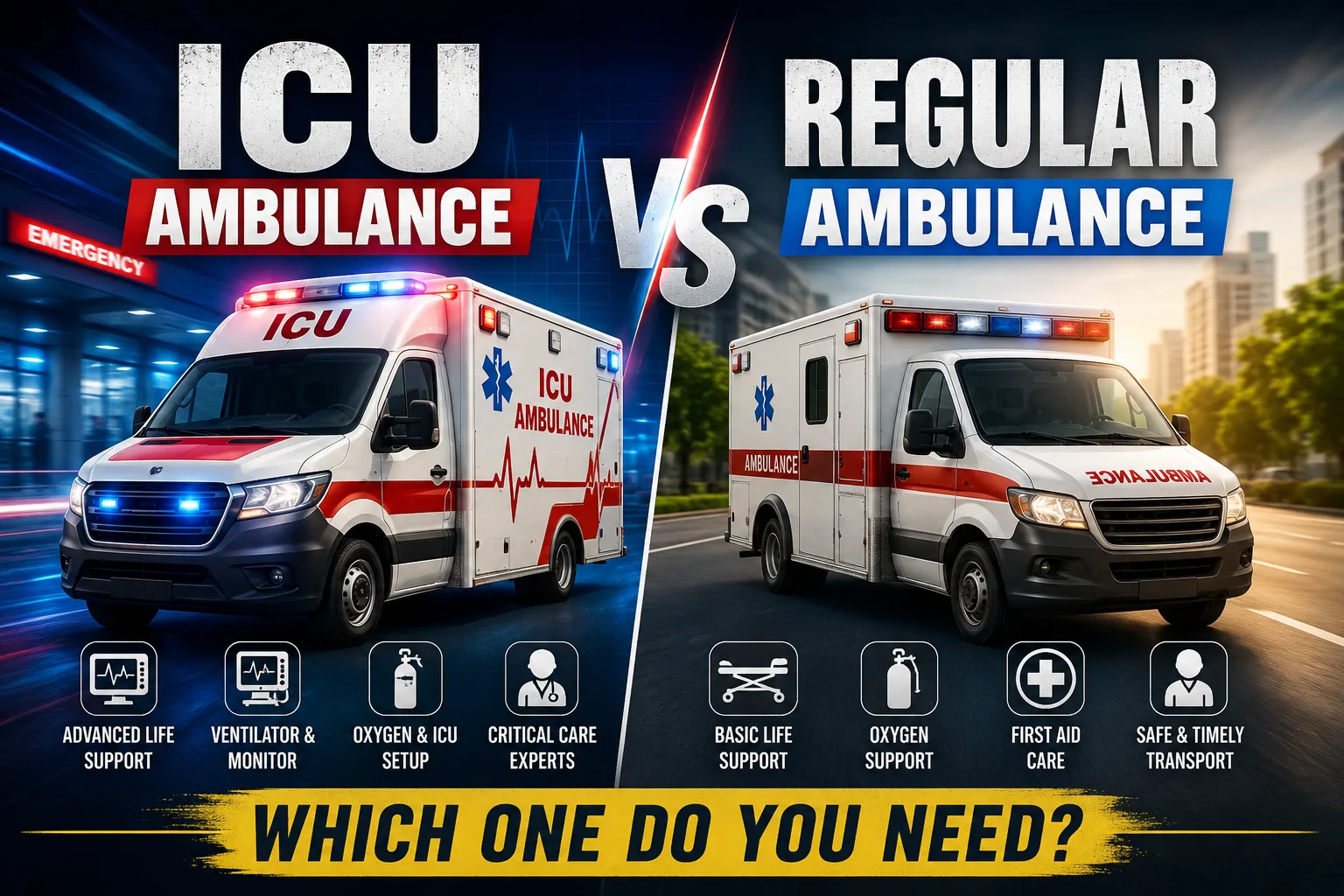
When a patient needs to be transported to a hospital, one of the most common questions families ask is whether they should book an ICU ambulance or a regular ambulance. Many people assume both provide the same service, but there are important differences. Choosing the right type of ambulance depends on the patient's medical condition and the level of care required during transportation.
What Is a Regular Ambulance?
A regular ambulance is mainly used to transport patients who are medically stable. It is suitable for hospital admissions, discharges, routine transfers, or patients who do not require continuous medical monitoring. These ambulances generally include a stretcher, basic first-aid supplies, and enough space for the patient and an attendant.
A regular ambulance is a practical option when the patient's condition is not critical and there is no need for advanced medical equipment during the journey.
What Is an ICU Ambulance?
An ICU Ambulance Service in Dhaka is specially designed for critically ill patients who need advanced medical care while being transported. Unlike a regular ambulance, it is equipped with life-support equipment and is often accompanied by trained medical personnel.
Depending on the provider, an ICU ambulance may include:
- Oxygen support
- Cardiac monitor
- Ventilator
- Suction machine
- Infusion pump
- Pulse oximeter
- Emergency medicines
- Trained paramedic or medical staff
These facilities help ensure that patients continue to receive proper medical support until they reach the hospital.
When Should You Choose an ICU Ambulance?
An ICU ambulance is usually recommended for patients who:
- Require oxygen or ventilator support
- Are unconscious or semi-conscious
- Have suffered a heart attack or stroke
- Have severe breathing difficulties
- Are being transferred from one ICU to another
- Need continuous monitoring during transport
For these patients, advanced equipment and trained medical staff can make transportation much safer.
When Is a Regular Ambulance the Better Choice?
A regular ambulance is generally sufficient if:
- The patient is medically stable.
- No life-support equipment is required.
- The transfer is scheduled in advance.
- The patient is going for routine treatment or hospital discharge.
- Continuous monitoring is not necessary.
Choosing a regular ambulance for stable patients is often more cost-effective while still providing safe transportation.
Things to Consider Before Booking
Before booking any ambulance, explain the patient's condition clearly to the service provider. Ask what type of ambulance they recommend and confirm the available facilities. It is also a good idea to ask whether trained medical staff will accompany the patient if needed.
If you are booking an ICU Ambulance Service in Dhaka, confirm that essential equipment such as oxygen, a ventilator, and monitoring devices are available and in working condition.
Final Thoughts
The choice between an ICU ambulance and a regular ambulance should always be based on the patient's medical needs. A regular ambulance is suitable for stable patients who only require transportation, while an ICU ambulance provides advanced medical support for critically ill patients during the journey.
If you are unsure which option is appropriate, describe the patient's condition to the ambulance provider or consult the treating doctor before making a booking. Choosing the right ambulance helps ensure safer and more comfortable patient transportation during both emergency and planned hospital transfers.