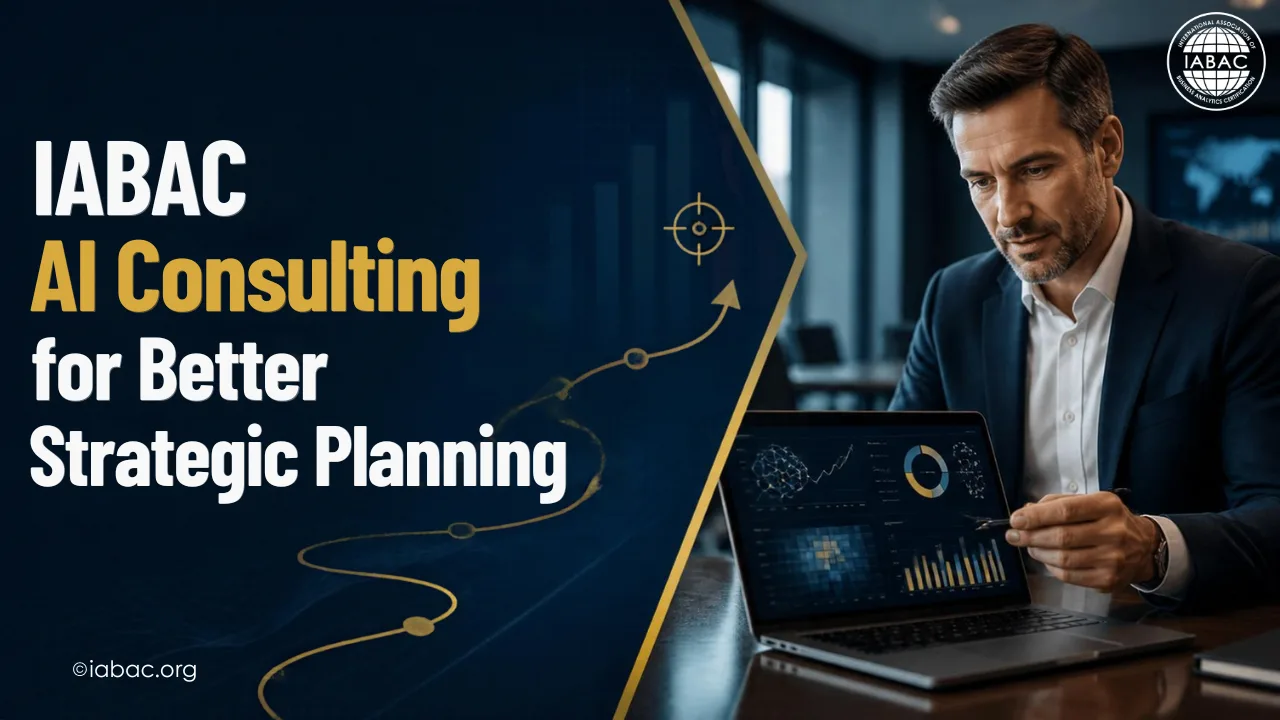
Strategic planning is an important part of running a successful business. Every organization wants to improve its performance, understand customer needs, manage resources effectively, and stay ahead of competitors. However, making the right decisions is not always easy. Businesses often deal with large amounts of data, changing market conditions, and challenges that require careful planning.
This is where IABAC AI Consulting can help businesses explore practical ways to use artificial intelligence (AI) in their decision-making and planning processes. With the right guidance, organizations can identify opportunities, improve existing workflows, and develop strategies that support their long-term goals.
Why Strategic Planning Matters for Businesses
A clear business strategy helps organizations understand where they want to go and how they can get there. Without proper planning, companies may invest in the wrong areas, overlook customer expectations, or struggle to respond to market changes.
Strategic planning involves setting business goals, evaluating current performance, understanding risks, and identifying the resources required to achieve results. It also requires regular reviews to ensure that the business stays on the right track.
Traditional planning methods remain valuable, but they may not always provide the speed and flexibility needed in a competitive business environment. AI can support this process by helping teams analyze information, identify patterns, and explore different possibilities before making important decisions.
How IABAC AI Consulting Supports Better Planning
AI adoption is not simply about introducing new technology. Businesses need to understand where AI can provide real value and how it can fit into their existing operations.
IABAC AI Consulting helps organizations explore AI-related opportunities and consider how these technologies can support their business objectives. A structured approach can help companies move from general ideas to practical implementation plans.
Here are some ways AI consulting can support strategic planning.
1. Making More Informed Business Decisions
Business decisions are stronger when they are supported by reliable information. AI tools can help teams examine sales figures, customer feedback, operational records, and other business data to identify useful patterns.
For example, a retail business may use AI-supported analysis to understand changes in customer demand. This information can help managers review inventory plans, improve product availability, and make more informed decisions about future investments.
With appropriate guidance, businesses can identify suitable AI applications and understand how the results can support their existing decision-making processes.
2. Identifying Opportunities for Business Growth
Growth opportunities are not always easy to recognize. A business may have access to valuable data but lack the right approach to turn that information into useful insights.
AI can help organizations examine customer preferences, market trends, and operational performance. These insights may reveal areas where businesses can improve their services, reach new customer groups, or develop better products.
IABAC AI Consulting can help businesses explore where AI may contribute to these goals and prioritize opportunities based on their needs, resources, and expected outcomes.
The aim is not to adopt AI everywhere. It is to identify the areas where it can make a meaningful difference.
3. Improving Operational Efficiency
Many businesses spend significant time on repetitive tasks, manual reporting, and routine administrative work. These activities can reduce the time employees have available for planning, problem-solving, and customer service.
AI-powered solutions may help automate selected tasks, organize information, and support faster workflows. For example, a company might use AI to summarize reports, categorize customer inquiries, or assist with internal data analysis.
Before introducing these solutions, businesses should review their current processes and identify tasks that are suitable for automation. An AI consulting approach can help organizations evaluate potential use cases, implementation requirements, and expected benefits.
This makes it easier to develop an improvement plan based on actual business needs rather than technology trends alone.
4. Understanding Business Risks
Every business faces risks, including changing customer demand, rising operating costs, supply chain disruptions, and unexpected market developments.
AI-supported analysis can help organizations examine historical information, recognize unusual patterns, and explore possible future scenarios. These insights can contribute to better risk assessment and contingency planning.
However, AI predictions are not always accurate. Their reliability depends on data quality, the methods used, and the conditions being analyzed. Human judgment remains essential when evaluating risks and making important business decisions.
With a well-defined strategy, businesses can use AI as a supporting tool while maintaining appropriate oversight and accountability.
The Importance of Choosing the Right AI Strategy
Not every AI solution is suitable for every organization. A tool that works well for a large enterprise may be too expensive or complex for a small business. Similarly, an organization with limited data may need to improve its data management practices before implementing advanced AI applications.
A practical AI strategy should begin with business priorities.
Companies should first identify the challenges they want to address. These may include reducing manual work, improving customer experiences, analyzing business performance, or supporting faster decisions. Once these priorities are clear, they can evaluate suitable technologies and determine what resources are required.
IABAC AI Consulting can be explored as part of this process, helping organizations consider how AI-related initiatives align with their wider business objectives.
A thoughtful approach also considers employee readiness, data privacy, security, implementation costs, and the need for ongoing monitoring.
Steps to Build a Better AI-Driven Business Strategy
Businesses can follow a structured process to plan their AI initiatives effectively.
Step 1: Define clear business goals
Start by identifying the problems the organization wants to solve. Goals should be specific enough to evaluate progress, such as reducing the time required to prepare reports or improving response times for customer inquiries.
Step 2: Review existing data and processes
Examine the quality of available data, the tools currently in use, and the workflows that could benefit from improvement. This review helps identify gaps that need to be addressed before implementing AI.
Step 3: Identify suitable AI applications
Compare potential solutions based on business requirements, cost, complexity, and expected value. Focus on applications that address a clear problem rather than adopting technology simply because it is popular.
Step 4: Start with a manageable project
A small pilot project allows teams to test an AI solution before making a larger investment. For example, a business could begin by using AI to support report preparation or analyze a specific category of customer feedback.
Step 5: Measure the results
Establish suitable performance indicators before implementation. Depending on the project, these could include time saved, operating costs, error rates, customer satisfaction, or employee productivity.
Step 6: Improve and expand gradually
Use the results of the pilot project to decide what should happen next. If the solution delivers measurable value, the business can consider expanding it while continuing to monitor performance and manage risks.
Following these steps can help organizations make more confident decisions about AI investments and avoid unnecessary spending.
Why Human Expertise Still Matters in AI Consulting
AI can process large volumes of information and assist with complex tasks, but it cannot replace every aspect of business judgment. Strategic decisions often involve company values, employee needs, customer relationships, financial limitations, and long-term priorities.
Human expertise is essential for interpreting AI-generated insights and deciding how to act on them. Business leaders also need to question unexpected results, check the reliability of information, and consider the wider impact of their decisions.
A strong AI consulting strategy combines technology with business knowledge. It helps decision-makers understand what AI can do, where its limitations lie, and how it can support the organization's objectives without creating unnecessary risks.
Measuring the Impact of AI on Business Planning
Introducing AI is only the beginning. Businesses need to evaluate whether their investments are delivering the expected results.
The right measurements depend on the problem being addressed. An organization seeking to improve operational efficiency may monitor processing time and costs. A company focused on customer experience may measure response times, satisfaction scores, and service quality.
Regular reviews also help businesses identify unexpected problems, adjust their approach, and determine whether a particular AI solution remains useful as requirements change.
It is important to consider both measurable financial benefits and broader improvements, such as better access to information, more consistent workflows, and increased employee capacity for higher-value work.
By connecting AI initiatives to clearly defined business outcomes, organizations can make strategic planning more focused and accountable.
Prepare Your Business for the Future With IABAC AI Consulting
AI is creating new possibilities for businesses across industries, but achieving meaningful results requires more than selecting a technology or launching a new tool. Organizations need a clear understanding of their goals, suitable implementation plans, and a way to measure progress.
IABAC AI Consulting offers a starting point for businesses looking to explore AI opportunities, improve their planning processes, and make more informed decisions about technology adoption.
Whether an organization wants to improve operational efficiency, explore AI-powered analysis, or prepare for future business challenges, a structured approach can help turn ideas into practical initiatives.
The best strategy is one that addresses real business needs, considers available resources, and delivers measurable value over time.
If your organization is exploring ways to use AI more effectively, visit the IABAC AI Consulting page to learn more about the available consulting options and take the next step toward better strategic planning.