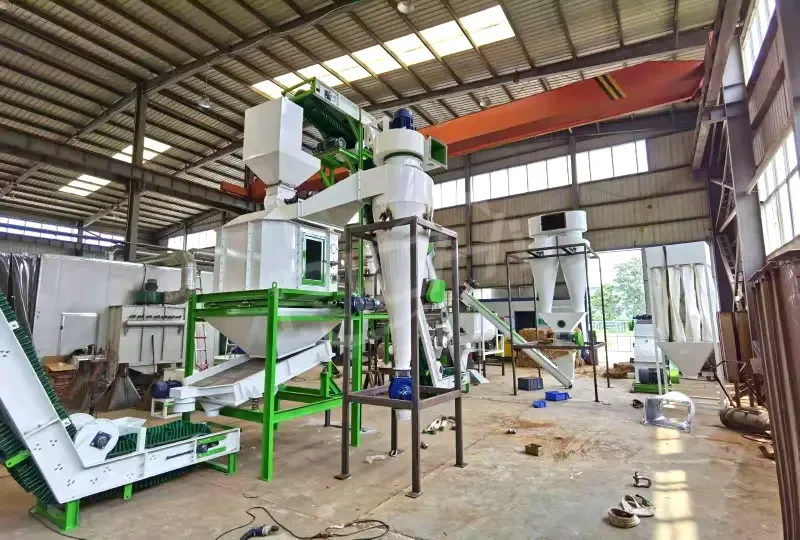

An animal feed factory is an important part of modern agricultural production. It converts grains, oilseed meals, protein ingredients, and other raw materials into balanced feed for poultry, pigs, cattle, and other livestock. As farms become more specialized, feed manufacturers need to consider not only nutritional quality but also production efficiency, equipment reliability, and operating costs. Understanding these factors can help investors make informed decisions when building or upgrading a feed processing facility.
Understanding the Main Production Processes
A typical animal feed factory includes several stages: raw material receiving, cleaning, grinding, batching, mixing, pelleting, cooling, and packaging. Each stage affects the quality and consistency of the final product.
Grinding reduces raw materials to a suitable particle size, making them easier to mix and process. Batching systems measure ingredients according to a predetermined formula, while mixers distribute nutrients evenly throughout the feed. If the factory produces pellets, the prepared mixture is compressed through a pellet mill. The pellets are then cooled and screened to improve stability and remove excessive fines.
Some facilities also operate a premix feed mill, which focuses on blending concentrated nutritional ingredients such as vitamins, minerals, and amino acids. Because these additives are often included in relatively small quantities, accurate weighing and uniform mixing are essential. Appropriate equipment and strict formulation controls help maintain consistent nutritional value across production batches.
Choosing Equipment Based on Feed Requirements
Equipment selection should begin with a clear understanding of the intended feed products and target animals. Poultry feed production often requires precise ingredient dosing, effective mixing, and reliable pellet formation. Cattle feed production may involve more fibrous materials, such as hay and alfalfa, which can require different grinding and processing arrangements.
Investors should also decide whether the factory will produce mash feed, pellets, or both. Mash feed generally requires fewer processing stages because it does not need pelleting and cooling. Pelleted feed, however, can offer advantages in handling, transportation, and feeding consistency, depending on the application.
Before selecting machinery, it is useful to estimate daily demand, planned operating hours, available floor space, and potential future expansion. These details help determine the appropriate capacity of grinders, mixers, conveyors, storage systems, and pellet mills. A well-matched configuration is usually more practical than simply purchasing the largest available equipment.
Evaluating the Cost of a Poultry Feed Plant
One common question among investors is, how much is a poultry feed pellet plant? The answer depends on production capacity, automation level, equipment specifications, building conditions, and local installation costs. A small facility serving a single farm will generally have different requirements from a commercial plant supplying multiple customers.
Related Post: https://commercialpelletmill.com/poultry-feed-plant-price/
The equipment itself is only one part of the total investment. Storage silos, raw material handling systems, electrical infrastructure, dust collection, packaging equipment, transportation, and commissioning may also affect the budget. Investors should account for working capital as well, since raw materials, labor, electricity, and maintenance must be paid for throughout daily operations.
When comparing quotations, buyers should check whether the stated capacity represents the pellet mill's rated output or the actual throughput of the complete production line. Grinding, mixing, conditioning, and cooling can all influence overall productivity. Evaluating the entire process provides a more realistic basis for financial planning.
When Is Mash Feed Production a Suitable Choice?
A livestock mash feed production line can be a practical option for farms and feed manufacturers that do not require pelleted products. The typical process involves cleaning, grinding, accurate batching, mixing, and sometimes screening before the feed is delivered or packaged.
One advantage of mash feed production is its relatively simple equipment configuration. Without a pellet mill and cooling system, the initial investment may be lower, and the process may consume less energy. However, the suitability of mash feed depends on the animal species, feeding method, ingredient characteristics, and transportation requirements.
For example, some poultry operations prefer pellets because they can reduce ingredient separation and make feed handling more convenient. Other livestock systems may use mash or meal-based diets effectively. The decision should therefore be based on nutritional recommendations, farm management practices, and a realistic comparison of production costs rather than equipment price alone.
Conclusion
Building an efficient animal feed factory requires a balanced approach to feed formulation, process design, equipment selection, and cost management. By defining production goals early and evaluating the complete processing workflow, investors can avoid unnecessary expenditure while maintaining consistent product quality.
Pellet line for sale provides feed processing equipment and production-line solutions for different manufacturing requirements. Regardless of the supplier chosen, buyers should compare technical specifications, installation scope, maintenance support, and expected operating performance. A carefully planned facility is better positioned to meet changing market demand and maintain reliable production over the long term.