A well-maintained soakaway drain plays an important role in managing surface water around your property. It helps rainwater drain into the ground, reducing the risk of flooding, standing water, and damage to your home or business.
Like any drainage system, a soakaway requires regular care to keep it working efficiently. Ignoring maintenance can lead to blockages, poor drainage, and costly repairs.
This guide explains how to maintain your soakaway drain, spot early warning signs, and know when to call a professional.
What Is a Soakaway Drain?
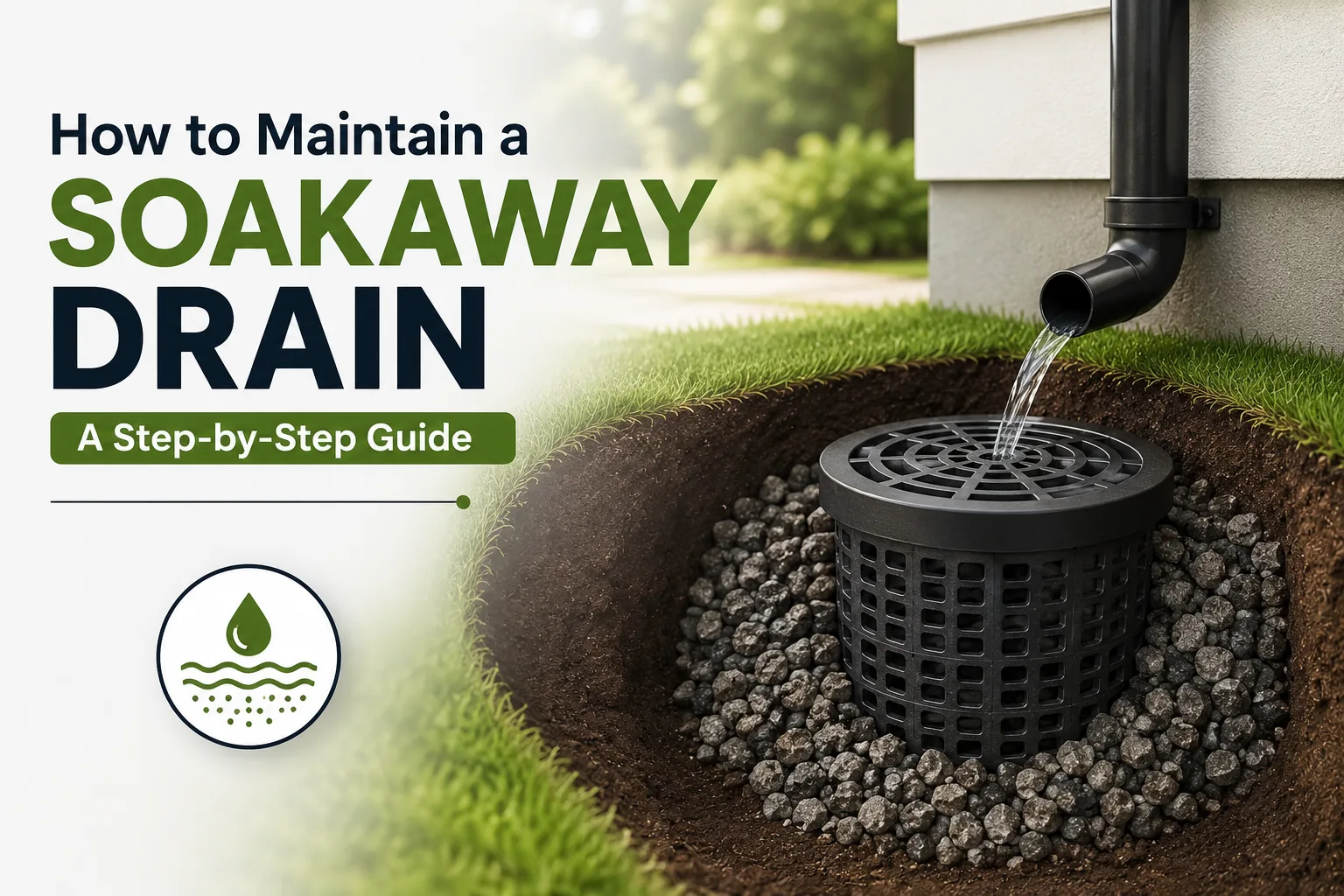
A soakaway drain is an underground drainage system designed to collect and disperse rainwater into the surrounding soil. It is commonly connected to roof gutters, surface water drains, and driveways.
A properly functioning soakaway helps prevent excess water from collecting around your property and reduces pressure on public drainage systems.
Why Regular Maintenance Matters
Routine maintenance keeps your soakaway performing as intended. It also helps prevent expensive repairs and extends the life of the drainage system.
Benefits include:
- Prevents water pooling
- Reduces the risk of flooding
- Improves drainage performance
- Extends the lifespan of the soakaway
- Helps identify problems before they worsen
Step 1: Inspect the Area Regularly
Walk around your property after heavy rainfall.
Look for signs such as:
- Standing water
- Soggy lawns
- Water near foundations
- Slow-draining surface water
These can indicate your soakaway is no longer draining efficiently.
Step 2: Keep Gutters and Downpipes Clean
Leaves, moss, and debris often enter the drainage system through blocked gutters.
Cleaning gutters and downpipes regularly prevents unnecessary debris from reaching your soakaway.
Installing leaf guards can also reduce maintenance.
Step 3: Remove Surface Debris
Keep the area above and around your soakaway clear.
Remove:
- Leaves
- Mud
- Grass cuttings
- Garden waste
This simple step helps surface water flow freely into the drainage system.
Step 4: Watch for Early Warning Signs
Small drainage issues often become major problems if ignored.
Contact a drainage specialist if you notice:
- Persistent puddles
- Bad odours
- Slow drainage
- Overflow during rainfall
- Soil erosion near the soakaway
Early action usually costs less than major repairs.
Step 5: Schedule a CCTV Drain Survey
Many soakaway problems develop underground and remain hidden.
A professional CCTV drain survey allows drainage engineers to inspect the system without excavation.
The survey can identify:
- Blockages
- Pipe damage
- Root intrusion
- Collapsed sections
- Silt build-up
Regular inspections help prevent unexpected failures.
Step 6: Avoid Heavy Loads Above the Soakaway
Do not park vehicles or place heavy structures directly above your soakaway.
Excess weight can compact the surrounding soil and damage underground drainage components.
Keep the area free from unnecessary pressure.
Step 7: Arrange Professional Maintenance
While basic inspections can be carried out yourself, professional maintenance helps keep the system in excellent condition.
Experienced drainage engineers can:
- Remove blockages
- Flush drainage pipes
- Inspect underground components
- Check overall system performance
Routine servicing helps reduce the need for emergency drain unblocking in the future.
Common Signs Your Soakaway Needs Attention
Your soakaway may require repair or maintenance if you notice:
- Water collecting after rainfall
- Slow surface water drainage
- Damp areas around the property
- Unpleasant smells outdoors
- Repeated flooding in the same location
Ignoring these warning signs can increase repair costs.
Does Maintenance Affect Soakaway Installation Cost?
Yes.
Regular maintenance helps extend the life of your drainage system and reduces the likelihood of needing a complete replacement.
Neglecting a failing soakaway can significantly increase the overall soakaway installation cost if a new system becomes necessary.
Preventative maintenance is usually the more cost-effective option.
When Should You Contact a Professional?
Some drainage issues require specialist equipment and expertise.
Consider contacting a local soakaway installation and drainage specialist if:
- Your soakaway repeatedly overflows
- Water does not drain after heavy rain
- You suspect underground damage
- Previous DIY solutions have not worked
Professional drainage companies also provide 24/7 drainage solutions for urgent drainage emergencies.
Why Choose Precise Drainage Solutions?
Maintaining a soakaway correctly helps protect your property from unnecessary water damage.
Whether you need a CCTV drain survey, routine maintenance, repairs, or emergency drain unblocking, Precise Drainage Solutions provides reliable drainage services across the UK.
Experienced engineers can identify issues early and recommend the most effective solution to keep your drainage system working efficiently.
FAQs
How often should a soakaway drain be inspected?
Inspect your soakaway at least once a year and after periods of heavy rainfall. Professional inspections are recommended if you notice drainage problems.
Can a blocked soakaway cause flooding?
Yes. A blocked soakaway prevents rainwater from draining properly, leading to standing water and localised flooding.
Is a CCTV drain survey necessary?
A CCTV drain survey is one of the most accurate ways to detect hidden drainage issues without digging or disrupting your property.
What affects soakaway installation cost?
The cost depends on soil conditions, system size, excavation requirements, accessibility, and the complexity of the installation.
Who should I contact for soakaway problems?
A qualified drainage specialist like Precise Drainage Solutions can inspect, repair, maintain, or install soakaway systems and provide 24/7 drainage solutions when urgent assistance is required.