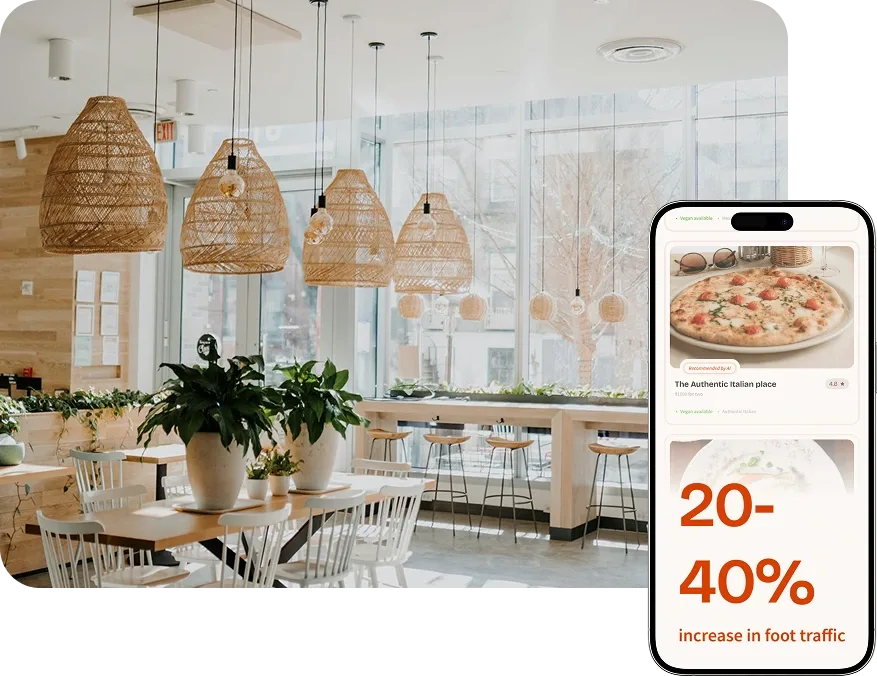
Saturday takes care of itself. The hard nights are Monday through Thursday, when the kitchen is fully staffed and half the tables stay empty. Owners usually respond with discounts, happy hour tweaks, or another round of social posts, and sometimes those help. But there's a quieter lever that most restaurants haven't touched yet. If you want to increase restaurant sales on the nights that matter most, it helps to look at where weeknight diners actually make their decisions.
More and more of them ask an AI tool. Someone leaves work, feels like eating out, and types, "Where's a good place for dinner nearby tonight?" The answer they read becomes the plan.
Why Slow Weeknights Are the Fastest Way to Increase Restaurant Sales
Weekend demand is crowded. Every restaurant is competing for the same limited number of Friday and Saturday reservations. Weeknight demand works differently. The diners are fewer and less planned, so they lean on quick recommendations instead of long comparisons.
That's an advantage for any restaurant that appears in those quick answers. A single recommendation at the right moment can fill a table that would otherwise stay empty, and the cost of serving one more guest on a quiet Tuesday is far lower than the cost of an ad campaign. Weeknights are where a small improvement in visibility shows up as visible, countable covers. It also helps with planning. Steadier midweek traffic makes staffing and ordering easier, which smooths out costs across the whole week, not just the busy nights.
How Perplexity Decides Which Restaurants to Recommend
Perplexity behaves like a fast research assistant. Instead of listing links, it reads current web sources, writes a short answer, and cites where each claim came from. When a diner asks for a good weeknight dinner spot, it isn't tasting your food. It's judging which restaurants have information it can read, trust, and quote.
This is why two restaurants with similar quality can get very different results. The one whose menu, hours, and description are clear and consistently confirmed across the web gets named. The one with outdated details or a vague homepage gets skipped, and nobody ever knows it was in the running.
How to Rank in Perplexity: The Four Signals Behind Every Recommendation
The good news is that how to rank in Perplexity comes down to four signals the platform consistently rewards: content freshness, domain authority, logical structure, and trust signals from outside sources.
Freshness matters because restaurants change constantly. A page still showing last season's menu suggests the information may no longer be reliable. Structure matters because a homepage that opens with one plain sentence about your cuisine, neighborhood, and atmosphere is far easier to quote than one that buries those facts. Authority and trust are built beyond your own site, through accurate directory listings, consistent reviews, and mentions from local writers and guides. When all of those agree with each other, the platform has a good reason to name you. A simple self-test is to read your own homepage as a stranger in a hurry. If you can't tell within ten seconds what kind of food you serve, where you are, and whether you're open tonight, an AI tool reading at speed will struggle with the same questions.
Myth vs Reality: What Owners Assume About AI and Weeknight Traffic
Many owners assume AI recommendations only matter for tourists. In reality, locals use them too, especially on spontaneous weeknights when they haven't planned anything. Others believe good food and good reviews are enough. Reviews help, but AI tools can only recommend what they can read and verify, so a well-written, current website adds a lot. Some feel this is only for chains with marketing teams, yet independent restaurants can update a menu page in an afternoon, which is a real speed advantage. And plenty of people expect a one-time fix to last forever, even though freshness is one of the signals Perplexity values most, so pages need regular attention.
A Week of Small Moves: Monday to Sunday
You don't need a big project to start. Spread the work across one ordinary week:
- Monday: Ask Perplexity, ChatGPT, and Gemini the questions weeknight diners ask, such as "best dinner near me tonight," and note who appears instead of you
- Tuesday: Rewrite your homepage opening so the first sentence names your cuisine, neighborhood, and atmosphere
- Wednesday: Update your menu page with today's dishes, prices, and hours, and add a visible "last updated" date
- Thursday: Make your name, address, phone number, and description match exactly across your website, Google Business Profile, and every directory
- Friday: Ask one local food writer or neighborhood guide whether they'd feature or list your restaurant
- Weekend: Rest, and enjoy the crowd that was coming anyway
Repeat the Monday check a month later. Seeing your name appear where it was missing before is the clearest sign the effort is working.
What Changes When Quiet Nights Start Filling Up
None of this replaces good cooking or friendly service. It simply makes sure the people already looking for a place to eat can actually find you. Restaurants that keep their information fresh, structured, and consistent give AI tools a reason to say their name, and weeknight tables are usually the first place that effort shows up.
Start with one small step this week. By the time next Tuesday comes around, your restaurant could be part of the answer instead of part of the silence.