Unveiling SaaS’s Transformative Role in eCommerce Today
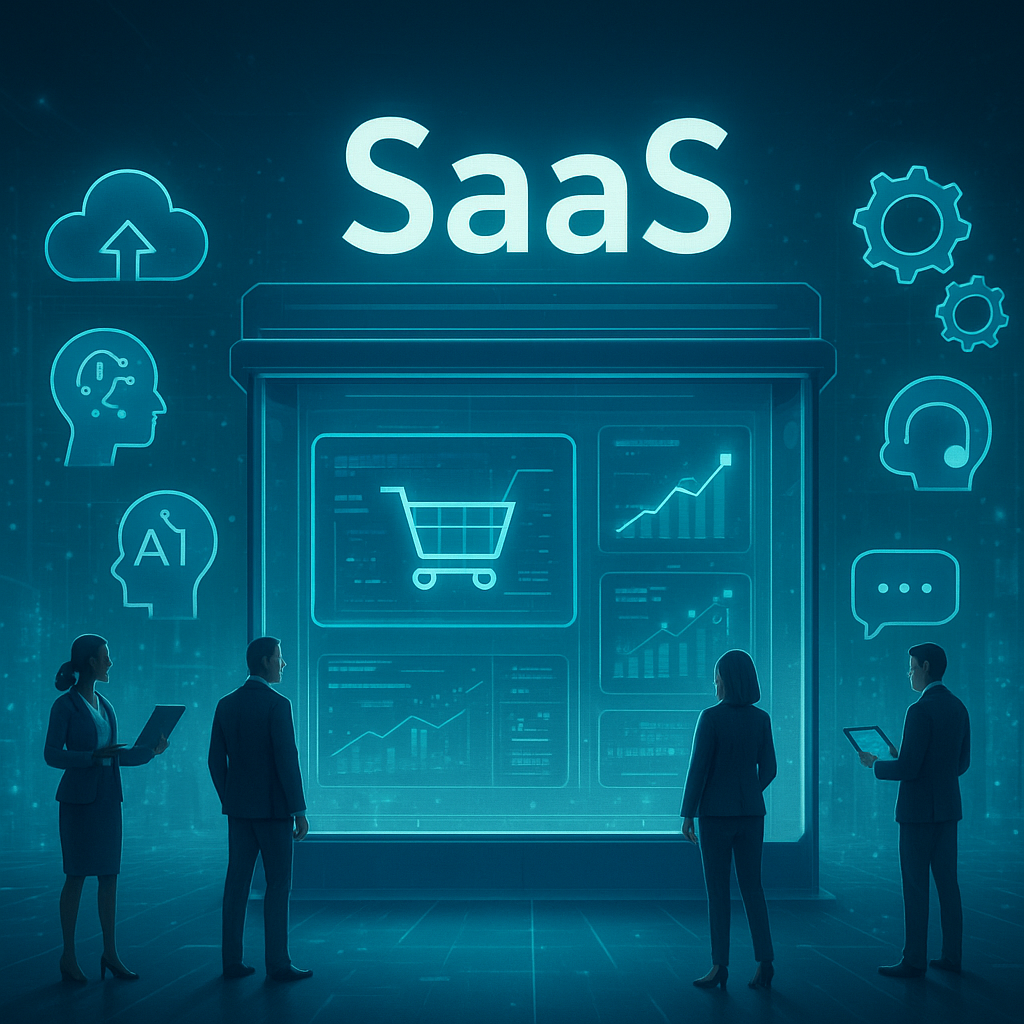
In a bustling office in San Francisco, a mid-sized retailer watches its online sales surge—not because of a massive marketing push or a new product launch, but due to a seamless software update delivered instantly by their SaaS provider. This moment underscores the profound transformation SaaS (Software as a Service) has brought to eCommerce. SaaS platforms have become the backbone of digital commerce, offering scalable, accessible, and continuously evolving tools that empower businesses to compete globally with agility.
According to industry estimates, over 75% of eCommerce businesses globally now rely on SaaS solutions for critical functions such as storefront management, payment processing, inventory control, and customer engagement. This shift has not only democratized access to enterprise-grade technology but also fostered innovation at unprecedented speeds. The continuous delivery model intrinsic to SaaS ensures merchants can adapt rapidly to market changes—whether integrating AI-driven personalization engines or adopting new payment methods.
“The SaaS model has eliminated barriers to entry for countless entrepreneurs, enabling them to launch and scale eCommerce brands with minimal upfront investment.” — Industry Analyst, TechInsights
Tracing the Evolution: From Legacy Systems to Cloud-Native SaaS
The journey to the current SaaS dominance in eCommerce is a story of technological evolution and changing business needs. Initially, eCommerce platforms were predominantly on-premises solutions, requiring significant capital expenditure and technical expertise. These legacy systems often hindered agility, tying companies to rigid infrastructures and slow update cycles.
The early 2010s marked a turning point with the proliferation of cloud computing and the emergence of SaaS pioneers such as Shopify and BigCommerce. These platforms embraced cloud-native architectures, offering multi-tenant environments that shared resources efficiently while maintaining security and isolation. This innovation drastically lowered costs and simplified software management for online retailers.
By 2020, the SaaS market for eCommerce solutions had exploded, fueled by rising internet penetration, mobile commerce growth, and the COVID-19 pandemic's acceleration of digital adoption. The pandemic underscored the need for rapid deployment and scalability—qualities inherent in SaaS models. The shift to subscription-based pricing further aligned vendor and customer incentives, fostering continuous improvement and innovation.
“SaaS broke the mold of traditional software, making technology a service rather than a product, which perfectly matches the dynamic needs of eCommerce.” — CTO, Nimbus Commerce
Core SaaS Features Driving eCommerce Innovation in 2026
In 2026, SaaS platforms for eCommerce have matured into comprehensive ecosystems that transcend simple online store management. At their core, these platforms offer modular, API-driven architectures that enable seamless integration with third-party services and custom applications. Key features now include:
- AI-Powered Personalization: Real-time data analytics and machine learning algorithms customize product recommendations and marketing messages to individual shopper behavior.
- Headless Commerce: Decoupling front-end presentation layers from back-end commerce engines allows brands to deliver omnichannel experiences across web, mobile apps, IoT devices, and even in-store kiosks.
- Advanced Inventory and Supply Chain Integration: SaaS solutions now integrate deeply with suppliers, logistics providers, and warehouses, providing real-time inventory visibility and automated replenishment.
- Subscription and Recurring Billing Management: Supporting the booming subscription commerce trend, SaaS platforms enable flexible billing cycles, customer self-service portals, and churn analytics.
- Enhanced Security and Compliance: With increasing regulatory scrutiny, SaaS vendors embed compliance frameworks (PCI DSS, GDPR, CCPA) and offer advanced fraud detection powered by AI.
These capabilities collectively empower merchants to optimize operations, reduce costs, and deliver differentiated customer experiences. Market data from Statista confirms that SaaS-powered eCommerce platforms have consistently outperformed traditional models in conversion rates, average order value, and customer lifetime value.
2026 Milestones and Emerging Trends in SaaS for eCommerce
The past year has witnessed several pivotal developments reshaping the SaaS eCommerce landscape. One striking trend is the proliferation of AI-infused automation beyond personalization, extending into customer service with sophisticated chatbots and virtual assistants that handle complex queries and transactions with near-human accuracy.
Moreover, SaaS providers are increasingly embracing sustainability as a core value, offering tools that help merchants track and reduce carbon footprints across their supply chains. This aligns with growing consumer demand for ethical shopping options and regulatory pressures worldwide.
Another notable advance is the expansion of no-code and low-code SaaS tools, enabling non-technical business users to customize storefronts, workflows, and integrations without developer intervention. This democratization of software customization accelerates innovation cycles and lowers operational bottlenecks.
Integration of Web3 technologies is also gaining momentum. While still nascent, blockchain-enabled SaaS features are facilitating transparent supply chain provenance, NFT-based loyalty programs, and crypto payment acceptance, signaling a gradual fusion between decentralized finance and traditional eCommerce.
These cutting-edge trends are reshaping how merchants build, operate, and scale their digital storefronts. For a deeper dive into these innovations, readers may consult how no-code tools are reshaping ecommerce and SaaS innovation and why SaaS is the backbone of modern ecommerce innovation.
Expert Insights and Market Impact: Voices from the Frontlines
Industry leaders emphasize that SaaS has fundamentally altered the competitive dynamics in eCommerce. Former Shopify executive and current SaaS strategist Maria Chen remarks, “SaaS platforms have leveled the playing field. Small and medium-sized businesses now compete on the same technological footing as giants, thanks to accessible, scalable SaaS tools.”
Financial analysts note that the SaaS eCommerce sector continues to attract significant venture capital, with funding rounds for SaaS startups specializing in AI, headless commerce, and sustainability solutions exceeding $3 billion in the first quarter of 2026 alone.
Further, established enterprises are increasingly adopting hybrid models, integrating bespoke SaaS solutions alongside legacy systems to harness agility without compromising on customization or compliance. This nuanced adoption signals SaaS’s maturation from a disruptive novelty to a foundational element of digital commerce strategy.
“The SaaS revolution in eCommerce is not just about software delivery. It’s about enabling continuous innovation that directly impacts customer satisfaction and business resilience.” — Maria Chen, SaaS Strategist
Looking Ahead: What SaaS Will Mean for eCommerce’s Future
As we look beyond 2026, the trajectory of SaaS in eCommerce suggests an increasingly symbiotic relationship between technology and commerce. Key future developments to watch include:
- Greater AI Autonomy: Expect SaaS platforms to incorporate predictive analytics and autonomous decision-making to optimize pricing, inventory, and marketing in real time.
- Hyper-Personalized Shopper Journeys: Advances in data integration across devices and channels will enable truly seamless, personalized experiences that anticipate consumer needs.
- Expanded Ecosystem Collaboration: SaaS vendors will deepen partnerships with logistics, finance, and content platforms, creating integrated commerce ecosystems.
- Augmented Reality (AR) and Virtual Reality (VR) Integration: SaaS solutions will increasingly support immersive shopping experiences, enhancing product visualization and engagement.
- Regulatory and Ethical Technology Leadership: SaaS companies will play a proactive role in setting standards for data privacy, sustainability, and ethical AI use.
For online retailers and SaaS entrepreneurs alike, mastering these trends is critical. Resources like Unlocking SaaS Mastery: Proven Strategies for Lasting Success provide actionable insights to navigate this complex environment effectively.
Case Studies: SaaS Success Stories in eCommerce
To illustrate SaaS’s impact, consider two contrasting case studies:
- Luna Apparel: A mid-sized apparel brand leveraged a headless SaaS platform combined with AI-powered personalization to increase conversion rates by 30% and reduce cart abandonment by 15% within a year. Their ability to rapidly launch targeted campaigns and optimize inventory in real time was crucial.
- EcoHome Goods: This startup integrated SaaS sustainability tracking and blockchain provenance tools to certify product origins and carbon footprints. This transparency boosted brand loyalty among eco-conscious consumers and helped secure preferred supplier contracts.
Both examples demonstrate how SaaS empowers diverse eCommerce businesses to innovate, scale, and differentiate in highly competitive markets.
Overall, SaaS continues to reshape eCommerce profoundly, driving efficiency, innovation, and customer-centricity. As the sector advances, businesses must embrace SaaS strategically, balancing technology adoption with evolving consumer expectations and regulatory demands.