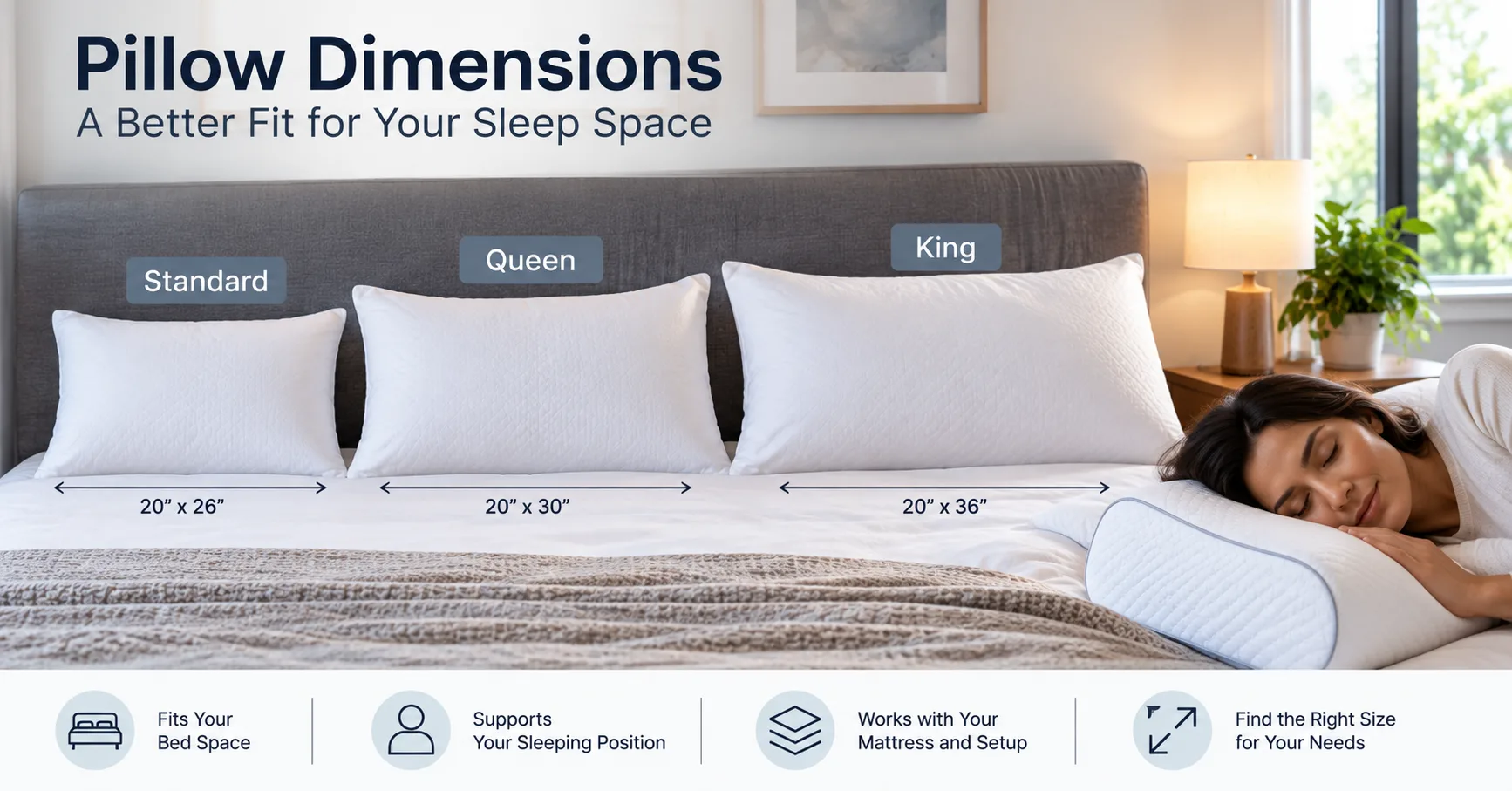
A pillow may seem like a simple rectangular object, but its size and proportions can influence how easily you use your bed. The difference between a compact pillow and a larger supportive design can affect available space, sleeping arrangements, and even how you organize your bedding.
Rather than focusing only on softness or firmness, it can be useful to consider how a pillow's dimensions fit into your actual sleeping environment.
Size Changes How Much Space You Have
The amount of space available on a bed can make a noticeable difference when choosing bedding.
A large pillow can provide a substantial surface for your head and upper body, but it also takes up more room. On a smaller bed, several oversized pillows may leave less usable space for sleeping.
A more appropriately sized pillow can make the bed feel less crowded while still providing the support you expect from your bedding.
This is particularly worth considering for people who share a bed. Each person may have different preferences, and using pillows that fit comfortably within the available space can make the overall setup easier to manage.
Pillow Shape Can Matter as Much as Length
Two pillows can have similar overall dimensions but feel completely different because of their shape.
A traditional rectangular pillow generally has a straightforward profile. Other designs may have curved edges, raised sections, or a more structured shape intended to provide support in specific areas.
The shape determines where the pillow places its material beneath your head and neck. It can also affect how easily the pillow stays in position while you move during the night.
For someone who spends much of the night on their side, these differences can become especially noticeable.
Think About the Space Between Your Head and Mattress
When you sleep on your side, your head is positioned above your shoulder rather than directly above the mattress.
This creates a gap that the pillow needs to accommodate. The ideal height can vary according to shoulder width, body proportions, mattress firmness, and personal preference.
A pillow that is too low may leave the head dropping toward the mattress, while one that is excessively high can create the opposite problem.
This is why choosing a best pillow should involve more than simply selecting the most popular or highly rated option. The dimensions and structure need to make sense for the person using it.
Materials Can Change How a Pillow Uses Its Available Space
Dimensions alone don't tell the entire story.
The material inside a pillow can determine how much it compresses when weight is applied. Two pillows with similar measurements can therefore feel quite different during use.
For a closer look at how pillow materials respond to pressure, understanding the relationship between construction and compression can help explain why measurements on a product page don't always tell you exactly how a pillow will feel.
A pillow that maintains more of its original shape may occupy its intended space differently from one that compresses significantly under pressure.
Consider Your Mattress and Headboard
Your pillow doesn't exist separately from your bed.
The mattress determines how deeply your shoulders and hips sink, while the headboard or wall can influence how you arrange pillows when sitting or relaxing.
For example, someone with a softer mattress may experience a different overall sleeping position than someone using a firm mattress.
This means that a pillow's dimensions should be considered as part of the entire bed setup rather than evaluated in isolation.
Larger Isn't Always Better
It can be tempting to assume that a larger pillow automatically provides more comfort.
However, a bigger pillow may not be practical for every sleeper. It can occupy additional bed space, become difficult to position, or interfere with other pillows.
A smaller design may work better for someone who prefers more open space around their head and shoulders.
The goal isn't to find the largest pillow available. It is to find dimensions that work naturally with your body, mattress, and sleeping environment.
Think About How You Move During Sleep
People rarely remain perfectly still throughout an entire night.
You may move from one side to another, adjust your head, or shift your shoulders. A pillow that works well in one position should ideally remain manageable when you make small movements.
This is another reason to consider the overall shape and dimensions rather than focusing on one specification.
A pillow that is excessively large or unusually shaped may require more frequent repositioning, while a design that matches your sleeping habits may stay easier to manage.
Keep Pillow Arrangement Simple
A bed doesn't necessarily need a large collection of pillows to feel comfortable.
Too many pillows can make it difficult to determine which one provides the actual support you need. They can also create unnecessary clutter and require more time to arrange before sleeping.
Instead, consider what each pillow is actually doing.
One pillow may provide primary head and neck support, while additional pillows may serve decorative or secondary purposes.
Keeping the arrangement simple can make your bedtime routine easier and allow you to notice whether your main pillow is actually working well for you.
Check the Dimensions Before Buying
Product photographs can sometimes make pillows appear larger or smaller than they really are.
Before purchasing, check the listed measurements and compare them with your existing pillow. You can even measure the available space on your mattress if you are unsure about how a particular design will fit.
Pay attention to:
- Overall length and width
- Pillow height or loft
- Shape and contour
- Material construction
- Expected compression
- Available bed space
These details can help you make a more informed decision.
Final Thoughts
The dimensions of a pillow can influence much more than its appearance. Size, shape, height, construction, and compression all contribute to how the pillow fits into your sleeping environment.
For side sleepers in particular, finding a pillow that works with the space between the head, shoulder, and mattress can be an important part of creating a comfortable setup.
Instead of automatically choosing the biggest, softest, or most popular option, consider how the pillow will actually fit into your bed and your normal routine. A practical combination of size, shape, and construction can make a pillow easier to use night after night.