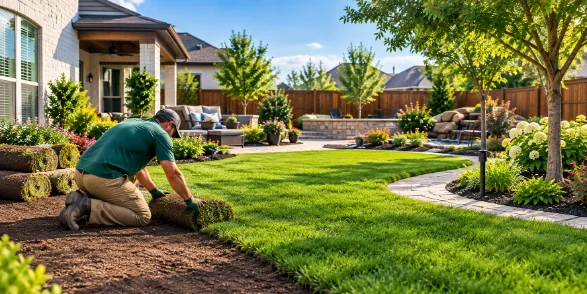
A residential yard can develop problems that are easy to overlook until they begin affecting the way the property looks, feels, or functions. Water may collect near a walkway, grass may struggle in one section, a slope may become difficult to maintain, or an awkward corner may remain unused year after year. These issues are not always solved by simply adding plants or mowing more often.
This is where landscaping services in Arlington can take a more practical role. Instead of focusing only on appearance, a well-planned landscape can address drainage, soil conditions, turf health, access, outdoor use, and ongoing maintenance. The result is a yard that works better for the people who use it and is easier to manage over time.
Look at the Problem Before Changing the Yard
One of the biggest mistakes homeowners can make is starting a landscape project before understanding why a particular area is performing poorly. A bare patch of grass, for example, might appear to need new turf, but the actual problem could be shade, compacted soil, standing water, or excessive foot traffic.
The first step should be observing the property as a whole. Look at how sunlight moves across the yard, where water travels after rainfall, which areas receive the most traffic, and where existing plants or turf consistently struggle.
A basic property assessment can reveal:
- Areas where water drains too slowly
- Sections exposed to excessive sunlight or shade
- Places where soil has become compacted
- Lawn areas that receive repeated foot traffic
Once these conditions are understood, improvements can be selected for a reason rather than simply added for visual effect.
Deal With Drainage Before It Damages Other Areas
Water-related problems are among the most frustrating landscape issues because their effects may spread beyond the original location. Persistent moisture can weaken turf, create muddy areas, affect planting beds, and make walkways uncomfortable to use.
A landscape should guide water away from areas where it can cause damage while allowing appropriate moisture to reach plants and soil.
Find the Source of Standing Water
A puddle that appears after every major rainfall deserves attention rather than repeated cosmetic repairs. The cause may involve grading, compacted soil, an obstruction, or the way surrounding surfaces direct runoff.
Small changes in grading can sometimes improve water movement, while other properties may require more deliberate drainage solutions.
The important point is to correct the underlying condition. Installing fresh grass over an area that continues to hold water is unlikely to provide a lasting solution.
Improve Turf Where Grass Keeps Struggling
Not every part of a property provides ideal conditions for lawn growth. Some areas may receive intense afternoon heat, while others may remain shaded beneath mature trees. Grass can also suffer when soil becomes compacted or when irrigation does not reach the area evenly.
This is where landscaping services in Arlington can involve more than routine lawn maintenance. Evaluating the condition of the turf and its surrounding environment can help determine whether the problem is related to the grass itself or to the conditions in which it is expected to grow.
Give the Root Zone More Attention
Healthy turf depends heavily on what happens below the surface. Compacted soil can make it harder for roots to access air and water, while poor moisture balance can create additional stress.
Depending on the condition of the lawn, homeowners may benefit from practices such as:
- Aerating compacted sections
- Improving soil structure
- Adjusting irrigation patterns
- Modifying mowing practices
These steps focus on improving the conditions that support the lawn instead of treating only visible symptoms.
Use Landscape Design to Fix Awkward Spaces
Some of the most difficult areas of a residential property are not necessarily damaged. They are simply poorly suited to their current purpose.
A narrow side yard may be too small for a traditional lawn. A steep corner may be difficult to mow. A strip between a driveway and fence may collect debris without serving any useful function.
Instead of forcing every part of a property to function as turf, landscap design can assign different purposes to different spaces.
A difficult side area, for instance, could become a defined walkway with planting beds. A slope could be stabilized with suitable plants and edging. An unused corner might become a small seating area or a low-maintenance garden.
Make Maintenance Part of the Original Plan
A landscape that looks excellent immediately after installation can become difficult to manage if maintenance requirements were ignored during planning.
Homeowners should consider how much time they realistically want to spend mowing, pruning, watering, removing weeds, and caring for planting beds.
A practical plan considers:
- How frequently different areas need attention
- Whether plants will outgrow their locations
- How easily irrigation can reach planting zones
- Which surfaces will collect leaves or debris
- How much lawn is actually necessary
Good landscap design is therefore not just about where things are placed. It is also about making future maintenance manageable.
Rethink Areas That Receive Too Much Foot Traffic
Grass can struggle when people repeatedly use the same route across it. This often happens between a driveway and backyard gate, around outdoor seating areas, or along the route to a shed.
Rather than continually repairing damaged turf, homeowners can create a defined path that matches how the property is actually used.
A walkway made from suitable materials can protect surrounding grass while making movement through the yard more convenient. It can also give the landscape clearer organization without requiring major structural changes.
The key is to observe existing behavior. The best path is often the one that follows the route people already naturally take.
Consider Sod When Existing Turf Cannot Recover
Sometimes a lawn has reached a point where gradual maintenance is no longer enough. Large areas may have poor coverage, extensive damage, or inconsistent growth that makes the property difficult to maintain.
In suitable conditions, sod installation can establish a new lawn more quickly than starting from seed. However, replacing turf should not be treated as the complete solution.
Before new sod is installed, homeowners should understand why the previous lawn failed. If the area has poor drainage, severe compaction, unsuitable sunlight, or another underlying issue, those conditions should be addressed first.
Prepare the Surface Properly
Successful sod installation depends on more than placing new turf over existing ground. Soil preparation, grading, moisture management, and proper establishment all influence how well the new lawn develops.
A rushed installation may look impressive at first but struggle later if the foundation has not been prepared properly.
Make Planting Areas Work With the Property
Planting beds can solve several practical problems when they are designed around existing site conditions.
For example, a bed beneath a mature tree may be more appropriate than trying to maintain dense turf in deep shade. Similarly, a planting area along a fence can create a defined transition between lawn and property boundaries while reducing awkward mowing edges.
Plant selection should also consider the amount of sunlight, available moisture, mature plant size, and expected maintenance.
This prevents a common problem where attractive plants are installed in locations that do not provide the conditions they need.
Address Slopes and Uneven Ground Carefully
Uneven ground can create both maintenance and usability problems. A steep lawn may be uncomfortable to walk across and difficult to mow, while erosion can gradually expose roots or move soil toward lower areas.
The solution depends on the property's slope, drainage pattern, soil, and intended use.
Possible improvements can include:
- Stabilizing selected areas with suitable planting
- Creating clearer transitions between elevations
- Using edging where appropriate
- Redirecting water away from vulnerable soil
The objective is not necessarily to make every part of the yard perfectly flat. In many cases, working with the property's natural shape produces a more practical result.
Choose Materials That Match Everyday Use
Outdoor materials should be selected according to how the space will actually be used.
A family that regularly entertains outdoors may need durable patio surfaces and clearly defined circulation areas. A household with children or pets may require more open lawn space. A property with limited outdoor activity may benefit from reducing the amount of turf that requires regular attention.
These decisions can prevent homeowners from investing in features that look attractive but do not fit their daily routines.
Avoid Fixing One Problem by Creating Another
Landscape improvements often affect multiple parts of a property. Adding a new bed may change how water moves. Installing a walkway may redirect runoff. Planting a mature-growing tree may eventually create extensive shade.
Before making a change, consider what it will mean for nearby lawn, soil, drainage, and maintenance.
Some common mistakes include:
- Installing turf without correcting drainage
- Choosing plants based only on appearance
- Ignoring mature plant size
- Creating narrow lawn strips that are difficult to mow
- Adding hardscape without considering water movement
Thinking about these interactions can prevent unnecessary repairs later.
When Professional Help Makes Sense
Some outdoor problems are straightforward, while others involve several connected conditions. A lawn may be struggling because of drainage and shade at the same time, or an uneven section may involve both grading and erosion.
Professional assistance can provide a broader assessment before work begins. For homeowners considering a larger project, The Grounds Guys of Arlington can help with lawn and landscape needs while taking existing property conditions into account.
The useful part of professional involvement is often the planning process. Understanding what is causing a recurring problem can help homeowners spend resources on improvements that address the actual issue instead of repeatedly treating the visible result.
Plan Improvements in Stages When Necessary
Not every landscape project needs to happen all at once. In fact, dividing improvements into stages can make larger projects easier to manage.
A homeowner might first address drainage, then improve damaged turf, and later redesign an unused side area. This approach also gives the property time to respond to each change before the next project begins.
A phased plan can focus on:
- Correcting problems that may damage other parts of the yard.
- Improving areas that receive the most household use.
- Replacing landscape elements that repeatedly fail.
- Adding aesthetic improvements after practical concerns are handled.
- Establishing a maintenance routine for the completed areas.
This order helps keep appearance and function connected rather than treating them as separate goals.
Think About How the Yard Will Age
A landscape should be evaluated not only by how it looks immediately after completion but also by how it will perform several years later.
Plants grow. Trees create larger shade patterns. Roots expand. Families change how they use outdoor areas. Turf can experience different levels of wear as household routines evolve.
Planning with these changes in mind can reduce the need for major corrections later.
A yard maintenance routine should also evolve as the landscape matures. Newly planted areas may need different attention than established beds, while older turf may require different care from recently installed grass.
Build a Property That Is Easier to Manage
The most useful landscape improvements often solve several small problems at once. A properly placed walkway can reduce lawn wear and improve access. A redesigned planting bed can simplify mowing around trees. Corrected grading can protect turf while improving drainage.
This is the practical value of coordinated landscape planning.
Rather than asking how to make every section of a yard look identical, homeowners can ask a more useful question: what should each part of the property do?
That mindset can lead to a landscape that feels more organized and requires fewer unnecessary interventions.
Conclusion
Outdoor property problems rarely exist in isolation. Poor turf may be connected to soil or drainage, an awkward space may be caused by how the yard is used, and recurring maintenance problems may point to a design decision that no longer suits the property.
Using landscaping services in Arlington with a problem-solving approach allows homeowners to look beyond surface-level improvements. Drainage, turf health, pathways, planting areas, grading, and long-term maintenance can all be considered as parts of the same landscape.
When planning begins with the actual conditions of the property, improvements become more purposeful. The result can be a residential yard that is easier to use, easier to maintain, and better suited to the way homeowners live.
FAQs
What types of outdoor problems can landscaping services address?
Landscaping services can address issues such as poor drainage, damaged turf, uneven ground, difficult planting areas, erosion, and inefficient use of outdoor space. The appropriate solution depends on the property's specific conditions.
When should a homeowner consider sod installation?
Sod installation may be useful when large areas of turf are damaged or consistently fail to establish. The underlying reason for the turf problem should be addressed before new sod is installed.
Can landscape design reduce maintenance?
Yes. Proper planning can reduce awkward mowing areas, organize planting beds, improve access, and place plants where their growing requirements match site conditions. These choices can make ongoing care more manageable.
Why does drainage matter for a residential yard?
Poor drainage can lead to standing water, muddy areas, turf damage, and soil erosion. Addressing how water moves across the property can help protect both landscape features and usable outdoor areas.
How often should yard maintenance be adjusted?
Maintenance should respond to seasonal growth, weather, turf condition, and changes in how the property is being used. A fixed routine may not work equally well throughout the year.
Is professional landscaping necessary for every yard problem?
Not necessarily. Small maintenance issues may be manageable by homeowners, while problems involving grading, drainage, extensive turf damage, or major landscape changes may benefit from professional assessment.