College soccer recruiting works best when a player starts early, knows their real level, targets the right schools, and reaches out to coaches with a clear plan. Talent matters, but most players get noticed because they are organized and honest about where they fit, not because a coach found them by luck.
If you are a parent or a player, the process can feel confusing. There are emails to write, videos to make, camps to pick, and deadlines to track. This guide breaks college soccer recruiting into simple steps so you know what to do and when to do it.
Why College Soccer Recruiting Feels So Hard
Many families think that if a player is good, college coaches will just show up. That rarely happens.
Coaches have small staffs and big lists. They watch hundreds of players every year. So they lean on players who make their job easier.
Here is what usually gets in the way:
- No clear target list – families email every school at once.
- No honest picture of the player's level – they aim too high or too low.
- Weak video – long clips with no focus on what the player actually does well.
- Starting too late – by senior year, many rosters are already filled.
The good news? All of these can be fixed with a plan.
The 7 Steps of College Soccer Recruiting
1. Get an Honest Picture of Your Level
This is the step most families skip. And it is the one that matters most.
Before you pick schools, you need to know where you stand today. That means looking at:
- Technical skill – first touch, passing, and finishing under pressure.
- Decision-making – how fast and how well you read the game.
- Physical profile – speed, strength, and stamina for your position.
- Mentality – how you respond to mistakes and tough games.
A club coach can help, but they may not be fully neutral. An independent soccer player evaluation gives you a clear, outside view of your strengths and the gaps you still need to close.
2. Learn the Different College Levels
College soccer is not one single level. In the US, you have NCAA Division I, Division II, Division III, NAIA, and junior college (NJCAA).
Each one has its own pace, rules, and scholarship setup. A great fit at one level may be a poor fit at another. Look at playing time, academics, location, and cost, not just the name on the jersey.
3. Build a Smart Target List
Once you know your level, pick around 20 to 40 schools that match it. A good list has a mix:
- Reach schools – a stretch, but possible.
- Target schools – a strong match for your level today.
- Safer schools – places where you would likely play and grow.
4. Make a Short, Focused Highlight Video
Coaches are busy. Keep your video to about three to five minutes.
- Put your best clips in the first 30 seconds.
- Mark yourself clearly at the start of each clip.
- Show what your position really needs, not just goals.
- Add a link to a full match if you have one.
5. Contact Coaches the Right Way
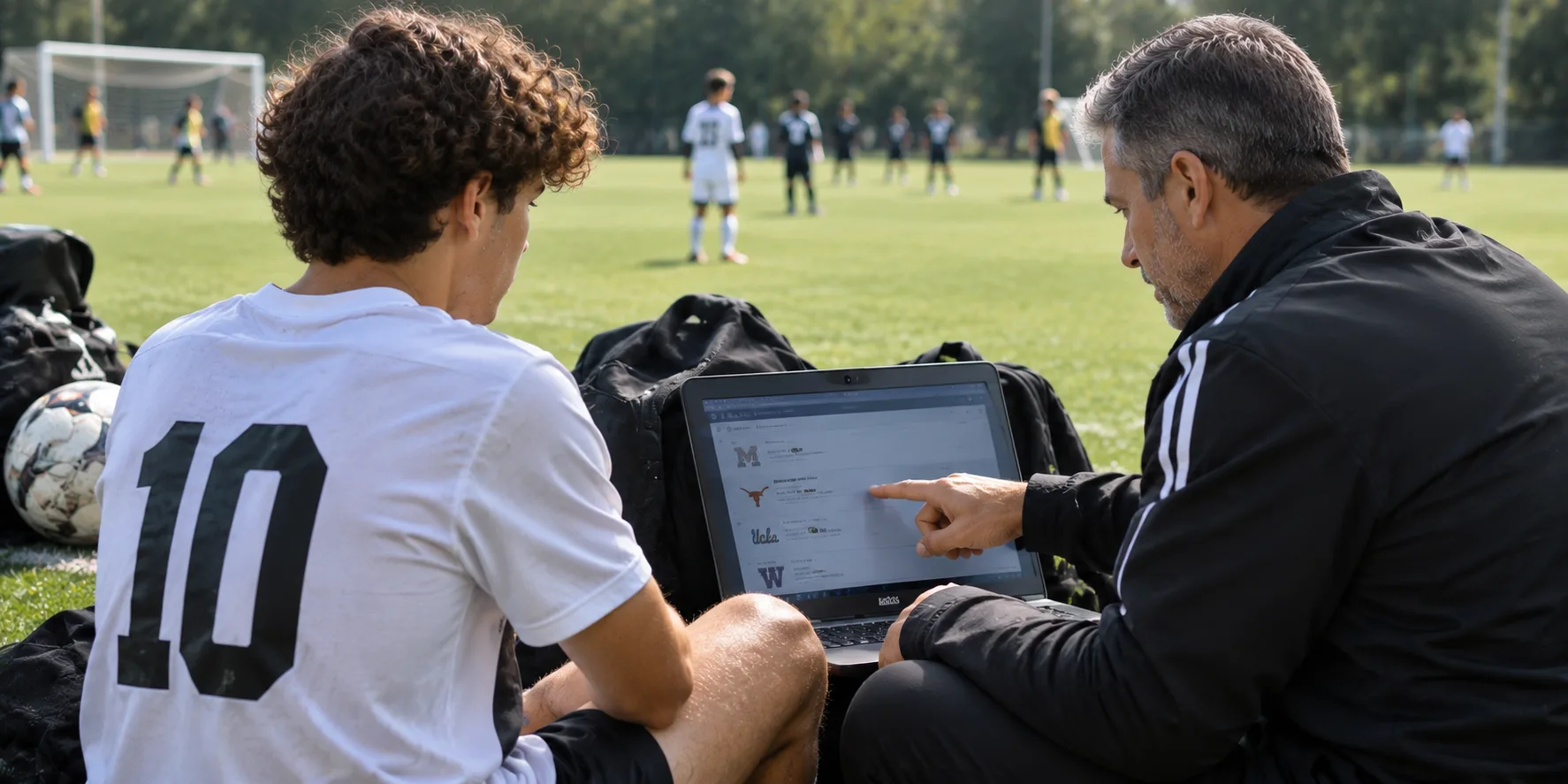
Write short, personal emails. Mention the school by name and explain why you like their program. Include your grad year, position, club, GPA, video link, and upcoming schedule.
The NCAA has rules about when coaches can reply and contact players, and they can change. Always check the latest NCAA guidance for your grad year.
6. Choose Camps and Showcases Wisely
Not every camp is worth the money. Go to ID camps run by schools on your list, or showcases where those coaches will actually be watching. Email the coaches before you go so they know to look for you.
7. Keep Improving and Stay in Touch
Recruiting is not a one-time email. Send coaches short updates every few months with new clips, results, or grades. At the same time, keep working on the gaps from your evaluation. Real progress gives you something real to share.
Practical Example: Two Players, Two Paths
Let's look at two made-up players with very similar skills.
Player A waits until the start of senior year. She emails 80 Division I coaches with the same message and a 12-minute video. A few coaches reply, but most rosters are nearly full. She feels stuck.
Player B starts in her sophomore year. She gets an honest evaluation and learns that her game reads and passing are strong, but her speed needs work. She builds a list of 30 schools across Division I, II, and III. She sends a short video, attends three camps at schools on her list, and updates coaches every few months.
By junior year, Player B is talking with several programs that truly want her. Same talent. Very different outcome. The difference was the plan.
Common Mistakes to Avoid
Here are the mistakes we see families make again and again:
- Only aiming for big-name schools – this can shut you out of great fits.
- Letting parents write every email – coaches want to hear from the player.
- Ignoring grades – good academics open more doors and can help with aid.
- Paying for services that promise a scholarship – no honest advisor can guarantee one.
- Going quiet after the first email – coaches notice players who follow up.
- Skipping the honest self-check – guessing your level wastes time and money.
Final Thoughts
College soccer recruiting is a process, not a lottery. Players who start early, know their real level, and pick the right schools give themselves the best shot at finding a program where they can play and grow.
You do not have to figure it all out alone. If you want an outside view of where your player stands and a clear plan for the next steps, reach out to the FootTrap team. We will help you build a realistic college pathway that fits your goals.
Frequently Asked Questions
When should a player start the college recruiting process?
Most players should start thinking about it in their freshman or sophomore year. That gives time to improve, build a target list, and connect with coaches before rosters fill up.
Do I need a highlight video to get recruited?
Yes, in most cases. A short, focused video helps coaches decide if they want to see you play live. Pair it with a full match link if you can.
Can a recruiting advisor guarantee a scholarship?
No. Anyone who guarantees a scholarship or roster spot is not being honest. A good advisor gives you a clear view of your level and a smart plan.
Is Division I the only good option?
Not at all. Division II, Division III, NAIA, and junior college programs offer strong soccer and great education. The best fit is where you will play, learn, and grow.