
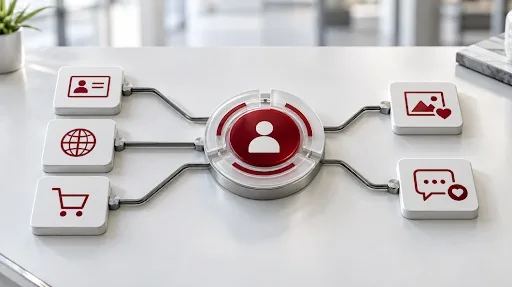
The real reason why personalization fails in marketing isn’t that marketers lack ideas. It usually fails because the data behind those ideas is incomplete, delayed, or trapped in different systems.
Marketing teams may know what they want to say, who they want to reach, and what experience they want to create. But if customer data is sitting across disconnected platforms, even the best campaign idea becomes harder to execute.
That is why data integration is so important in a modern MarTech system. It brings the right customer signals together so teams can personalize with more confidence, engage at the right moments, and understand what is actually working.
In this article, we’ll look at how data integration improves personalization and engagement, what data matters most, and how businesses can build a stronger foundation with the right data integration services.
But first, it’s essential to understand the basics!
Why Data Integration is Important in MarTech
A MarTech system is supposed to help teams move faster and create better customer experiences. But that only happens when the systems inside it can share useful information.
Different marketing systems may hold different important customer details. On their own, each tool has value. Together, they can create a much clearer picture of the customer.
Data integration helps marketing teams practically connect those details.
This matters because modern engagement depends on context. A customer’s recent purchase, content activity, support history, or communication preference can all change what message should come next.
How Data Integration Improves Personalization
Personalization works best when it feels timely, relevant, and natural. Data integration helps make that possible by giving marketing systems access to better customer context.
It Helps Teams Understand Customers More Clearly
A customer profile becomes more useful when it includes information from more than one system. CRM data may show who the customer is. Purchase data may show what they buy. Loyalty data may show how engaged they are. Campaign data may show what content they respond to.
When these signals are connected, marketing teams can start making more informed decisions.
For example, a first-time buyer should not receive the same message as a long-term loyalty member. Similarly, a lead who has engaged with multiple resources may be ready for a more direct sales conversation.
Data integration helps teams see these differences and respond in a way that feels more relevant.
It Makes Segmentation More Practical
Segmentation often becomes too broad when teams only use basic data. Location, job title, industry, or age group can help, but they do not always explain customer intent.
Integrated data allows teams to build segments based on behavior, value, lifecycle stage, product interest, loyalty activity, or recent engagement. These segments are more useful because they reflect what customers are actually doing.
For example, marketing teams can create groups such as repeat buyers who have not redeemed rewards, inactive customers who previously engaged often, or new subscribers who have not completed onboarding.
These are more actionable than broad lists because they point to a clearer next step.
It Improves Message Timing
The right message can lose impact if it arrives too late. Data integration allows marketing teams to act closer to the moment when customer behavior happens.
If someone abandons a cart, completes a booking, downloads a resource, or updates a preference, that action can trigger a relevant follow-up. The faster that data reaches the right system, the easier it becomes to engage while the customer’s interest is still active.
This is where integrated MarTech systems create real value. They help teams move from scheduled campaigns to more responsive customer journeys.
How Data Integration Improves Engagement
Engagement improves when customers feel that the brand understands the relationship. Data integration helps create that feeling by keeping communication more consistent across channels.
It Reduces Irrelevant Communication
Few things weaken engagement faster than messages that ignore what a customer has already done. A customer who just purchased should not keep receiving the same acquisition offer. A loyalty member should not be shown a reward they cannot use. A customer who opted out of a channel should not be contacted there again.
Integrated data helps teams apply better suppression, eligibility, and preference rules. This reduces repeated messages, mistimed offers, and disconnected communication.
Better engagement is not always about sending more. Often, it is about sending less, but making each interaction more useful.
It Connects Content With Customer Intent
Content plays a major role in engagement, but it becomes more powerful when it is connected to customer data.
A CMS can deliver the same page, banner, or offer to everyone. But when it connects with CRM, loyalty, or a campaign, the experience can become more relevant.
A returning customer might see content related to a recent purchase. A loyalty member might see tier-specific messaging. An inactive customer might see a re-engagement offer.
This kind of relevance helps customers stay involved because the content feels closer to what they need at that moment.
It Creates a More Consistent Cross-Channel Experience
Customers do not think about which platform is sending which message. They expect the brand to understand them across email, web, mobile, loyalty portals, support channels, and sales conversations.
Data integration helps make that consistency possible. When customer status, preferences, and recent activity move across systems, each channel can reflect the same relationship.
This is especially important for enterprises with multiple teams managing different touchpoints. Integrated data helps keep everyone working from the same customer context.
How to Build a Stronger Data Integration Foundation
Data integration should begin with the customer journey, not the technology stack. Businesses should identify the moments where better data would improve the experience, such as onboarding, repeat purchase, loyalty engagement, reactivation, or service recovery.
Once those moments are clear, teams can decide which systems need to connect and how quickly data should move between them.
A strong foundation usually includes APIs for structured data exchange, middleware for coordinating more complex workflows, clean data standards, consent management, access controls, and regular monitoring. These elements help keep the MarTech system reliable as campaigns, channels, and customer expectations grow.
Businesses should also keep the integration focused. The goal is not to create the largest possible data environment. The goal is to make the right data available where it can improve decisions and customer experiences.
Final Thoughts
Data integration gives marketing teams a better way to understand and engage customers.
When customer signals move clearly across the MarTech system, teams can personalize with more confidence, reduce irrelevant communication, respond faster, and measure engagement more effectively. The result is a marketing operation that feels less fragmented internally and more connected from the customer’s point of view.