Automotive operations involve vehicle movement, component handling, assembly activities, and workers performing tasks across different areas. Maintaining safety and operational visibility across these activities can be challenging, particularly in large facilities. AI solutions for automotive industry applications can help organisations analyse visual activity, identify selected safety events, and improve awareness of operational conditions without relying entirely on manual observation.
How AI Video Analytics Supports Automotive Operations
AI in automotive industry applications extend beyond vehicle design and autonomous driving. Video analytics can also support the monitoring of activities inside automotive facilities, workshops, assembly areas, and vehicle handling zones.
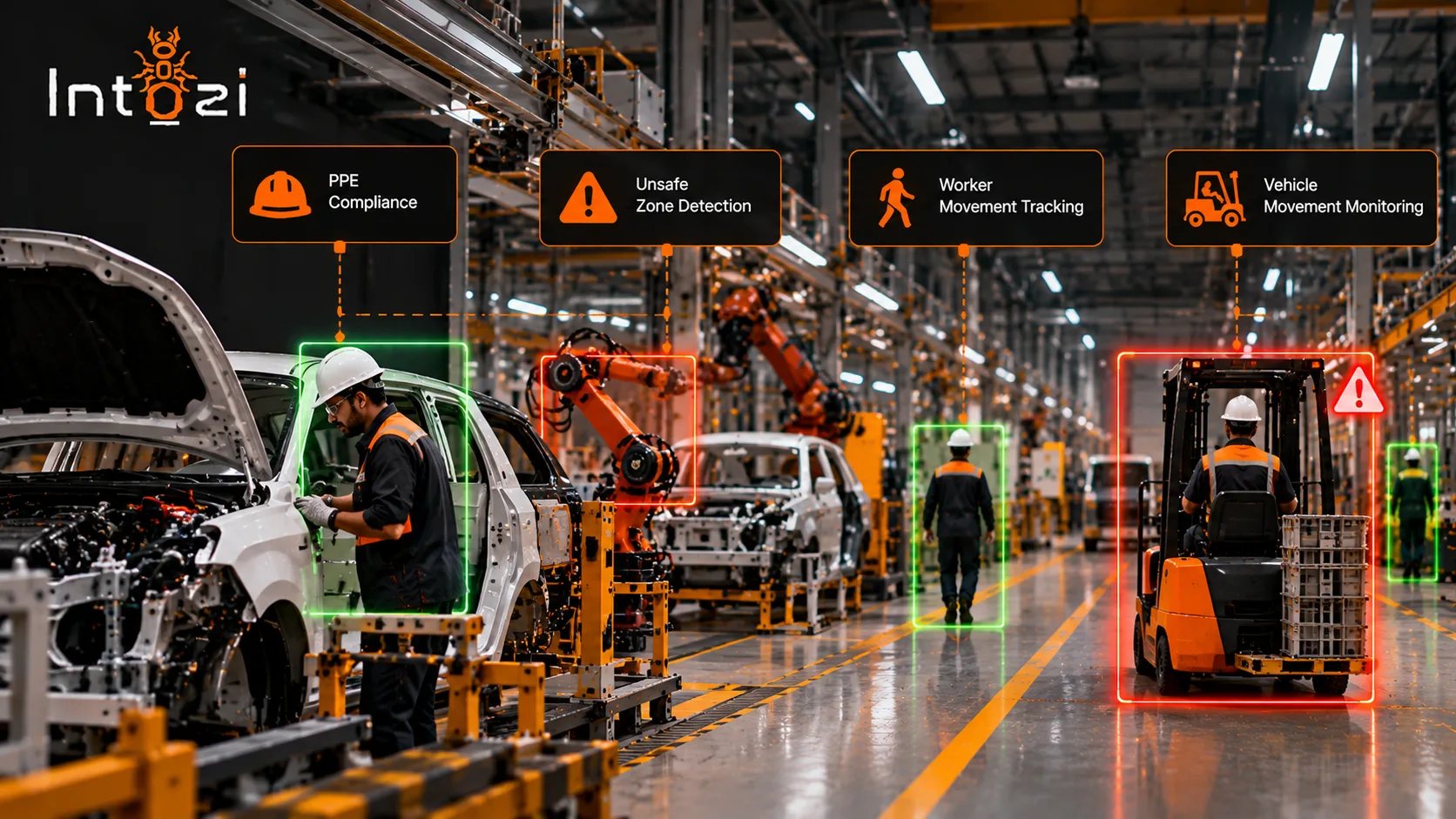
Depending on the selected analytics, AI can help identify:
- People entering restricted operational areas
- Workers missing required personal protective equipment
- Vehicles moving through designated zones
- Potentially unsafe interactions between workers and vehicles
- Specific activities that require operational review
These capabilities can help teams focus on relevant events while work is underway. Actual detection performance depends on video quality, camera positioning, site conditions, and system configuration.
Why Automotive Facilities Need Better Safety Visibility
Automotive environments bring people, vehicles, machinery, and materials together. Even established safety procedures can be difficult to monitor consistently across multiple work areas.
AI vehicle safety monitoring can support the identification of configured events involving vehicle movement and people in designated areas. For example, analytics may flag a person entering a restricted vehicle route or identify movement that requires a safety review.
AI alerts should complement workplace supervision, safety training, traffic management, and established incident response procedures.
How AI Helps Monitor Vehicle Movement
Vehicle movement is an important consideration in automotive plants, workshops, testing areas, and component handling facilities. Uncontrolled movement or unsafe interactions between vehicles and people can create operational risks.
An AI vehicle monitoring system can analyse compatible video feeds to identify defined vehicle-related events, depending on the system's capabilities.
Potential applications include:
- Monitoring vehicles in designated operational zones
- Identifying unauthorised vehicle access
- Observing movement around loading and unloading areas
- Flagging selected interactions between people and moving vehicles
- Supporting reviews of vehicle-related safety incidents
These applications can provide additional visibility, but video analytics should not be treated as a substitute for dedicated vehicle safety systems or physical traffic controls.
What Computer Vision Can Identify on the Automotive Floor
Computer vision for automotive industry applications can recognise visual patterns associated with people, vehicles, objects, and selected activities. In operational environments, this can help teams understand what is happening in monitored areas.
For example, automotive computer vision solutions may be configured to identify visible PPE conditions, movement into restricted zones, or specific vehicle-related events. The suitability of each use case depends on the environment and the analytics available.
Computer vision is most useful when the monitored event is clearly defined and the resulting alert supports a practical decision or response.
How AI Supports Automotive Manufacturing and Component Production
Automotive manufacturing involves assembly operations, component handling, machinery, and repeated work processes. Monitoring these environments requires attention to both production activity and worker safety.
AI in automotive manufacturing can support video-based monitoring of defined events across production and component handling areas. Depending on the deployment, AI solutions for automotive parts manufacturing may help identify safety-related activity, monitor restricted areas, and provide additional visibility into operational processes.
Relevant use cases may include:
- Monitoring safety compliance around production equipment
- Identifying people entering designated hazardous zones
- Observing movement around component storage areas
- Flagging configured activities for supervisor review
These applications support operational awareness rather than replacing quality inspection equipment, production control systems, or specialist automation.
How Automotive AI Solutions Can Improve Operational Efficiency
Operational efficiency depends on more than production speed. Teams also need to understand recurring safety events, movement patterns, and activities that may interrupt workflows.
Automotive AI solutions can help surface relevant events from monitored video feeds, making it easier to review specific situations. Similarly, AI-powered automotive solutions can support more informed decisions when analytics are aligned with defined operational objectives.
For example, a facility may use event data to investigate repeated restricted-zone entries or review vehicle movement around busy work areas. Any changes to procedures should be based on verified findings and appropriate operational assessment.
How AI Supports Automotive Component Manufacturers
Component manufacturing environments may involve machining, material movement, assembly, and handling across different production zones. Each area can have distinct safety and monitoring requirements.
AI solutions for automotive component manufacturers can be configured around relevant visual events, while AI-powered solutions for automotive manufacturing may support selected safety and operational monitoring use cases.
The most suitable applications depend on the specific process being monitored. AI video analytics should be used where visual information can reliably support the task, rather than assuming that every manufacturing process can be assessed through video alone.
Where Smart AI Solutions Fit Into Automotive Operations
Smart AI solutions for automotive manufacturing can add value when they address a clearly defined challenge. For instance, a facility may prioritise PPE monitoring, restricted-area detection, or vehicle movement rather than attempting to analyse every activity at once.
AI-powered automation solutions for automotive parts manufacturing can refer to a broader category of technologies, including robotics, machine vision, and process automation. Video analytics has a more specific role: analysing visual activity and identifying events that require attention.
The distinction matters because monitoring software and automated production machinery solve different problems, even when they contribute to the same operational objectives.
How Intozi and Ikshana Support Automotive Video Intelligence
Intozi's Ikshana platform applies AI video analytics to visual activity in operational environments. Depending on the selected analytics and deployment configuration, it can support the identification of defined safety, vehicle movement, and operational events in suitable automotive facilities.
This provides organisations with another way to turn video feeds into structured information for review. Available capabilities depend on the use case, site conditions, video infrastructure, and configured analytics.
Why AI Video Analytics Is Becoming Relevant to Automotive Operations
Automotive facilities need to coordinate worker safety, vehicle movement, and operational activity across changing environments. AI video analytics can help identify selected events and bring relevant information to the attention of responsible teams.
The value comes from connecting detection with a clear operational purpose, verified alerts, and established response procedures. Intozi Ikshana platform supports this approach by applying AI-powered video intelligence to suitable automotive environments, helping organisations improve visibility into safety and operational events.
Frequently Asked Questions (FAQs)
How can AI video analytics improve automotive operations?
AI video analytics can identify configured events involving workers, vehicles, restricted areas, and selected operational activities. This helps teams review relevant incidents and improve situational awareness alongside existing safety and operational procedures.
Can AI monitor vehicle safety in automotive facilities?
Yes. Depending on the analytics available, AI can identify selected vehicle movements and interactions within monitored areas. It can help flag potential risks, but dedicated safety systems and established vehicle control procedures remain important.
How is computer vision used in automotive manufacturing?
Computer vision can analyse visual information to recognise objects, people, movement, and selected activities. In manufacturing environments, it can support applications such as safety monitoring, restricted-area detection, and certain process observation tasks.
Can AI video analytics support automotive parts manufacturing?
It can support selected monitoring tasks in component manufacturing facilities, including configured safety events and movement in designated areas. The suitability of a particular use case depends on the production environment, video quality, and system capabilities.
Do automotive facilities need to replace existing video infrastructure to use AI analytics?
Not necessarily. Compatible existing video feeds may be usable, depending on technical requirements, video quality, connectivity, and integration capabilities. A site assessment helps determine whether the existing infrastructure is suitable.