The Digital Transformation of Modern Healthcare
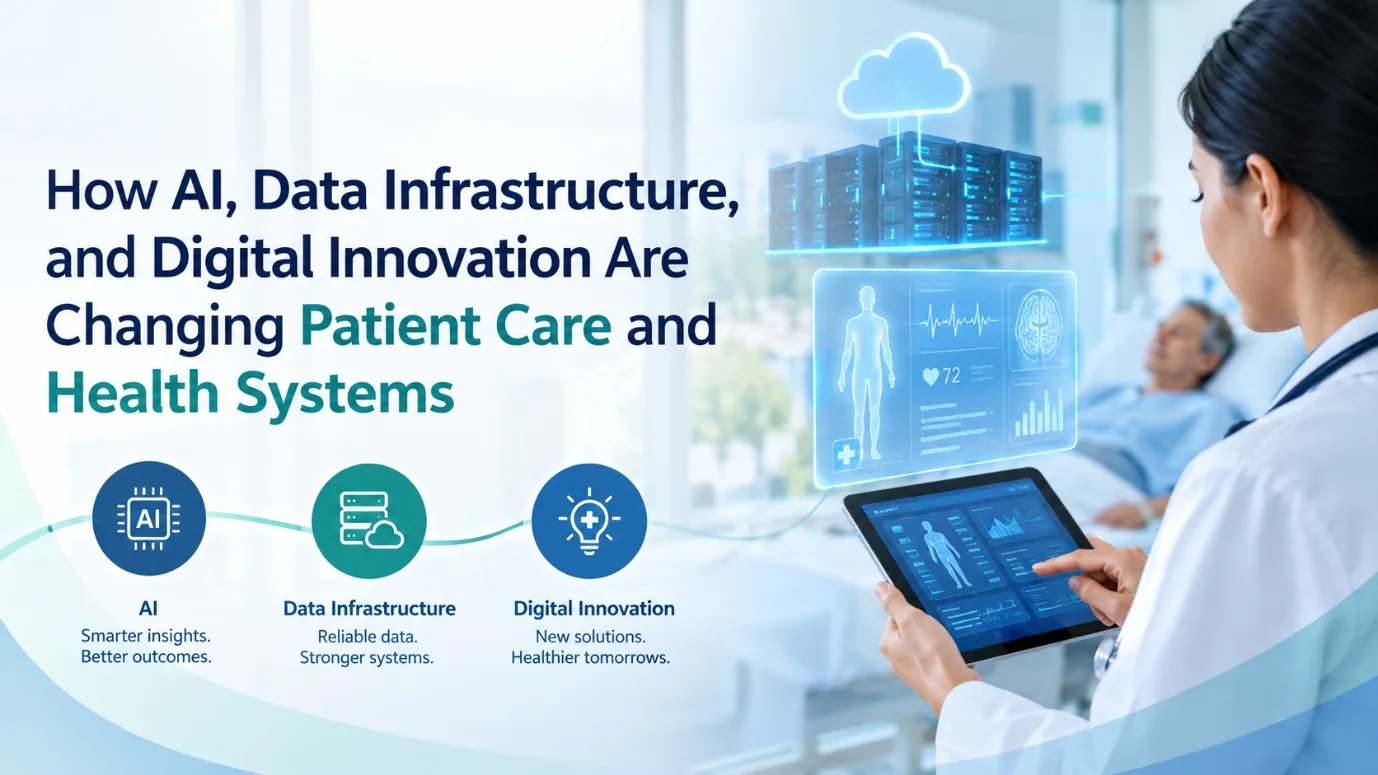
There is a lot of change happening in the healthcare industry with advent of artificial intelligence, good data infrastructure and other technological advancements in the industry. Previously, services in this industry were provided through physical meetings, manual handling of data, and decision making from personal knowledge. Currently, through systems that are interconnected, healthcare providers have better access to data, data analysis, and data sharing. Technologies like electronic health record, cloud, wearables, telehealth, and AI are enabling better data-driven healthcare delivery. The use of these technologies not only assists doctors to diagnose health issues, track patients and make better decisions but also enables patients to have better access to their health data. Data infrastructure helps in gathering and securing large amounts of medical data while digital innovation opens up new ways of providing care. The use of technology in this sector has opened opportunities to explore efficiency and personalization among others. According to Consegic Business Intelligence, the AI in healthcare market is valued at USD 46.06 billion in 2026 and is projected to reach USD 453.03 billion by 2034, reflecting the growing adoption of AI for medical imaging, clinical decision support, patient monitoring, and healthcare information systems.
How AI Is Improving Diagnosis, Treatment, and Patient Outcomes
There are numerous fields in patient care where the use of artificial intelligence is becoming more common. Artificial intelligence systems can process extensive amounts of patient data including patient files, laboratory reports, medical imaging, patient history, and others and reveal potential patterns that should be studied in more detail. For instance, in medical imaging, the use of AI can assist radiologists in the detection of abnormalities during image processing. AI can also help in the provision of personalized treatment as it takes into account the condition of a patient, his or her medical history, and other relevant details. Through the use of predictive analytics, health care providers will be able to determine which patients are at risk of certain complications and provide timely intervention. Furthermore, AI-based virtual assistants and chatbots can help schedule appointments and facilitate communication between patients and health care practitioners. However, one should be aware that despite artificial intelligence usage, it is impossible to replace the value of clinical expertise.
The Role of Data Infrastructure in Building Connected Health Systems
The success of digital healthcare solutions also hinges on effective data infrastructure that would be able to gather, store, process and exchange information securely. Hospitals and healthcare organizations produce huge volumes of information in the form of electronic medical records, imaging and diagnostics systems, lab tests results, wearable devices, patient management software, etc. The lack of appropriate infrastructure may result in fragmented data which is available in different departments of an organization or across different systems. Cloud computing, interoperable platforms, secure databases and standard data formats may assist healthcare providers in connecting all these sources of information and getting access to necessary data when it is required. Data integration might also help to improve collaboration between hospitals, specialists, laboratories, pharmacies, and other healthcare entities. It should be noted, however, that health care data are often sensitive personal information and must be properly protected. Thus, healthcare organizations should have proper cybersecurity systems, access control, encryption and governance processes.
Digital Innovation and the Rise of Personalized, Patient-Centric Care
Innovation is also taking place in the field of digital healthcare and is transforming the ways in which patients communicate with healthcare providers and take control of their health. Telemedicine software enables patients to communicate with healthcare providers without going to the clinic physically in cases when such an interaction is not needed. Wearable devices and mobile health applications can provide data on such parameters of a person's life as physical activity, heart rate, sleep pattern, and many others, making people more aware of their health status in the regular course of daily life. Remote patient monitoring may enable healthcare providers to monitor some patients remotely as well. In addition, all these solutions contribute to the transition to more continuous healthcare rather than periodic one. Digital platforms can help healthcare providers to communicate with patients through such means as appointment reminder, test results, information on medications, educational materials, and so on. Personalized healthcare may utilize available data to develop personalized plans of treatment and care. Nevertheless, access to digital healthcare is not always equitable.
AI Healthcare Systems and Their Challenges for the Future
Despite the fact that AI implementation in the healthcare industry seems very promising on paper, there are a lot of challenges involved. First of all, data privacy and security become especially relevant due to the sensitivity of the information stored by healthcare systems. Moreover, poor data quality may undermine the quality of analytics and AI-based solutions. Interoperability may become another issue, since the systems used by different healthcare organizations may have no easy way to interact with each other. It is also important that healthcare practitioners receive sufficient training in order to learn about the ways in which digital technologies operate and interpret the results of their operations. At the same time, regulatory requirements and ethics also play a vital role especially when it comes to AI usage in the field of clinical decision-making. In the future, it is expected that there will be even more focus on secure data exchange, intercommunication of platforms, AI-assistance in workflow management, and remote care solutions. The aim will not only be the implementation of technology itself but rather the meaningful usage of it.
Conclusion
AI, data infrastructure, and innovations in the digital world are transforming the sector of health care with the help of more connected and effective approaches to care. With the help of technology, like the use of AI for diagnosis, telemedicine, and wearable devices, along with data infrastructure, one is able to assist health care professionals in providing better services to patients. Yet, the successful digital transformation of the sector cannot be only about the implementation of innovations and technology. In order to do that effectively, there is a need to take into account data privacy, cyber security, interoperability, data quality, and proper training of professionals.