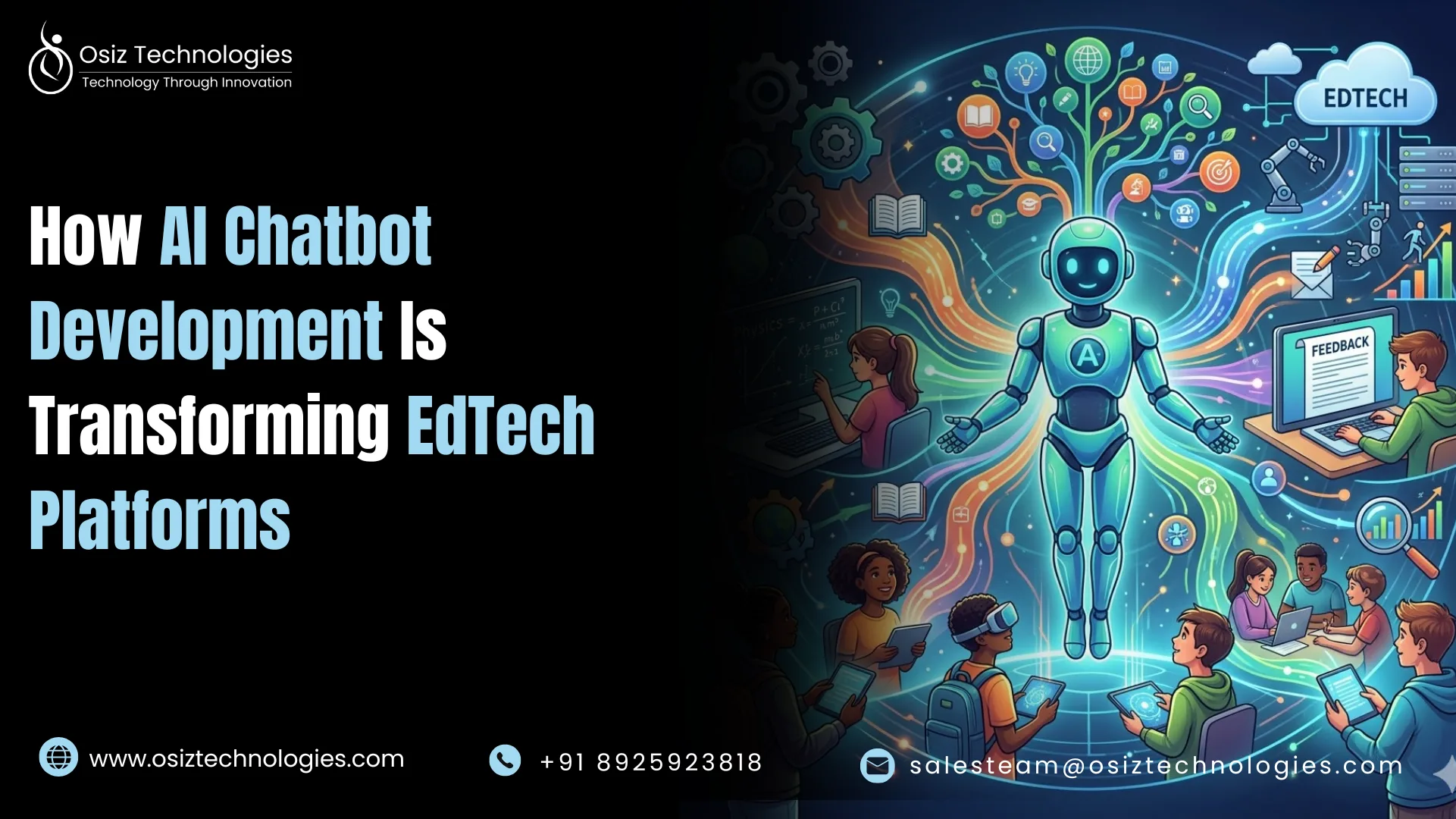
Education is no longer confined to classrooms, textbooks, or fixed schedules. The rapid shift toward digital learning has transformed how students access knowledge, interact with educators, and progress through courses. As EdTech platforms continue to evolve, the need for smarter, more responsive systems has become clear. This is where AI Chatbot Development plays a crucial role. By enabling real-time communication, personalized assistance, and automated support, AI-powered chatbots are reshaping the modern learning experience. From answering simple queries to guiding students through complex topics, these intelligent systems are becoming an essential part of digital education.
What Is AI Chatbot Development in EdTech?
AI chatbot development in EdTech refers to the creation of intelligent conversational systems designed to assist students, educators, and administrators. These chatbots use advanced technologies to understand user inputs, provide relevant responses, and continuously improve through interactions.
In educational platforms, AI chatbots act as virtual assistants that simplify learning processes. They can help students find courses, explain concepts, schedule classes, and even track academic progress. Unlike traditional support systems, chatbots offer instant responses, making learning more interactive and accessible at any time.
Why EdTech Platforms Need AI Chatbots
Growing Demand for Personalized Learning
Modern learners expect education tailored to their pace, preferences, and goals. AI chatbots analyze user behavior and learning patterns to deliver customized recommendations, ensuring a more engaging and effective learning journey.
24/7 Student Support Expectations
Students often study outside traditional hours, making round-the-clock support essential. AI chatbots provide instant assistance anytime, helping learners resolve doubts without delays.
Challenges in Traditional Learning Systems
Conventional education systems struggle with scalability, delayed responses, and limited personalization. AI chatbots address these issues by automating interactions and delivering consistent support across large user bases.
Key Use Cases of AI Chatbot Development in EdTech
AI Chatbots as Virtual Tutors
AI chatbots act as on-demand tutors, guiding students through lessons, explaining concepts, and offering additional resources to strengthen understanding.
Automated Student Query Resolution
Handling repetitive queries can overwhelm support teams. Chatbots efficiently manage common questions related to courses, schedules, and fees, freeing up human resources for more complex tasks.
Course Recommendations & Guidance
By analyzing user preferences and learning history, chatbots suggest relevant courses and learning paths, helping students make informed decisions.
Exam Preparation and Assessment Support
AI chatbots assist in exam preparation by providing practice questions, quizzes, and instant feedback, enabling students to identify areas for improvement.
Enrollment & Onboarding Assistance
From registration to course selection, chatbots simplify the onboarding process by guiding users step-by-step, reducing confusion and drop-offs.
Benefits of AI Chatbot Development for EdTech Platforms
Enhanced Student Engagement
Interactive conversations and instant responses keep students engaged, making learning more dynamic and less monotonous.
Scalable Learning Solutions
AI chatbots can handle thousands of users simultaneously, allowing EdTech platforms to scale without compromising on support quality.
Cost Reduction and Automation
By automating repetitive tasks, chatbots reduce operational costs and improve overall efficiency.
Real-Time Insights and Analytics
Chatbots collect valuable data on user behavior, preferences, and challenges, enabling platforms to optimize their offerings and improve learning outcomes.
Technologies Behind AI Chatbot Development
Natural Language Processing (NLP)
NLP enables chatbots to understand and interpret human language, allowing them to provide accurate and meaningful responses.
Machine Learning Algorithms
Machine learning helps chatbots learn from interactions, improving their responses over time and adapting to user needs.
Integration with Learning Management Systems (LMS)
Seamless integration with LMS platforms allows chatbots to access course data, track progress, and deliver personalized learning experiences.
Cloud and API-Based Architecture
Cloud infrastructure and APIs ensure scalability, flexibility, and easy integration with other systems, making chatbot deployment efficient and reliable.
Challenges and Considerations in Implementation
While AI chatbots offer numerous benefits, implementing them comes with certain challenges. Ensuring data privacy and security is a top priority, especially when handling sensitive student information. Additionally, developing chatbots that understand diverse languages and contexts requires continuous training and refinement.
Another key consideration is maintaining a balance between automation and human interaction. While chatbots can handle routine tasks, complex issues may still require human intervention. EdTech platforms must design systems that seamlessly transition between chatbot and human support when needed.
Conclusion: Shaping the Future of Learning with AI Chatbots
AI chatbots are no longer a futuristic concept—they are actively transforming how education is delivered and experienced. By enabling personalized learning, instant support, and scalable solutions, they are helping EdTech platforms meet the growing demands of modern learners.
As technology continues to advance, the role of chatbots in education will only expand, making them a vital component of digital learning ecosystems. Partnering with a reliable AI Chatbot Development Company can help businesses build intelligent solutions that not only enhance user experience but also drive long-term growth in the competitive EdTech landscape.