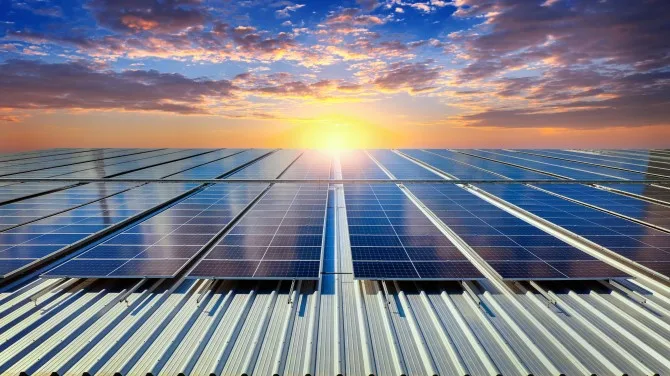

Turning the Tide: The Dawn of a New Green Tech Era
In October 2026, across the globe, cities are no longer just hubs of commerce and culture but have become living laboratories for green technology. A striking example is Singapore’s recent launch of its "EcoGrid" project, which integrates AI-driven energy distribution with solar microgrids to power entire neighborhoods. This initiative exemplifies a transformative shift—green tech is no longer a niche pursuit but a mainstream, indispensable part of urban infrastructure. The International Energy Agency reported that by mid-2026, renewable energy technologies accounted for over 45% of global electricity generation, a leap from just 29% in 2020.
Yet, this surge is not merely about clean energy. It encompasses a broad spectrum of innovations spanning carbon capture, sustainable agriculture, circular economy solutions, and next-generation materials that promise to reshape our relationship with the planet.
“Green technology has evolved from an aspirational ideal into an economic imperative and a strategic necessity for governments and corporations worldwide,” remarks Dr. Helena Vargas, a leading environmental economist at the Global Sustainability Institute.
This article explores how green tech has reached this pivotal moment by examining its roots, current breakthroughs, and what lies ahead. It draws on the latest industry data and expert perspectives to provide an authoritative, nuanced understanding of this critical sector.
From Roots to Revolution: How Green Tech Found Its Footing
Understanding where green technology stands today requires revisiting the past two decades of environmental and technological progress. The early 2000s saw nascent efforts focused mainly on renewable energy with solar and wind emerging as viable alternatives to fossil fuels. Back then, high costs and limited scalability were major obstacles. However, two key trends laid the foundation for the current surge.
First, the rapid advancement of digital technologies—especially AI, IoT, and big data—created new possibilities for optimizing energy use and managing resources efficiently. Second, increasing regulatory pressure and global climate agreements, such as the Paris Accord, galvanized investment in green innovation.
Between 2010 and 2020, venture capital in green tech exploded, with billions funneled into startups focused on battery storage, smart grids, and clean transportation. The advent of electric vehicles by companies like Tesla and BYD accelerated adoption, while governments worldwide began embedding sustainability into policy frameworks.
By 2020, the concept of a circular economy gained traction, emphasizing resource reuse and waste elimination. This holistic approach expanded green tech’s scope beyond energy to include materials science, water management, and sustainable agriculture.
“The marriage of digital and environmental technologies created a fertile ground for exponential innovation,” explains Prof. Marcus Lee, author of Green Tech Frontiers.
This historical context clarifies why 2026 is a watershed moment. The sector has matured from scattered projects into a cohesive ecosystem aligned with global sustainability goals.
Data-Driven Innovations: Decoding the Current Green Tech Landscape
Today’s green technology landscape is vast and multifaceted. According to the latest figures from the Global Clean Energy Council, global investment in green tech reached $1.2 trillion in 2025, a 25% increase from 2023. This capital is distributed across various domains:
- Renewable Energy Generation: Solar and wind remain dominant, but emerging sources like tidal and geothermal are gaining momentum.
- Energy Storage: Breakthroughs in solid-state batteries and flow batteries have improved storage capacity by over 40%, addressing intermittency issues.
- Carbon Capture and Utilization: Direct Air Capture (DAC) technologies have scaled, with facilities like Climeworks in Iceland capturing thousands of tons of CO2 annually.
- Sustainable Materials: Innovations such as bio-based plastics and carbon-negative cement are reducing industrial emissions.
- Smart Agriculture: AI-driven precision farming and vertical farms are enhancing yields while minimizing water and chemical use.
Comparative analysis shows that countries investing heavily in integrated green tech ecosystems are outperforming others in sustainability indices and economic growth. The European Union, China, and the United States each lead different segments, but collaboration is increasing through global initiatives.
For example, battery production capacity worldwide is projected to exceed 4 terawatt-hours by 2030, quadrupling 2020 levels. This surge is critical for the electrification of transportation and grid stability.
“The synergy between technological advances and policy support is crucial. Neither can succeed in isolation,” notes Dr. Farah Al-Jabiri, chief technology officer at GreenFuture Innovations.
These data points reveal a sector on the cusp of widespread adoption, yet challenges remain in scaling equitable access and minimizing environmental footprints of green technologies themselves.
Breakthroughs and Trends Shaping Green Tech in 2026
In 2026, several key developments are redefining green tech’s trajectory. Notably, quantum computing has begun to impact climate modeling and materials discovery, enabling more rapid innovation cycles. Companies such as QuantumEco Labs have unveiled prototypes of quantum-enhanced solar cells with efficiency rates surpassing 35%.
Another trend is the integration of blockchain for transparent carbon credit trading and supply chain verification, which enhances accountability and incentivizes emissions reductions. The launch of the GreenChain Consortium in late 2025, involving over 100 multinational corporations, marks a milestone in this space.
On the infrastructure side, decentralized energy systems empowered by AI and IoT allow consumers to become prosumers—both producing and consuming energy. This shift reduces transmission losses and boosts resilience against climate-related disruptions.
Moreover, bioengineering breakthroughs have enabled the development of carbon-neutral synthetic fuels derived from algae and captured CO2, offering alternatives for hard-to-decarbonize sectors like aviation and shipping.
- Key 2026 innovations include:
- Quantum-enhanced photovoltaics
- Blockchain-based carbon markets
- Decentralized AI-powered microgrids
- Carbon-neutral synthetic biofuels
- Advanced bio-based construction materials
These advances are supported by evolving regulatory frameworks that prioritize lifecycle sustainability and circularity, ensuring that new technologies do not trade one environmental problem for another.
For a deeper exploration of these trends, see our detailed analysis in Green Tech’s Leap Forward: Innovations Reshaping Our Sustainable Future.
Industry Voices: Perspectives from the Frontlines of Green Innovation
Industry leaders emphasize that collaboration across sectors and geographies is essential for maximizing green tech’s impact. Jennifer Morales, CEO of EcoSphere Technologies, highlights how partnerships with governments and nonprofits accelerate deployment in underserved regions.
“Scaling green tech requires aligning incentives across stakeholders—businesses, regulators, and communities alike,” Morales says. “It’s about building ecosystems, not just products.”
Academic experts point to education and workforce development as pivotal. The increasing demand for green tech skills has prompted universities worldwide to launch interdisciplinary programs combining engineering, environmental science, and data analytics.
Financial institutions also play a transformative role. Green bonds and sustainability-linked loans now account for a significant share of global debt markets, facilitating capital flow to impactful projects. According to BloombergNEF, green finance exceeded $3 trillion in 2025, doubling from 2022.
However, critics caution against techno-optimism. They stress the need for inclusive policies ensuring that green tech benefits do not bypass marginalized communities, reinforcing existing inequities.
Dr. Samuel Osei, a social ecologist, warns: “Innovation alone can’t solve systemic problems. Equity must be baked into sustainability strategies.”
These perspectives underscore the multifaceted nature of green tech’s promise and challenges.
Looking Ahead: What to Watch in Green Tech’s Next Decade
As we look beyond 2026, several critical dynamics will shape green tech’s evolution. One is the scaling of negative emissions technologies, which many climate models identify as essential to meet net-zero targets. Enhanced mineralization and ocean-based carbon sequestration are emerging frontiers.
Another is the rise of circular economy platforms powered by AI and blockchain that optimize resource flows globally, reducing waste and extending product lifecycles.
Urban centers will increasingly adopt smart city frameworks integrating green tech for transportation, waste, and energy management. These efforts will be monitored closely for replicability and scalability.
The geopolitical dimension will also intensify. As nations vie for leadership in green tech, supply chain security for critical materials like lithium and rare earth elements will prompt strategic alliances and innovation in material substitution.
- Key future trends to monitor:
- Expansion of carbon removal technologies
- Widespread adoption of circular economy marketplaces
- Smart cities leveraging integrated green systems
- Geopolitical shifts influencing resource access
- Growth in green tech education and workforce development
Ultimately, the trajectory depends on sustained investment, policy coherence, and public engagement. For readers interested in beginning their own green tech journey, resources like Starting Your Journey in Green Tech: Essential Steps for Meaningful Impact offer practical guidance.
Green technology in 2026 stands at a crossroads: it is both a beacon of hope and a complex challenge demanding integrated solutions. Its continued progress will be a defining factor in humanity’s ability to navigate the climate crisis and secure a sustainable future.