Unraveling the AI Revolution: A Snapshot from Silicon Valley’s Smart Labs
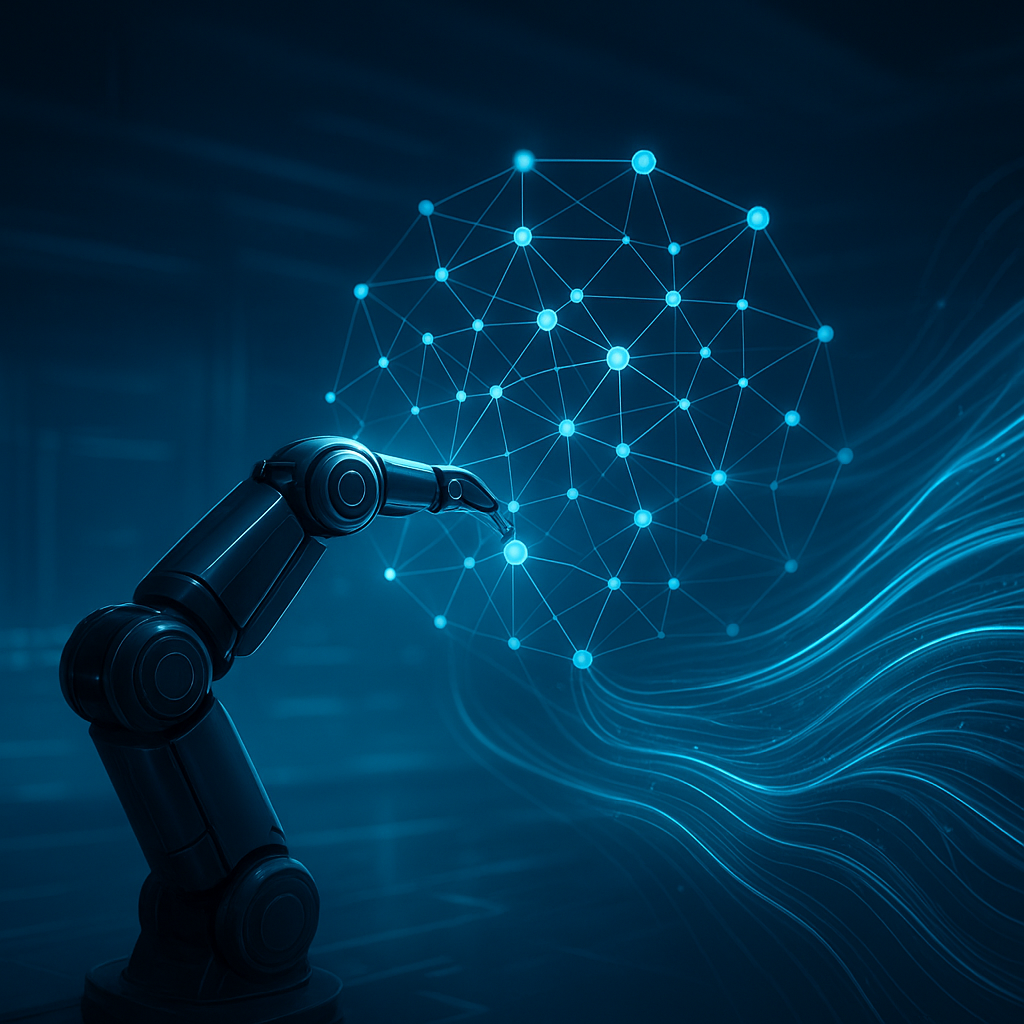
In a sprawling research center just outside Silicon Valley, a robotic arm deftly assembles microchips while an adjacent cluster of servers hums with machine learning algorithms analyzing terabytes of data in real time. This scene, emblematic of 2026’s AI advancements, distills a transformative reality: artificial intelligence is no longer theoretical but deeply embedded in the fabric of modern technology. The convergence of machine learning, robotics, and algorithms is driving a paradigm shift across industries, pushing the boundaries of what machines can autonomously achieve. According to Gartner’s latest report, global AI adoption has surpassed 75% of enterprises, highlighting the urgency and scale of this revolution.
Yet, behind the glossy headlines and futuristic demos lies a complex interplay of technologies. Machine learning provides the adaptive intelligence, robotics offers the physical manifestation, and algorithms serve as the underlying logic. Together, they form the triad powering innovations from autonomous vehicles to precision medicine. This article explores these forces in depth, tracing their evolution, quantifying their current impact, and projecting what lies ahead.
From Concept to Reality: The Evolution of AI’s Core Pillars
Artificial intelligence’s journey spans over seven decades, but only in recent years have its foundational elements—machine learning, robotics, and algorithms—reached a level of maturity and integration capable of real-world disruption. Early AI efforts in the mid-20th century focused on symbolic reasoning and rule-based systems. However, these approaches struggled with scalability and complexity.
The breakthrough came with machine learning, especially the rise of deep learning in the 2010s, which enabled systems to learn patterns from vast datasets without explicit programming. Robotics, historically limited to repetitive manufacturing tasks, has evolved through advances in sensors, actuators, and control systems, now enabling robots to operate autonomously in dynamic environments. Meanwhile, algorithmic innovations, including optimization techniques and probabilistic models, have provided the mathematical backbone necessary for AI’s decision-making capabilities.
Industry milestones highlight this progression:
- 2012: AlexNet’s deep learning success in image recognition sparked widespread adoption of neural networks.
- 2016: DeepMind’s AlphaGo demonstrated strategic reasoning by defeating a world champion Go player.
- 2020–2025: The integration of AI with robotics accelerated, with companies like Boston Dynamics and Tesla introducing robots and autonomous vehicles capable of complex tasks.
The synergy of these fields has transformed AI from isolated experiments into a cohesive ecosystem driving innovation across sectors.
Deconstructing the Triad: Data, Algorithms, and Autonomous Systems in 2026
Machine learning, robotics, and algorithms each contribute unique capabilities to AI’s overall power, but understanding their interaction requires a granular examination.
Machine Learning (ML) sits at the heart of AI’s cognitive ability. By 2026, ML models have grown exponentially in complexity and scale. According to OpenAI’s recent whitepaper, GPT-7 employs over 2 trillion parameters, enabling nuanced understanding of language and context far beyond previous generations. This scalability has unlocked applications in natural language processing, computer vision, and predictive analytics.
Robotics has simultaneously transitioned from fixed, pre-programmed machines to adaptable, autonomous agents. Recent advancements in soft robotics and tactile sensing allow robots to perform delicate operations in healthcare and agriculture. For example, robotic surgeons now assist with microsurgeries by integrating real-time ML feedback to adjust to tissue variability.
Algorithms are the unsung heroes enabling efficient processing and decision-making. Innovations in reinforcement learning algorithms, such as Proximal Policy Optimization (PPO) and Evolution Strategies, have enhanced robots’ ability to learn from trial and error in real-world environments. Moreover, quantum-inspired algorithms are being explored to accelerate problem-solving in logistics and cryptography.
Key statistics illustrate this fusion:
- AI-driven robotics market valued at $95 billion in 2026, growing at 22% CAGR (Statista).
- ML model training energy consumption reduced by 40% due to algorithmic efficiency improvements (MIT Technology Review).
- Over 60% of AI deployments now incorporate real-time adaptive algorithms for autonomous decision-making (IDC report).
These figures underscore the interdependence of these components, each amplifying the others’ capabilities.
2026 Breakthroughs: How AI’s Core Technologies Are Shaping Industry and Society
The latest developments in 2026 showcase AI’s transformative role across domains. In manufacturing, collaborative robots (“cobots”) equipped with ML algorithms are boosting productivity by learning alongside human workers, minimizing downtime and errors. For example, Siemens reported a 30% efficiency increase in its smart factories through AI integration.
In the healthcare sector, AI-powered diagnostic robots combine image recognition algorithms with robotic precision to perform biopsies remotely, improving access in underserved regions. Researchers at Johns Hopkins University recently published a study demonstrating a robotic system achieving 95% accuracy in tumor detection and sampling.
Transportation has witnessed further disruption as autonomous vehicles leverage reinforcement learning algorithms to navigate complex urban environments safely. Waymo’s recent fleet expansion includes over 20,000 fully autonomous taxis servicing seven major cities worldwide, validated by a 99.8% safety record in 2025.
Moreover, AI algorithms are enhancing cybersecurity by autonomously detecting and mitigating threats in real time. According to Cybersecurity Ventures, AI-driven defenses have reduced breach costs by 25% in organizations adopting these technologies.
“The integration of machine learning, robotics, and sophisticated algorithms is not just enhancing efficiency but redefining human-machine collaboration,” says Dr. Elena Martinez, CTO at RoboTech Innovations.
These advancements reflect a broader trend toward intelligent systems that are more autonomous, adaptive, and integrated into everyday life.
Industry Perspectives: Challenges and Opportunities Ahead
Despite impressive gains, significant hurdles remain. Experts emphasize that data quality and bias continue to challenge machine learning outcomes, necessitating transparent and ethical algorithm design. The robotics community grapples with replicating human dexterity and contextual awareness outside controlled environments.
Furthermore, the energy footprint of training ever-larger ML models raises sustainability concerns. Innovative solutions such as neuromorphic computing and distributed learning are being explored to mitigate environmental impact.
On the opportunity front, AI-driven automation promises to unlock new economic value. PwC estimates AI could contribute up to $15.7 trillion to the global economy by 2030, driven by productivity gains and new product innovations.
Industry leaders also highlight the importance of cross-disciplinary collaboration. As noted in a recent TheOmniBuzz feature Rethinking Intelligence: The Synergy of Machine Learning, Robotics, and Algorithms, fostering integration between algorithm developers, roboticists, and data scientists is vital for sustainable progress.
“True AI innovation emerges at the intersection of disciplines, where algorithms meet physical agents in dynamic environments,” remarks Prof. Samuel Lee, AI Ethics Chair at Stanford University.
Looking Forward: What to Watch in AI’s Next Frontier
As AI technologies mature, several trends merit close attention. Firstly, the rise of edge AI—embedding machine learning and decision-making capabilities directly into devices—will reduce latency and reliance on centralized cloud infrastructure. This shift enables real-time responsiveness in applications like autonomous drones and smart manufacturing.
Secondly, advances in explainable AI are poised to enhance trust and regulatory compliance by making algorithmic decisions more transparent to users and auditors. This is critical as AI systems increasingly impact healthcare, finance, and legal sectors.
Finally, the fusion of AI with emerging technologies like quantum computing and bioinformatics promises to unlock breakthroughs in drug discovery and materials science. Industry watchers point to startups leveraging quantum-enhanced algorithms to accelerate molecular simulations.
Key future considerations include:
- Ethical frameworks and governance models for AI deployment.
- Workforce transformation and reskilling in response to automation.
- Global cooperation to address AI safety and security challenges.
For those interested in exploring AI’s future trajectory more deeply, TheOmniBuzz’s How Machine Learning, Robotics, and Algorithms Are Forging the New AI Frontier offers further insights.
Case Study: Autonomous Agriculture Robots Transforming Food Production
One compelling example of AI’s impact is the deployment of autonomous robots in agriculture. In the United States Midwest, AgriBot Inc. has pioneered a fleet of AI-driven robots that perform planting, weeding, and harvesting with minimal human intervention. These robots utilize advanced computer vision algorithms to identify crops and pests accurately, while machine learning models optimize route planning and resource allocation.
Since their introduction in 2024, these systems have increased crop yields by 18% and reduced pesticide use by 35%, according to company reports. Their adaptability to diverse crop types and terrains exemplifies the practical integration of machine learning, robotics, and algorithms.
This real-world application highlights key success factors:
- Robust sensing and perception capabilities to operate in unstructured environments.
- Continuous learning models enabling adaptation to seasonal and climatic changes.
- Efficient algorithms balancing speed, precision, and energy consumption.
The AgriBot case underscores AI’s potential not only to enhance productivity but also to advance sustainability goals in critical industries.