
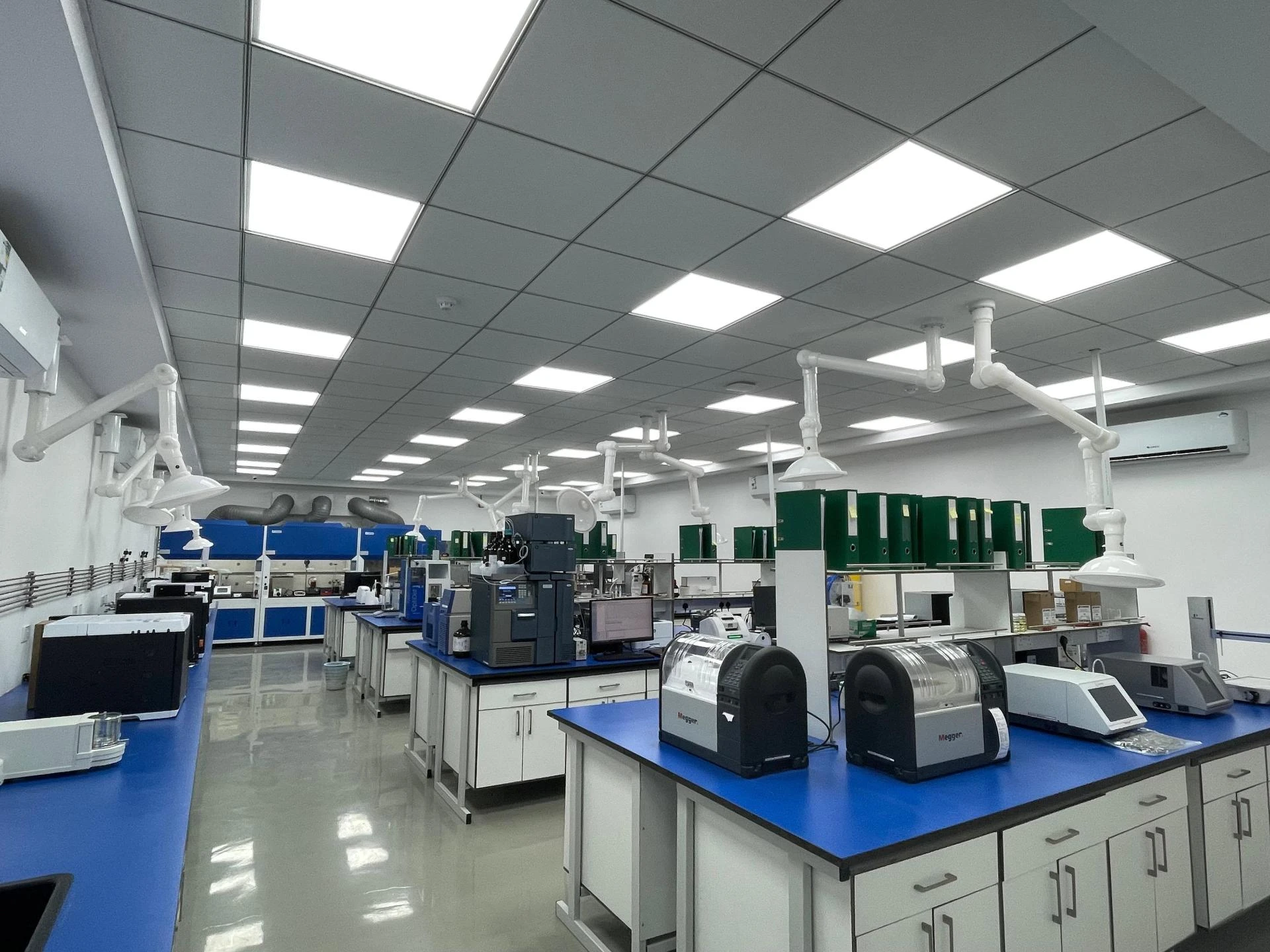
The oil and gas business is a pillar of the Saudi Arabian economy, and the quality control needs to be strict to ensure the safety and efficiency. An Oil and Gas Testing Laboratory in Saudi Arabia plays an important role in analyzing fuels and lubricants, among other petroleum products, for compliance with international standards. The laboratories offer a full range of testing services that support equipment performance, operational reliability, regulatory compliance, and help industries optimize production and avoid costly downtime.
Core Services of Oil and Gas Testing Laboratory in Saudi Arabia
Lubricating Oil Analysis
Lubricating oil testing is conducted to establish whether the oil being analyzed falls within the required standards for use in internal combustion engines and industrial mechanisms through various measurements of its physical, chemical, and performance properties. The tests are used to ensure the efficiency of the equipment, reduce wear, and increase the service life of mechanical components. Some of the measurements provided in comprehensive testing include air release, aniline point, boiling point, cloud point, density, and other measurements.
Transformer Oil Analysis
Transformer oil testing is critical in ensuring the well-being and functioning of transformers within the electric power systems. The insulating oil is the subject of testing, which needs to be well-insulating, cooling, and protective of the parts of the transformers. The typical tests are acid number, dielectric breakdown voltage, dissolved gas analysis, dielectric dissipation factor, copper corrosion, and much more. Such analyses help in the monitoring of the condition, fault diagnosis, and maintenance planning, and also in making sure that the regulatory standards are met.
Crude Oil and Heavy Fuel Oil Analysis
Crude oil and heavy fuel oil testing are important in the refining process and can offer a great understanding of the quality of feedstock and the efficiency of the process. Some of the parameters analyzed in the laboratory include ash content, asphaltenes, carbon residue, density, API gravity, electrical conductivity, flash and fire points, heating value, kinematic viscosity, sulfur content, total acid number, and water content, among others. This kind of testing guarantees that handling is done well and refining processes are made more efficient to yield better, safer, and efficient production.
Conclusion
The Oil and Gas Testing Laboratory in Saudi Arabia is crucial in quality assurance in oil products, operational efficiency, and regulatory compliance. These laboratories assist the oil and gas industry to perform checks on the reliability, safety, and sustainability of performance by equipping them with complete analyses of lubricants, fuels, greases, asphalt, and bitumen, as well as coolants.