Charging Ahead: The Electric Vehicle Surge Capturing Global Roads
In the early months of 2026, electric vehicles (EVs) have surpassed a remarkable milestone: global EV sales have exceeded 20 million units annually for the first time, according to industry reports. This surge reflects a tectonic shift in automotive preferences, driven by stricter emissions regulations, technological breakthroughs, and growing consumer appetite for sustainable mobility. Urban centers worldwide are witnessing EVs dominating parking lots and highways, a vivid sign of transformation from the internal combustion engine (ICE) era to an electrified future.
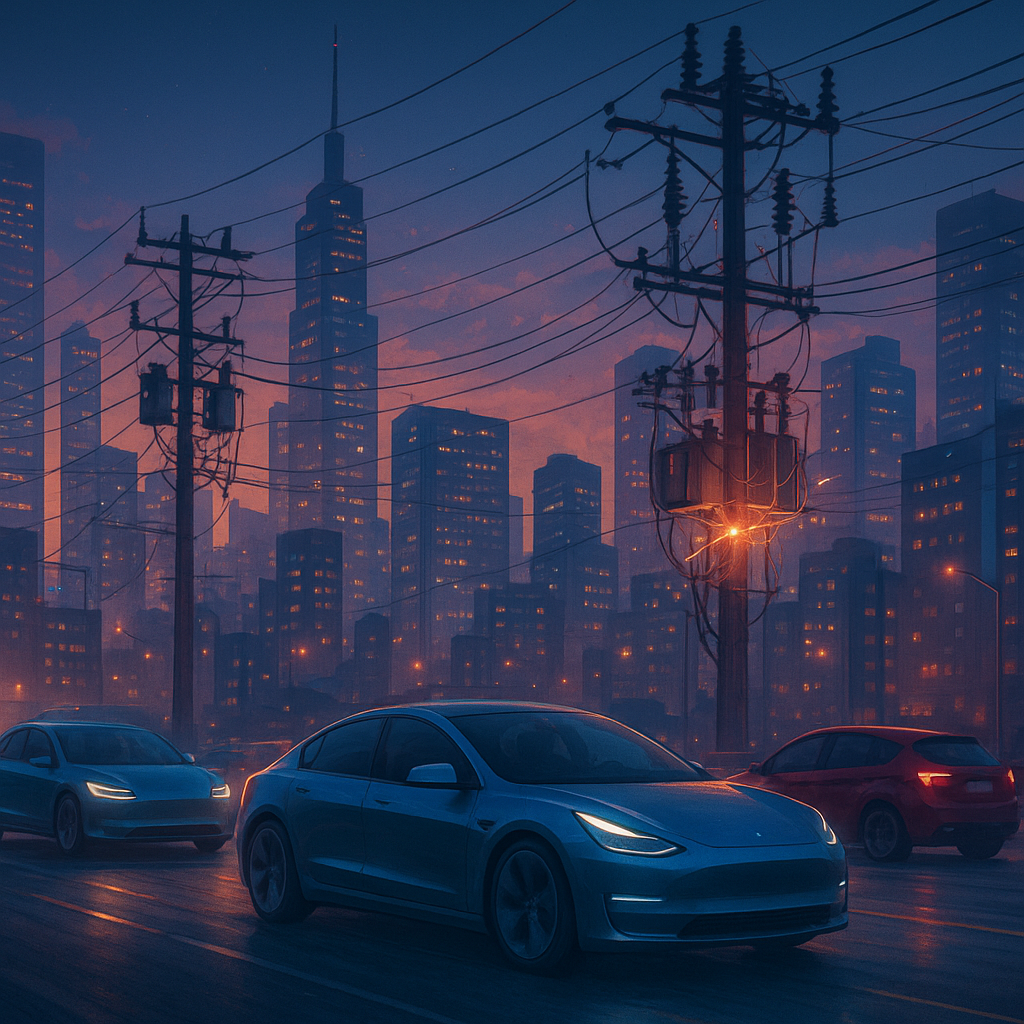
Consider the example of Oslo, Norway, where over 85% of new car registrations in the first quarter of 2026 were electric. This city has become a living laboratory showcasing the potential of EV adoption when supported by robust policy frameworks and infrastructure investments. Yet, this electrification wave is not without its challenges. The rapid pace of EV uptake is exerting unprecedented stress on electrical grids, raising concerns about capacity, reliability, and environmental sustainability of power generation.
As we explore the current state of EVs, it becomes clear that the automotive revolution is outpacing the energy infrastructure designed to support it. This article will dissect the factors propelling EV growth, analyze the grid readiness crisis, examine technological and policy responses, and assess future outlooks.
From Niche to Mainstream: The Road to Electric Vehicle Dominance
The rise of electric vehicles is rooted in decades of evolving technology and shifting market dynamics. Initially, EVs were niche products with limited range and high costs, largely confined to early adopters and environmental enthusiasts. However, breakthroughs in lithium-ion battery technology, government incentives, and escalating concerns about climate change have catalyzed rapid adoption.
The 2010s saw the first major wave, with Tesla’s Model S and Nissan Leaf capturing public imagination. By the early 2020s, improvements in battery energy density and manufacturing scale drove down costs significantly. According to BloombergNEF, the average cost per kilowatt-hour of lithium-ion batteries fell from over $1,200 in 2010 to below $100 by 2025. This price plunge enabled automakers to produce affordable, longer-range EVs that could compete with ICE vehicles on price and performance.
Government policy also played a pivotal role. Countries in Europe, China, and North America implemented stringent emissions targets and phased out ICE vehicle sales. Subsidies, tax breaks, and zero-emission vehicle mandates accelerated consumer uptake. China, the world’s largest EV market, alone accounted for nearly 50% of global EV sales by 2025.
Public infrastructure investments followed suit. The expansion of fast-charging networks by companies like ChargePoint, Ionity, and Tesla’s Supercharger network removed a key barrier to adoption: range anxiety. Urban planners integrated EV considerations into sustainable transport policies, often coordinating with utilities to anticipate load requirements.
Analyzing the Numbers: EV Growth Meets Grid Constraints
The accelerating demand for electric vehicles has profound implications for electricity grids. A key challenge lies in the sheer volume of additional electricity required to power millions of EVs, especially during peak hours. According to the International Energy Agency (IEA), an average EV consumes roughly 30 kWh to travel 100 miles. Multiply that by millions of vehicles, and the demand surges dramatically.
Data from the U.S. Energy Information Administration (EIA) reveals that EV charging in the United States alone increased electricity demand by approximately 40 terawatt-hours (TWh) in 2025 compared to 2020 levels. This added load corresponds roughly to the annual electricity consumption of a medium-sized country like Sweden.
However, electricity grids were originally designed for predictable, centralized demand from residential and industrial consumers—not the high, often synchronous loads imposed by EV fast-charging stations. The increased load can lead to grid congestion, voltage instability, and increased risk of blackouts if not properly managed.
"The mismatch between EV adoption and grid readiness is the defining energy challenge of this decade," said Dr. Leah Martinez, a leading energy systems analyst. "Without strategic upgrades and smart integration, the benefits of electrification could be undermined by energy insecurity."
Regional disparities also complicate the picture. Urban areas with dense populations and established infrastructure can better accommodate EV charging, while rural and developing regions face significant hurdles. The distribution grids in many places are aging and require modernization to handle bi-directional electricity flows from vehicle-to-grid (V2G) technologies.
Key Technical Challenges Include:
- Peak load spikes: Fast chargers demand high power instantaneously, stressing transformers and feeders.
- Grid stability: Sudden charging surges can destabilize voltage levels and frequency.
- Renewable integration: Aligning EV charging with intermittent solar and wind generation to maximize green energy use.
- Infrastructure gaps: Insufficient public charging in underserved areas limits EV adoption equity.
2026 Developments: Innovations and Policies Tackling the Grid Challenge
The past year has witnessed a flurry of initiatives aimed at bridging the gap between EV demand and grid capacity. Utilities, automakers, and policymakers are collaborating to deploy smart charging solutions, grid upgrades, and regulatory reforms that enable a more resilient and flexible energy ecosystem.
One notable trend is the widespread adoption of smart charging infrastructure. These systems use real-time data and AI algorithms to shift charging loads to off-peak hours or times of high renewable energy availability, smoothing demand peaks. Companies like ChargePoint and Enel X have rolled out intelligent charging platforms integrating vehicle telematics and grid signals.
Vehicle-to-grid (V2G) technology is also gaining traction. V2G allows EVs to discharge stored energy back to the grid during peak demand periods, effectively transforming them into distributed energy resources. Pilot programs in Japan, the Netherlands, and California have demonstrated the viability of V2G in enhancing grid reliability and reducing energy costs.
On the policy front, governments are updating grid codes and incentive schemes to support these innovations. The European Union’s Grid Modernization Directive, enacted in late 2025, mandates smart meter deployment and grid-edge flexibility services. Similarly, the U.S. Department of Energy’s Grid Resilience Program has allocated $2.5 billion to upgrade transmission and distribution infrastructure with EV integration in mind.
Moreover, automakers are increasingly designing EVs with integrated energy management capabilities. Tesla’s latest models released in early 2026 come equipped with bidirectional charging and intelligent energy optimization software, setting new industry standards.
"Smart charging and V2G are no longer futuristic concepts—they are essential tools to harmonize transportation electrification with grid stability," stated Elena Rossi, Chief Technology Officer at Enel X.
2026 Highlights in Numbers:
- Over 3 million smart chargers deployed globally.
- Vehicle-to-grid participation increased by 150% year-over-year.
- Renewable energy share in EV charging rose to 45% in Europe.
- Investment in grid modernization projects exceeded $20 billion worldwide.
Industry Impact and Expert Perspectives: The New Automotive-Energy Nexus
The intertwining of electric vehicles and energy grids has reshaped both industries, spawning new collaborations and competitive dynamics. Traditional automakers are evolving into energy service providers, while utilities are becoming mobility enablers.
Industry leaders emphasize the importance of cross-sector partnerships. General Motors, for instance, has partnered with utility companies in the U.S. to roll out integrated EV charging and grid management solutions. Similarly, Volkswagen’s Electrify America subsidiary collaborates with energy firms to expand fast-charging networks powered by renewable energy.
Experts highlight the emerging role of data analytics and AI in optimizing EV-grid interactions. Real-time monitoring, predictive maintenance, and demand forecasting are critical to maintaining grid resilience amid fluctuating loads.
However, challenges remain. Regulatory fragmentation, cybersecurity risks, and consumer acceptance of dynamic pricing and load management are hurdles to widespread deployment.
Energy economist Dr. Raj Patel notes, "The EV transition is driving a paradigm shift in how we conceive mobility—not just as transport but as a distributed energy asset. This convergence will redefine value chains and customer relationships in the coming decade."
What to Watch: Navigating the Road Ahead for EVs and Grids
Looking forward, several trends will shape the trajectory of electric vehicles and grid integration through the late 2020s. Key areas to monitor include:
- Battery innovation: Solid-state batteries and alternative chemistries promise higher density and faster charging, potentially easing grid stress.
- Grid-edge technologies: Expansion of microgrids, home energy storage, and peer-to-peer energy trading will enhance local flexibility.
- Policy evolution: Harmonized global standards for EV-grid interoperability and incentives for green charging will accelerate adoption.
- Urban planning: Integration of EVs with public transit and shared mobility platforms to optimize overall energy use.
Consumer behavior will also play a critical role. Education and incentives to encourage off-peak charging and participation in demand response programs will be essential to managing load effectively.
For those interested in a broader context of automotive innovations and sustainability, you might enjoy exploring Cars in 2026: Innovations, Industry Shifts, and Future Roadmaps as well as The State of Cars in 2026: Innovation, Sustainability, and Market Dynamics for comprehensive insights.
Ultimately, the electrification of transport presents an unprecedented opportunity to reduce carbon emissions and reshape energy systems. Yet, realizing this potential demands coordinated action to upgrade grids, deploy smart technologies, and foster consumer engagement.
"The future of mobility is electric, but its success hinges on a resilient and intelligent grid infrastructure," summarized energy strategist Mia Chen. "Investment, innovation, and collaboration are the pillars that will sustain this transformation."