The dining table has always been the heart of the home, but its design is changing fast. Straight edges and uniform surfaces are giving way to softer, more expressive forms that feel personal and artistic. Today, a custom made dining table is less about filling a room and more about defining it, with curves, texture, and natural wood leading the way.
At Zorka Furniture, these trends reflect a broader shift in how homeowners think about furniture. Instead of settling for standard shapes, they want pieces that fit their space, tell a design story, and feel warm and inviting at the same time.
Trend 1: Flowing Curves Over Hard Angles
Curved forms are one of the strongest movements in current dining design. Rounded edges, sweeping bases, and fluid silhouettes soften a room and make it feel more welcoming.
Why curves are so popular:
- They improve flow, making it easier to move around the table
- They feel inviting, encouraging conversation and connection
- They create visual movement, adding energy without clutter
- They contrast beautifully with the straight lines found in most architecture
Curved tables, whether oval, round, or freely organic, bring a sense of ease to dining spaces of every size.
Trend 2: Rich, Tactile Texture
Texture has become a defining feature of modern design. Smooth, flat surfaces are being replaced by pieces that invite touch and catch the light in interesting ways.
In dining tables, texture appears through:
- Sculptural bases with layered or rippled forms
- Visible wood grain treated as a design feature rather than hidden
- Carved or shaped details that add depth and shadow
- Mixed finishes that pair matte wood with glossy accents
This focus on texture helps a table feel crafted rather than manufactured, giving it a presence that photographs and real-life visits both appreciate.
Trend 3: Natural Wood as the Foundation
Even as designs become more experimental, natural wood remains central. Its warmth balances bold shapes and gives modern forms a sense of grounding.
Natural wood offers:
- Authentic character, with grain patterns unique to every piece
- Durability for years of daily meals and gatherings
- Timeless appeal, avoiding the quick aging of trend-driven materials
- Versatility, pairing well with metal, glass, acrylic, and stone
Oak, walnut, and ash are especially popular for their rich tones and workability, making them ideal for sculptural and curved designs.
Featured Design: Aurora Flow
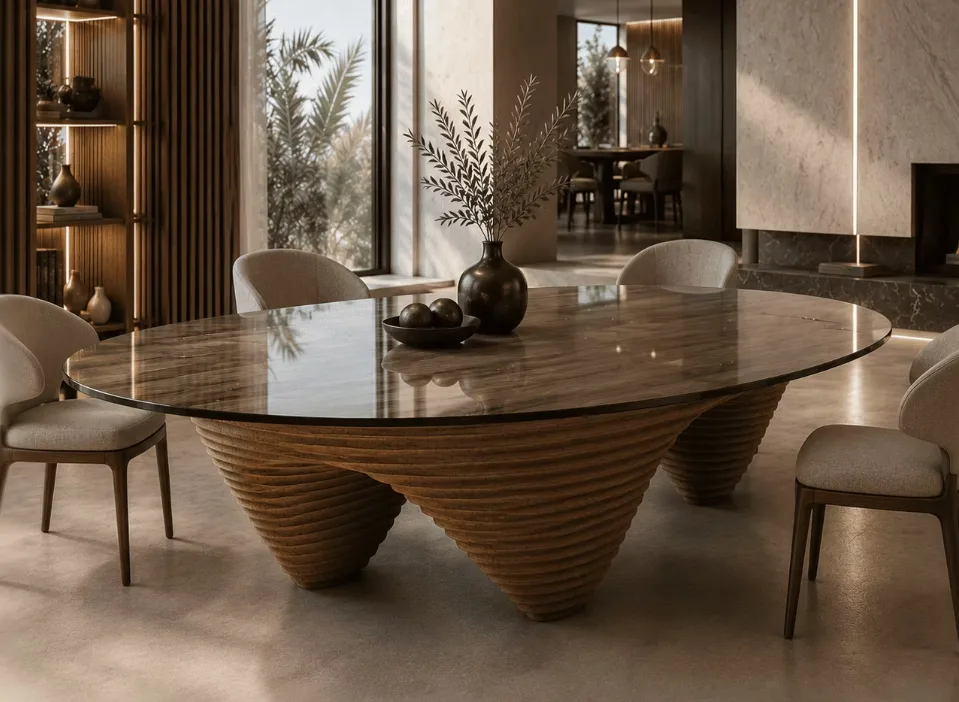
A standout example of these trends coming together is the Aurora Flow from Zorka Furniture. This contemporary parametric art table features a sculptural oak structure that blends flowing curves with expressive texture, all grounded in natural wood. It shows how a dining table can serve as both a practical gathering spot and a true centerpiece, bringing movement and warmth into the room at once.
For homeowners drawn to organic design, Aurora Flow offers a clear look at how modern craftsmanship can turn a table into functional art.
The Role of Parametric Design
Many of today's most striking tables rely on parametric design, which uses computational modeling to create complex, fluid forms with structural precision. This approach allows makers to achieve shapes that would be difficult to carve by hand while keeping the table strong and stable.
Key advantages include:
- Precise, repeatable patterns that feel organic yet controlled
- Efficient structures that stay sturdy despite delicate-looking details
- Greater creative freedom in shape and proportion
- Consistent quality across larger surfaces
Why Customization Matters
Trends are exciting, but a table has to work in a real home. Customization lets homeowners adapt popular styles to their exact needs, including:
- Dimensions that suit the room and seating requirements
- Wood species and finishes that match the existing palette
- Shape and base design tailored to traffic flow
- Scale that feels balanced rather than overwhelming
Many people begin their search by trying to buy dining table furniture from standard retail collections, only to find that none of the options truly fit their space or style. Custom design solves that problem by building the piece around the home instead of the other way around.
Craftsmanship and Longevity
Trends come and go, but quality lasts. Investing in custom wood furniture means choosing materials and construction methods meant to endure, from solid joinery to protective finishes that preserve the wood's natural beauty. A well-made table can serve a household for decades and often becomes a cherished part of family life.
The Custom Design Process
Creating a custom dining table typically includes:
- Consultation to discuss style, space, and seating needs
- Design development, exploring shapes, textures, and materials
- Visualization, often with renderings before production
- Crafting, where the table is built with precision and care
- Delivery and setup, ensuring a perfect fit in the dining room
Final Thoughts
Curves, texture, and natural wood are shaping the next generation of dining tables, and together they create spaces that feel warm, expressive, and personal. Choosing a custom made dining table lets you embrace these trends while ensuring the piece fits your home and lifestyle. Working with a dedicated craftsman like Zorka Furniture means your table will be built with both creativity and lasting quality.
FAQ
1. What are the biggest dining table trends right now?
Flowing curves, rich textures, and natural wood finishes are leading the way, often combined in sculptural designs.
2. Why are curved dining tables so popular?
Curves soften a room, improve movement around the table, and create a welcoming atmosphere that encourages conversation.
3. Which wood types work best for custom tables?
Oak, walnut, and ash are popular for their durability, beautiful grain, and suitability for shaped or sculptural designs.
4. What is a parametric dining table?
It's a table designed with computational modeling, producing complex, organic forms with precise structural engineering.
5. How long does it take to create a custom dining table?
Timelines vary by complexity, but most custom tables take several weeks from consultation to delivery.