Imagine a single parent who must choose between losing a day’s wages and missing a hearing that could decide custody of their child. Or a witness who lives three hours from the courthouse. Or a defendant in custody whose transport requires a security detail, a vehicle, and a full morning. For many people, getting to court is the first obstacle to getting justice.
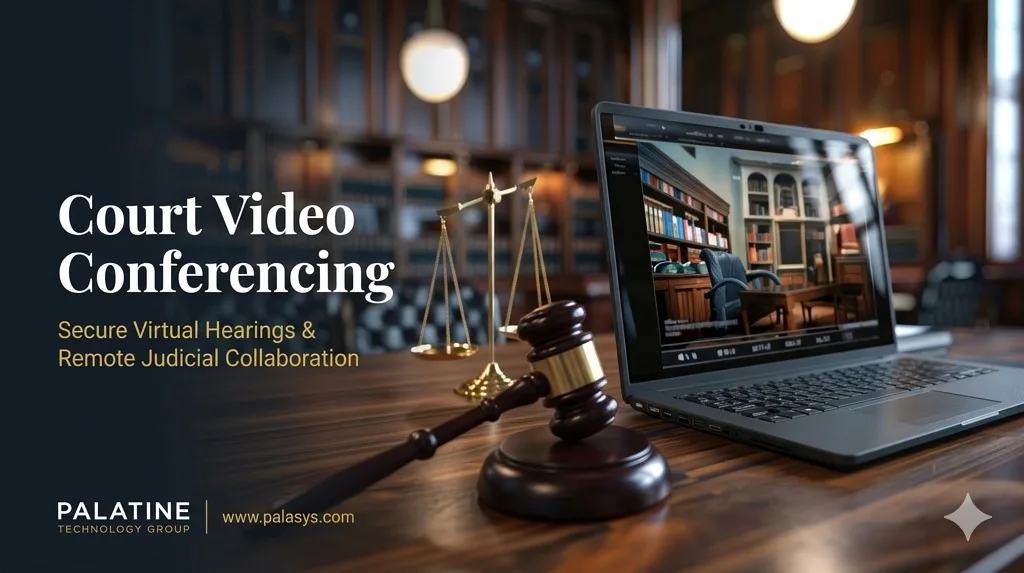
Court video conferencing is one of the most practical responses courts have found to this problem. By allowing participants to join proceedings remotely, a video court hearing can remove barriers of distance, cost, and time while keeping the process orderly and on the record. Purpose-built platforms such as Palasys video conferencing software are designed around the specific demands of courtrooms, including security, recording, interpreter support, and controlled participant access.
This article explains where remote hearings help, where they fall short, and how courts can implement them responsibly.
What Is Court Video Conferencing?
Court video conferencing is the use of secure, real-time audio and video technology to connect judges, attorneys, litigants, witnesses, interpreters, and court staff who are not in the same physical location. It lets a court conduct hearings, arraignments, status conferences, and some trials without everyone being present in the courtroom.
A video court hearing differs from an ordinary video call in several ways:
- Access is controlled, so only authorized participants can join.
- Proceedings can be recorded as part of the official record.
- Private attorney-client communication can be arranged.
- Public access can be provided where the law requires open proceedings.
- Evidence can be shared in an organized way.
General consumer meeting tools rarely cover all of these needs, which is why courts often turn to specialized systems like Palasys video conferencing software.
How Does Court Video Conferencing Improve Access to Justice?
Yes, in many situations it does. The strongest gains come from reducing the practical costs of attending court. When a person can appear from a nearby location or from home, fewer hearings are missed, and fewer cases are delayed or decided by default because someone could not make it in.
It Reduces Travel and Cost Barriers
Attending court can mean fuel, parking, public transport, childcare, and unpaid time off work. For people in rural areas or on low incomes, these costs can be decisive. Remote participation lowers them significantly.
It Helps People With Mobility or Health Challenges
A person with a disability, a chronic illness, or a recovery period after surgery may find a courthouse difficult or impossible to reach. A video court hearing lets them take part without added hardship.
It Supports Vulnerable Witnesses
Some witnesses, such as victims of domestic abuse, may feel safer testifying away from the person they fear. Courts can use remote testimony, with appropriate safeguards, to reduce intimidation and trauma.
It Can Speed Up Case Resolution
Routine matters like scheduling conferences, short motions, and uncontested applications often do not require a full in-person appearance. Moving them online can free courtroom time for complex matters and shorten waiting lists.
It Improves Efficiency for Custody and Detention Settings
Remote hearings for people in custody can reduce transport demands and security risks. This saves public resources and can bring hearing dates forward.
Where Can Video Hearings Fall Short?
Honest evaluation matters. Remote proceedings are not automatically fairer, and a poorly run video hearing can harm the people it is meant to help.
The digital divide. Not everyone has a reliable internet connection, a suitable device, or a private space. If a litigant cannot join properly, access to justice shrinks rather than grows.
Communication quality. Lag, poor audio, and frozen video can make it hard to follow proceedings or assess a witness’s credibility.
Confidentiality concerns. Private consultation between a lawyer and client is harder when they are in different places.
Technology literacy. Self-represented litigants, older adults, and people with limited digital experience may need extra support.
Procedural fairness. Judges and parties need confidence that witnesses are not being coached off-screen and that documents are handled properly.
These risks are real, but they are manageable through good policy, thoughtful platform choice, and clear procedures.
What to Look for in Court Video Conferencing Software
Choosing a platform is a legal and operational decision as much as a technical one. Courts evaluating options, including Palasys video conferencing software, typically consider the following:
- Security and privacy: encryption, access controls, and waiting-room features
- Recording and record-keeping: reliable capture that fits court archiving requirements
- Interpreter functionality: support for language access during proceedings
- Breakout capability: private rooms for attorney-client discussion
- Evidence sharing: controlled display of exhibits and documents
- Ease of use: simple joining steps for people with limited technical skill
- Integration: compatibility with existing courtroom equipment and case management systems
- Reliability and support: dependable performance and responsive technical assistance
Before adopting any system, courts should pilot it with real users, gather feedback, and confirm it meets local legal requirements.
For courts, the goal is not to replace the courtroom but to widen the doors to it. For litigants, lawyers, and the public, the best question to ask is not whether a hearing is online or in person, but whether every participant can be heard, understood, and treated fairly. When remote technology helps answer yes, it is doing exactly what the justice system needs it to do.