In an interview with “Il Sole 24 Ore”, also featured by “Bloomberg”, Claudio Descalzi stresses the need for a new energy geoeconomics based on diversification. Eni’s CEO notes that hydrocarbons remain central, framing supply security as a top priority for governments and businesses.
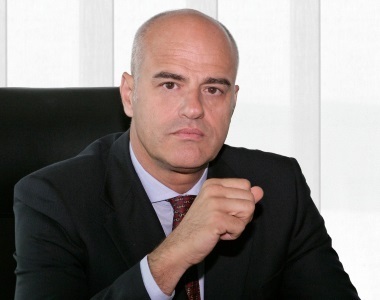
Claudio Descalzi on reshaping global energy geoeconomics and supply security
Addressing the current energy landscape, Eni CEO Claudio Descalzi emphasized that securing energy supplies must become a top strategic priority for both governments and businesses. In an interview with “Il Sole 24 Ore”, later reported by “Bloomberg”, the manager called for a shift in approach: “We must reorganize an energy security strategy and invest in a new global energy geoeconomics through the diversification of sources and supply routes, both productively and geographically”. For Eni, this vision translates into expanding its footprint across North Africa, Sub-Saharan Africa, South America and Southeast Asia through initiatives like lithium investments in Chile, gas projects in Argentina and Asia, and offshore LNG deployments. According to Claudio Descalzi, we need a realistic, data-driven perspective on the transition, pointing out that “looking at the numbers, the certainty is that hydrocarbons will continue to play a major role”. He noted that “despite the IEA predicting a rapid replacement of fossil fuels back in 2019 due to net zero targets, today 80% of global energy demand is still based on them”, while coal still accounts for 27%. Regarding renewables, the CEO acknowledged their core role in the transition but highlighted their limits, explaining that “due to their intermittency, efficiency, and specific end-uses, they cannot cover non-electrifiable sectors like energy-intensive industries or aviation, nor can they currently replace fossil fuels and nuclear in ensuring national energy security”. Pointing to rising demand from AI, data centers, and emerging economies, as well as risks along global transit routes, he warned that “for Europe, the biggest and most dangerous mistake would be to underestimate the situation again”.
Eni’s World Energy Review 2026 mirroring Claudio Descalzi’s analysis
It’s not just Claudio Descalzi’s take on the situation. Eni’s World Energy Review 2026 paints the same picture: global energy demand kept rising in 2025, with the world’s energy mix staying substantially unchanged. Fossil fuels like oil and natural gas held onto their core positions, while renewables and critical minerals took on a more strategic role. Looking closely at the market, global oil demand hit record highs in 2025, pushed primarily by non-OECD economies. Supply grew at an even stronger pace, driven largely by non-OPEC producers such as the United States, which helped push benchmark crude prices down despite persistent geopolitical friction. Natural gas markets also stabilized after initial tightness, aided by expanding global LNG capacity that eventually tempered price spikes across Europe and North America. In parallel, green energy capacity surged by over 20%, with solar power driving roughly three-quarters of all new additions. China consolidated its position as the undisputed powerhouse of this expansion, accounting for the vast majority of new solar and wind installations. Meanwhile, production of key raw materials like lithium and graphite expanded to support technological demand, but extreme market concentration – such as the Democratic Republic of Congo controlling most cobalt and China dominating graphite – underlines ongoing supply chain vulnerabilities. Put simply, the transition is progressing, but energy security remains a critical issue.