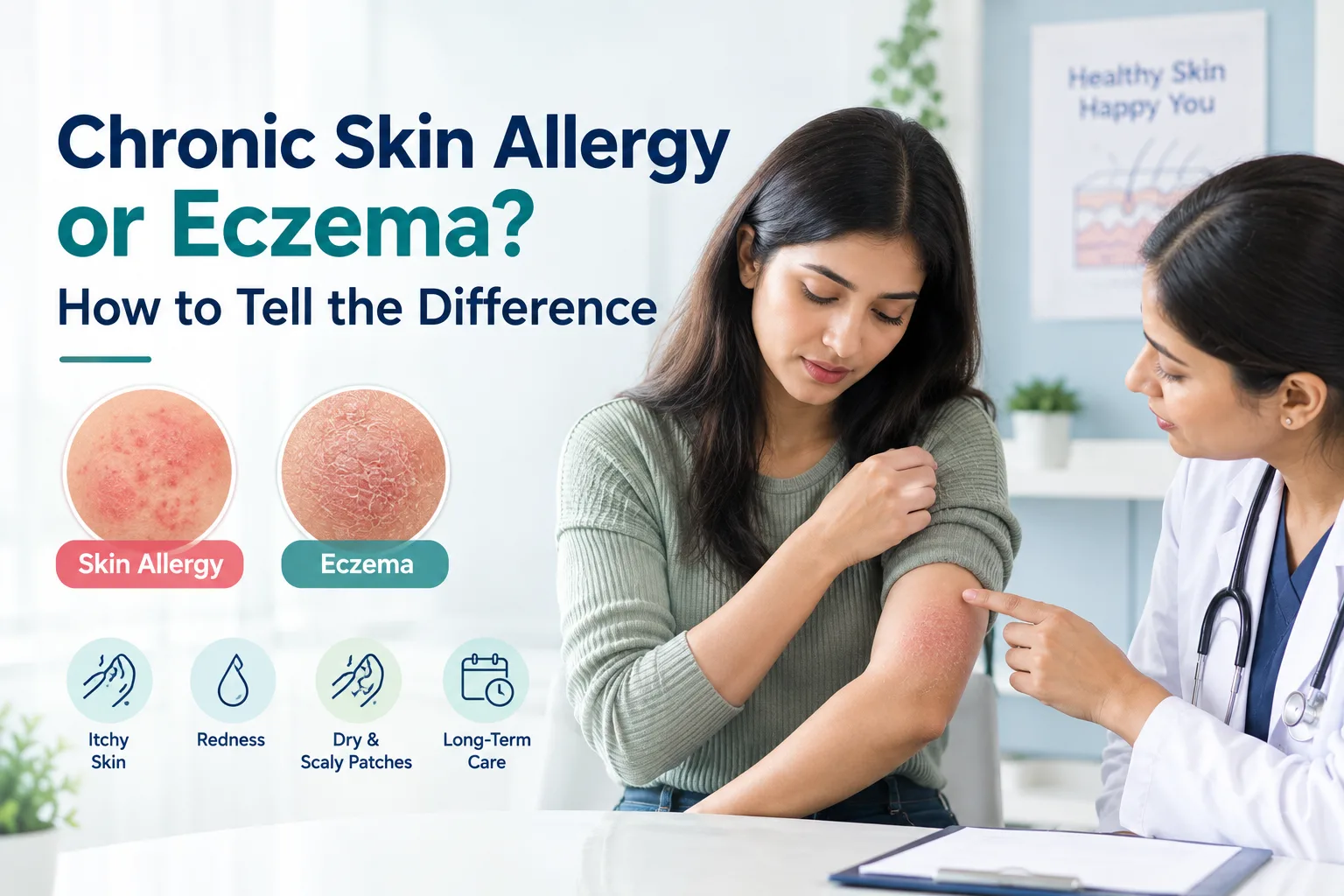
A skin rash that keeps coming back can be difficult to understand. It may itch, become red or dry, and sometimes appear after using a particular product. It is easy to call this a “skin allergy,” but recurring rashes can have several causes, including eczema.
The symptoms alone may not tell you what is behind the rash. Looking at when it appears, where it develops and what seems to trigger it can provide useful clues.
Key Takeaways
- Eczema and skin allergies can look similar but have different causes.
- Atopic dermatitis often causes recurring itching, dryness and inflammation.
- A specific substance usually triggers allergic contact dermatitis.
- Medical assessment, and sometimes patch testing, can help identify the cause.
- Treatment may include skin care, topical medicines, trigger avoidance or prescription treatment.
Chronic Skin Allergy or Eczema: What's the Difference?
Eczema and skin allergies can both cause itching, redness and irritation, but they do not always have the same cause. Eczema is a group of inflammatory skin conditions, while allergic contact dermatitis develops when the immune system reacts to a substance that touches the skin.
Atopic dermatitis is the most common type of eczema. Allergic contact dermatitis, meanwhile, is usually linked to a particular substance such as a fragrance, hair dye or metal. A person can also have both conditions, which can make the distinction less obvious.
Eczema: Causes, Symptoms and Triggers
Eczema has no single specific cause. Genetics, the immune system and the skin barrier can all play a role. People with a family history of asthma, eczema, or hay fever may also have a higher risk.
Itching is often the main symptom. Depending on the person and their skin tone, eczema can cause:
- Dry, rough or scaly skin
- Redness or changes in skin colour
- Cracking or thickening
- Irritation after scratching
- Increased skin sensitivity
Several factors, including soaps, detergents, fragrances, heat, sweating, changes in temperature and stress, can bring on flares. Not every flare has an obvious trigger.
How Allergic Skin Reactions Develop
Allergic contact dermatitis occurs after the skin becomes sensitive to a particular substance. The reaction may not appear the first time you encounter it. After sensitisation, later exposure can cause an itchy or inflamed rash.
Common triggers include nickel in jewellery, fragrances, cosmetics, hair dyes, rubber and some ingredients in topical products.
The reaction often develops where the substance has touched the skin. It may cause itching, redness, swelling, burning, dryness or small blisters. If the same rash repeatedly appears after exposure to a particular product or material, an allergic reaction may be worth investigating.
Signs That Can Help Tell Them Apart
FeatureEczemaAllergic contact dermatitisMain causeInflammation and problems with the skin barrierReaction to a specific allergenPatternOften comes and goesOften linked to repeated exposureCommon symptomsItching, dryness and irritationItching, redness, swelling or irritationTriggersCan include irritants, heat, weather and stressUsually a particular substanceLocationCan affect different areas of the bodyOften appears where the allergen touched the skinHow Are Eczema and Skin Allergies Diagnosed?
A doctor will usually examine the rash and ask when it started, whether it comes and goes, and what products or substances you have been exposed to.
If allergic contact dermatitis is suspected, a doctor may recommend patch testing. This can help identify a trigger that may otherwise be difficult to recognise.
Finding the cause matters because eczema treatment is not the same as simply avoiding an allergen.
Treatment and Skin Care
Managing eczema often starts with regular moisturising and avoiding known triggers. Topical creams may also be prescribed to calm inflammation. For allergic contact dermatitis, identifying and avoiding the substance causing the reaction is key.
When topical treatment is not enough for moderate-to-severe eczema, doctors may consider systemic medicines. Abrocitinib is one such medicine. It helps reduce the immune activity that drives eczema inflammation. Cibinqo 200 mg tablet contains abrocitinib and is prescribed for eligible people with moderate-to-severe atopic dermatitis under medical guidance.
The right Skin Care medicine depends on the cause of the rash, so persistent or recurring symptoms should be assessed rather than treated based only on appearance.
Preventing Flares and Knowing When to Get Help
You cannot always prevent eczema flares, but a few simple habits can reduce irritation and help keep your skin comfortable:
- Moisturise regularly, including when your skin feels better.
- Choose gentle, fragrance-free products if fragrances irritate your skin.
- Avoid soaps, detergents or other products that repeatedly worsen your symptoms.
- Keep track of products or substances that seem to trigger a rash.
- Avoid confirmed allergens if you have allergic contact dermatitis.
If you cannot work out what is causing a recurring rash, repeatedly changing skin care products may not solve the problem. A doctor can help determine whether allergy testing or eczema treatment may be needed.
It is also worth getting a persistent rash checked if it is affecting your sleep or daily life. Seek medical advice sooner if the rash becomes painful, spreads quickly, develops discharge or is accompanied by feeling unwell, as these may be signs of an infection or another condition that needs treatment.
Conclusion
Eczema and skin allergies can look alike, but they develop for different reasons. Eczema often involves recurring inflammation and a weakened skin barrier, while allergic contact dermatitis is linked to exposure to a particular allergen.
If a rash keeps returning, finding the underlying cause is more useful than assuming it is an allergy. Once the cause is clear, skin care, trigger avoidance and appropriate treatment can help keep symptoms under control.
Disclaimer: This article is for general informational purposes only and should not be considered medical advice. Consult a qualified healthcare professional for diagnosis and treatment of persistent or recurring skin symptoms.