
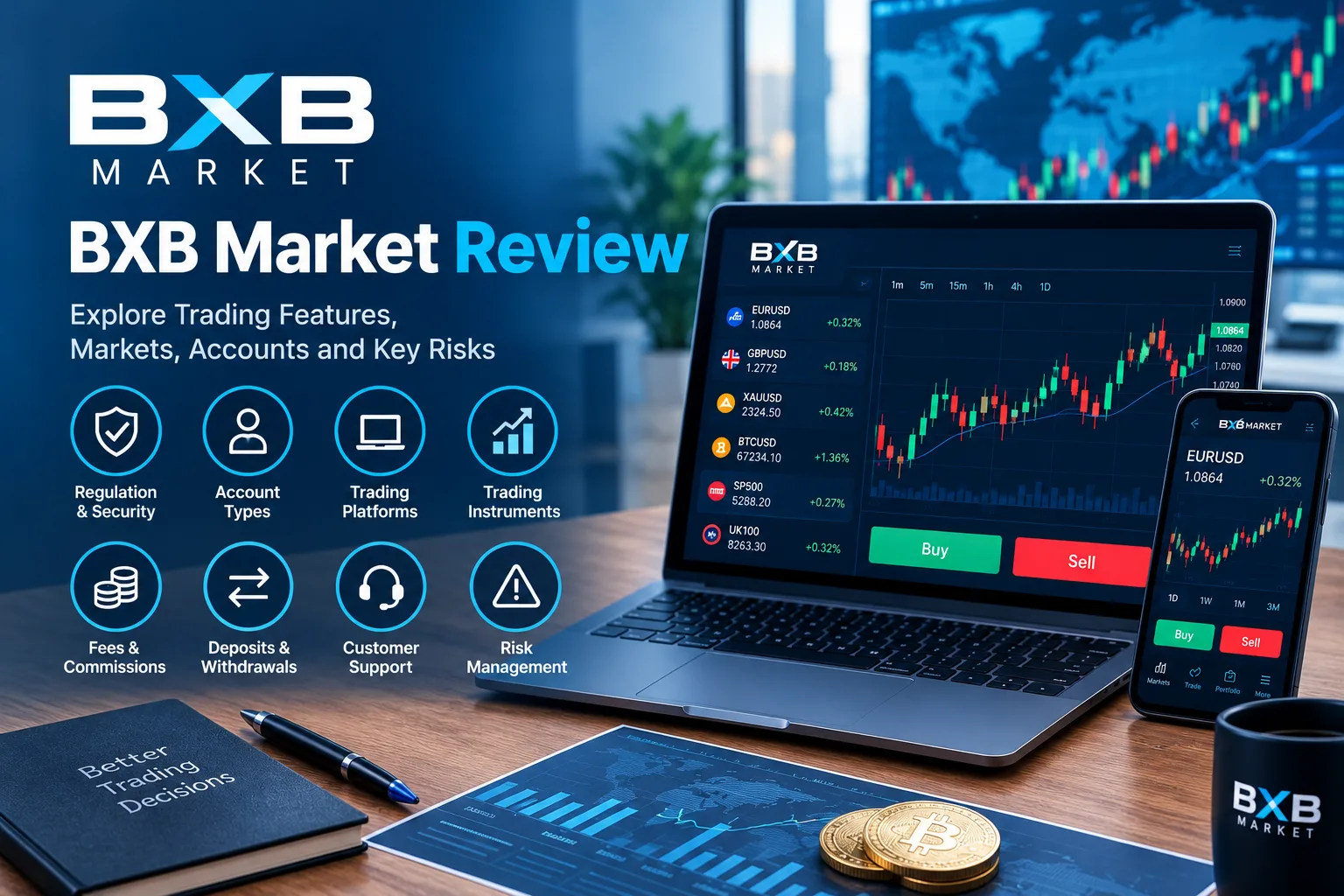
The growing popularity of online forex and CFD trading has created a wide range of options for traders searching for brokerage platforms. While having more choices can provide flexibility, it also makes careful broker research increasingly important. Trading conditions, legal structure, market access, platform technology, leverage, fees, and risk controls can differ considerably between providers.
This BXB Market Review examines the major areas that traders should consider when researching BXB Market. Instead of concentrating on a single platform feature, the review looks at the broader trading environment, including the company's published regulatory information, financial instruments, account considerations, trading technology, costs, margin requirements, and risk management.
According to BXB Market's published risk disclosure, BXB Market is owned and operated by Dynamix Ltd. The document states that Dynamix Ltd is registered in the Comoros Union with IBC number HT00525050 and is regulated by MISA, identified as the MWALI International Services Authority, under brokerage licence number BFX2025065.
For prospective traders, these details provide a starting point for independent research.
Why a Detailed Broker Review Matters
A broker is more than a website where traders place buy and sell orders. It provides the infrastructure through which clients access financial instruments, manage positions, deposit funds, and potentially withdraw capital.
The conditions surrounding those activities can influence the overall trading experience.
For example, a trader may be interested in low spreads but later discover that overnight financing, commissions, margin requirements, or other charges are also relevant. Similarly, access to many instruments can be useful, but each product may carry different volatility and margin characteristics.
A useful BXB Market Review should therefore consider multiple factors rather than focusing on one advertised feature.
Getting to Know BXB Market
The first stage of broker research is understanding the company behind the trading brand.
BXB Market's published documentation identifies Dynamix Ltd as its operating company. The company's risk disclosure provides registration and regulatory information and explains that the broker offers financial derivative products, including Contracts for Difference.
This distinction between a brand and its legal operating entity is important. When a trader opens an account, the contractual relationship is generally governed by the entity named in the relevant documentation.
Prospective clients should therefore review the legal information presented during the registration process and ensure they understand which company is providing the service.
Examining Regulatory Information
Regulation is one of the most important subjects when evaluating a broker.
BXB Market states in its published documentation that Dynamix Ltd is regulated by MISA under brokerage licence number BFX2025065.
Traders should treat this information as an important point for due diligence rather than assuming that a licence reference alone explains every protection available to a client.
Regulatory frameworks differ across jurisdictions. The rules applying to a particular trader may depend on their country of residence, the entity servicing their account, and the financial products involved.
Therefore, anyone researching BXB Market should verify the applicable regulatory information and determine which legal framework governs their account.
What Should Traders Verify?
Before registering, traders can investigate:
- The operating company's legal name
- Registration information
- Regulatory authority
- Licence details
- Applicable jurisdiction
- Client agreement
- Risk disclosure
- Complaint procedures
- Restrictions on services
These checks can help create a clearer picture of the broker before any capital is deposited.
Understanding the Available Financial Products
BXB Market's risk disclosure states that the company executes client orders involving CFDs in areas including stocks, commodities, indices, and currency pairs.
CFDs are leveraged derivative products. Unlike traditional investments involving direct ownership, CFD trading generally involves speculation on the price movement of an underlying market.
This means traders need to understand the characteristics of each instrument.
Currency pairs may react to interest-rate decisions, economic releases, central-bank policy, and geopolitical developments. Commodities can be influenced by supply and demand dynamics, inventories, weather, and global events. Stock and index-related instruments can respond to earnings, economic data, investor sentiment, and broader market trends.
Consequently, having access to multiple asset classes does not eliminate the need for individual product research.
Assessing the Trading Platform
Technology is another major consideration in a modern BXB Market Review.
BXB Market's terms describe the provision of trading services through its platform and electronic systems. The documentation also addresses client access to trading services and the company's rights and responsibilities concerning those systems.
Before committing significant capital, traders should become familiar with the platform and its essential functions.
Important features to investigate include:
Order Management
Traders should understand how market orders and other order types are entered, modified, and closed.
Position Monitoring
The platform should provide clear information about open positions, account balance, equity, and margin.
Stop-Loss and Take-Profit Functions
Risk-management orders can be useful, but traders should also understand that execution may be affected by market conditions.
Trading History
Access to historical transactions can help traders review their activity and evaluate their trading process.
Account Management
Funding, withdrawal, personal information, and account-verification functions should be straightforward to understand.
A platform's appearance may attract attention, but practical usability and transparency are more important when real money is involved.
Account Conditions and Trading Costs
Account conditions deserve careful attention because they can directly affect the cost of trading.
When comparing a broker, traders should look beyond a headline spread or promotional account feature. They should examine the entire cost structure.
Relevant areas include:
- Spreads
- Commissions
- Overnight financing
- Swap charges
- Deposit fees
- Withdrawal fees
- Currency conversion
- Other account-related charges
BXB Market's risk disclosure specifically states that its services are subject to charges and notes that charges may be changed according to the procedures described in its Terms and Conditions.
This means traders should review the current applicable conditions before opening positions.
Why Total Cost Matters
A trader who enters and exits positions frequently may be particularly sensitive to spreads and execution costs. A trader who holds positions for longer periods may need to pay closer attention to financing and overnight charges.
Therefore, the relevant question is not simply whether a broker advertises competitive pricing. The more useful question is how the total cost structure affects the particular trading strategy being considered.
Understanding Leverage
Leverage is one of the most significant considerations in any BXB Market Review.
BXB Market's published risk disclosure explains that trading Forex and CFDs involves leverage and that traders should carefully consider their financial circumstances, objectives, risk tolerance, knowledge, and experience before trading.
Leverage allows traders to control a position using a smaller amount of capital as margin. However, the same mechanism can magnify the effect of market movements on account equity.
For example, a relatively small adverse movement can have a substantial impact when a position is highly leveraged.
This is why traders should not view maximum available leverage as a target. Instead, they should consider whether the position size, margin requirement, and potential loss are appropriate for their available capital.
Margin Management Is Essential
Margin is closely connected to leverage.
When a trader opens a leveraged position, part of the account's available funds may be used as margin. If the market moves against the position, account equity can decline while margin requirements remain in place.
This can result in reduced free margin and potentially lead to position closure if the relevant requirements are no longer satisfied.
Traders should understand the difference between:
- Account balance
- Account equity
- Used margin
- Free margin
- Margin level
Understanding these concepts can help traders monitor exposure more effectively.
Risk Management and Market Volatility
Risk management should be central to any discussion of leveraged trading.
BXB Market's risk disclosure warns that Forex and CFD trading involves significant risk and that clients should understand the potential consequences before beginning trading activities. The document also explains that the listed risks are not exhaustive and that individual financial products can have their own specific risks.
Market volatility can increase quickly around economic announcements or unexpected events. In such circumstances, prices can move rapidly and execution conditions may change.
Traders should therefore consider risk before entering a position rather than attempting to manage risk only after the market has moved.
A practical risk-management process can include:
- Determining an appropriate position size.
- Understanding the instrument's volatility.
- Monitoring available margin.
- Setting predefined risk limits.
- Avoiding excessive concentration.
- Keeping sufficient capital available.
- Reviewing the potential impact of unexpected market movements.
No trading platform can eliminate market risk.
The Importance of Reading Broker Documents
Many traders focus on platform features and account benefits but overlook legal documentation.
BXB Market's Terms and Conditions contain information concerning client data, regulatory disclosures, trading services, account responsibilities, and circumstances under which information may be disclosed to regulators, payment providers, financial institutions, and other relevant parties.
The documentation also states that telephone communications between the client and company are recorded and retained according to the applicable regulatory framework.
Reading these documents can help traders understand their responsibilities before opening an account.
Important documents to examine include:
- Terms and Conditions
- Risk Disclosure
- Privacy information
- Fee information
- Account documentation
- Withdrawal procedures
- Product specifications
The details contained in these documents can be just as important as the information presented on a broker's main trading pages.
Deposits and Withdrawals
Funding procedures are another practical part of broker research.
Before transferring funds, traders should understand how deposits and withdrawals work. They should check available payment methods, verification requirements, processing procedures, possible charges, and any restrictions that may apply.
It is also sensible to ensure that account information and payment details are accurate before making a transaction.
Keeping records of deposits, withdrawals, transaction confirmations, and account statements can provide useful documentation for personal financial management.
Account Security and Personal Information
Online brokerage accounts contain sensitive personal and financial information, making account security important.
BXB Market's terms include provisions relating to client information and circumstances in which personal information may be disclosed or processed. The documentation refers to requirements involving regulatory authorities, fraud prevention, anti-money-laundering checks, payment providers, and verification services.
Traders should therefore read the broker's privacy and account documentation carefully.
Basic security practices also remain important. Clients should protect login credentials, avoid sharing passwords, and monitor their accounts for unusual activity.
Questions Traders Should Ask Before Opening an Account
A structured checklist can make broker research easier.
Before opening a BXB Market account, prospective traders can ask:
Who operates the platform?
Identify the legal entity responsible for the brokerage service.
What regulatory information is provided?
Review the stated regulator and licence details.
Which products are available?
Confirm whether the instruments match the intended trading strategy.
What are the total trading costs?
Consider spreads, commissions, financing, swaps, and other applicable charges.
How does leverage work?
Understand margin requirements and the potential impact of leveraged exposure.
What happens during volatile markets?
Review the broker's risk disclosures and order-management terms.
How are withdrawals handled?
Understand the procedures and requirements before depositing funds.
What responsibilities does the client have?
Read the Terms and Conditions rather than relying only on promotional descriptions.
Final Thoughts on BXB Market
This BXB Market Review demonstrates why evaluating a forex and CFD broker requires a broad approach. BXB Market's published documentation identifies Dynamix Ltd as the operating company and states that it is registered in the Comoros Union and regulated by MISA under brokerage licence BFX2025065.
The broker's risk documentation describes CFD products involving stocks, commodities, indices, and currency pairs while emphasizing the risks associated with leverage and market movements.
For traders researching BXB Market, the next step should be independent due diligence. Regulatory information, legal documentation, account conditions, trading costs, platform functionality, available instruments, funding procedures, and risk-management requirements should all be considered together.
A broker should be evaluated according to the trader's own circumstances rather than on a single advertised feature. By understanding how the platform operates and carefully reviewing the applicable documentation, traders can approach their research with a clearer understanding of the potential opportunities and risks involved in leveraged forex and CFD trading.