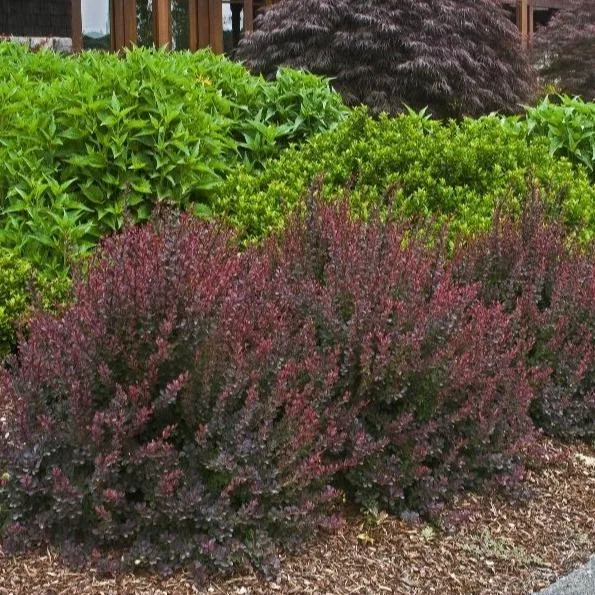
Burgundy foliage can give a garden depth, contrast, and year-round visual structure without relying entirely on seasonal flowers. Dark red, plum, bronze, and nearly black leaves stand out against traditional green planting and can make even a simple landscape feel more thoughtfully designed.
The key is to use these darker plants selectively. A few well-positioned trees, shrubs, and perennials can create a stronger effect than filling every garden bed with the same dramatic color.
Use Burgundy Foliage as a Focal Point
One of the easiest ways to introduce burgundy foliage is through a single focal plant. This could be a compact ornamental tree near an entryway, a dark-leaved shrub at the end of a garden path, or a specimen plant centered within a large planting bed.
For a taller and more architectural feature, consider adding a purple leaf tree that can provide both canopy structure and distinctive foliage color.
Give the focal plant enough open space to be appreciated. Crowding it with other dark-colored plants can reduce the contrast that makes it visually effective.
Pair Dark Leaves With Bright Green Plants
Fresh green foliage is one of the strongest companions for burgundy plants. The contrast makes both colors appear more vibrant and prevents the landscape from looking overly dark.
- Pair burgundy shrubs with chartreuse ground covers.
- Place deep purple foliage behind bright green hostas.
- Use golden ornamental grasses near dark-leaved trees.
- Combine bronze foliage with soft green evergreen shrubs.
Repeating the lighter color in several nearby locations helps the planting composition feel connected rather than random.
Add White and Pale Flowers
White flowers become especially noticeable when planted in front of burgundy foliage. Pale pink, cream, lavender, and light blue blooms can also soften the darker leaves while maintaining a refined color palette.
This combination works well around patios, front entrances, and outdoor seating areas because the lighter flowers remain visible during the evening. White hydrangeas, pale roses, flowering ground covers, and light-colored bulbs can all provide seasonal contrast.
Create Layers With Different Plant Heights
A successful planting bed should contain more than one height. Use a burgundy tree or tall shrub as the upper layer, medium-sized flowering plants in the center, and ground covers or low ornamental grasses along the front edge.
This layered arrangement makes the garden appear fuller while allowing each plant to remain visible. It also creates a gradual visual transition from the tallest architectural element to the surrounding lawn, walkway, or patio.
Repeat Burgundy in Small Amounts
Repeating a color helps guide the eye through a landscape. After selecting one dominant burgundy plant, introduce smaller touches of the same color elsewhere through low shrubs, annual flowers, planters, or foliage plants.
The repeated color does not need to match perfectly. Variations ranging from reddish bronze to deep plum can create a more natural and layered appearance.
Use Light-Colored Hardscaping for Contrast
Burgundy foliage often looks especially striking beside pale stone, light gravel, white siding, concrete, or natural wood. These materials create a clean background that allows the darker leaves to stand out.
In a modern landscape, dark foliage can soften the appearance of concrete walls and geometric paving. In a traditional garden, it can add depth beside brick paths, painted fences, and stone borders.
Consider Seasonal Changes
Some burgundy plants maintain their color throughout the growing season, while others change depending on sunlight, temperature, and the time of year. Certain varieties may emerge bright red in spring, deepen to purple during summer, and turn orange or crimson in fall.
Before choosing a plant, review its expected seasonal appearance as well as its mature size. This helps ensure the overall garden remains balanced throughout the year.
Avoid Overusing Dark Foliage
Too much dark foliage can make a small garden feel visually heavy. Burgundy plants are most effective when they are surrounded by lighter textures, open space, and contrasting colors.
Use them as accents rather than the default plant throughout the landscape. A restrained approach allows each dark-leaved specimen to have a clear role within the design.
Build the Planting Around the Site
The best burgundy foliage landscaping ideas still depend on the conditions of the property. Consider sunlight, soil drainage, available space, climate, and nearby structures before choosing specific plants.
By combining dark foliage with bright greens, pale flowers, layered heights, and light-colored materials, you can create a garden that feels colorful, balanced, and visually intentional.