
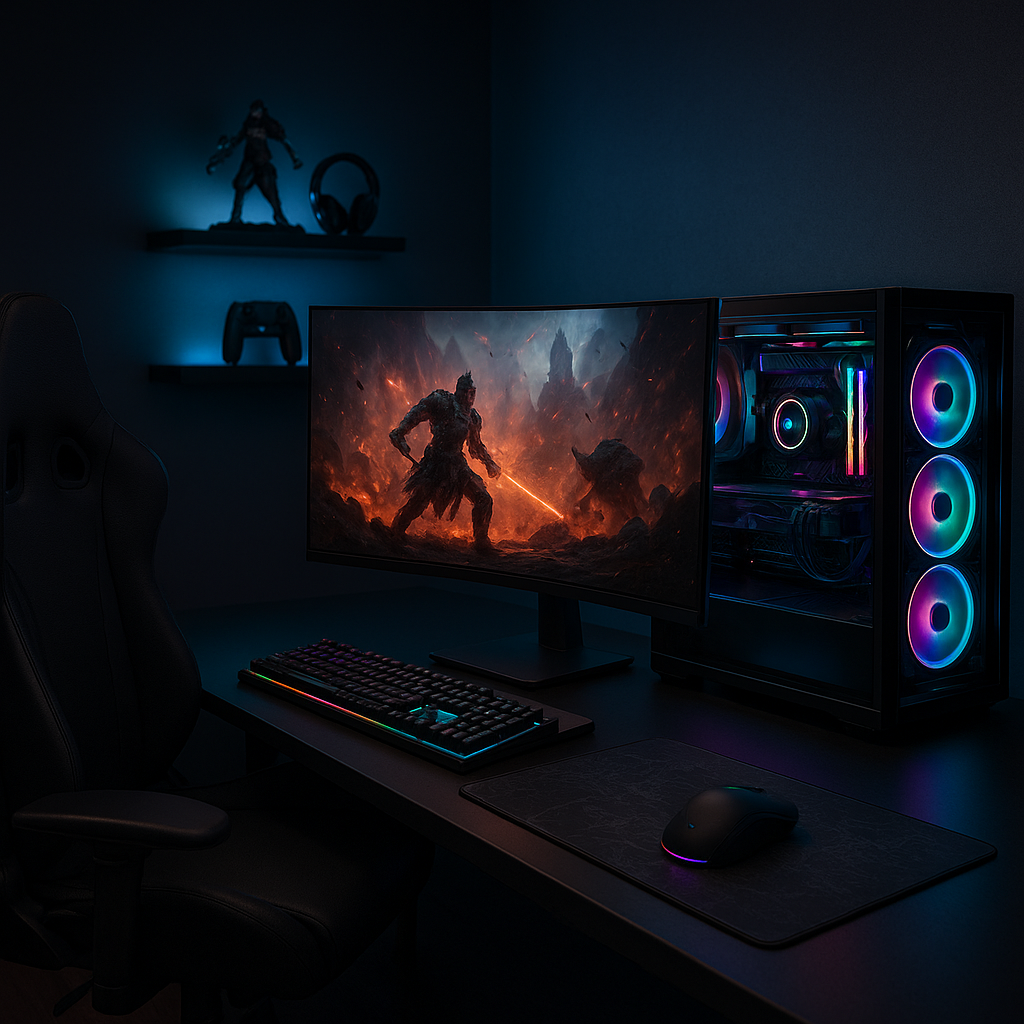
Starting Strong: The Moment Your Gaming Journey Begins
Imagine unboxing your very first gaming rig. The crisp hum of the PC powering on, the vivid glow of RGB lights illuminating your desk, and the immersive sounds of your favorite game filling the room. That moment is the gateway to an expansive world of gaming, where hardware is more than just equipment—it’s the foundation of experience, performance, and enjoyment.
However, for newcomers, the plethora of options can feel overwhelming. From choosing between an ultra-fast graphics card or a feature-rich gaming mouse, to deciding on a monitor that balances refresh rate and resolution, the decisions are critical. Getting started with gaming hardware is not just buying components; it’s about understanding the ecosystem and aligning it with your gaming goals.
As of 2026, the gaming hardware landscape has evolved significantly, blending cutting-edge technology with affordability to cater to beginners and pros alike. This guide provides a comprehensive roadmap to help you embark on your gaming hardware journey with confidence.
Tracing the Evolution: How Gaming Hardware Became Accessible and Advanced
The journey to today’s accessible gaming hardware started decades ago with bulky consoles and rudimentary PCs. Early gamers relied on limited graphics capabilities and minimal processing power, with titles like Doom and Quake pushing the boundaries of what was possible. Fast forward to the 2010s and early 2020s, the rise of esports, streaming, and more graphically intensive games accelerated demand for better hardware.
By 2026, technological advancements such as AI-accelerated GPUs, SSDs with lightning-fast NVMe interfaces, and modular PC components have transformed the gaming setup landscape. Additionally, manufacturers have focused on creating beginner-friendly bundles and plug-and-play devices that reduce complexity. The surge of cloud gaming has also influenced hardware requirements, allowing some beginners to start with minimal setups before upgrading.
Understanding this evolution helps new gamers appreciate the balance between performance, price, and future-proofing their setup. It also sheds light on why certain hardware choices matter more today than they did five years ago.
Core Components: What Every Beginner Needs to Build a Winning Setup
At the heart of every gaming setup lies a set of core components that determine your gaming experience. Prioritizing these is essential to avoid bottlenecks and ensure smooth performance.
- Central Processing Unit (CPU): The brain of your system. Modern games leverage multi-core processors; thus, choosing a CPU with at least 6 cores and 12 threads, such as AMD’s Ryzen 5 7600X or Intel’s Core i5-13600K, offers excellent value and performance.
- Graphics Processing Unit (GPU): Responsible for rendering visuals. In 2026, GPUs like NVIDIA’s RTX 50 series or AMD’s RX 8000 series provide ray tracing and AI upscaling features. Beginners should target GPUs that support at least 1080p at 60Hz for smooth gameplay.
- Memory (RAM): A minimum of 16GB DDR5 RAM is recommended for modern gaming, ensuring multitasking capability and future-proofing.
- Storage: NVMe SSDs have become standard for gaming rigs, drastically reducing load times. A 1TB SSD strikes a good balance between capacity and speed.
- Display: A monitor with a refresh rate of 144Hz or higher and low input lag is ideal. Features such as G-Sync or FreeSync enhance smoothness during gameplay.
- Peripherals: Quality keyboards, mice, and headsets improve control and immersion. Mechanical keyboards with customizable switches and high-DPI mice are popular choices for beginners aiming to improve performance.
"Choosing the right GPU and CPU combination is crucial to avoid performance bottlenecks that can degrade your gaming experience," says industry analyst Mark Jensen.
Moreover, the power supply unit (PSU) and cooling solutions should not be overlooked. A reliable PSU with at least 80 Plus Gold certification and efficient cooling (air or liquid) ensures longevity and stability.
Latest Trends in 2026: Innovations Shaping Beginner Gaming Hardware
The gaming hardware market in 2026 has embraced several innovations that benefit beginners. For example, AI-powered upscaling technologies like NVIDIA DLSS 3.0 and AMD FSR 3.0 allow entry-level GPUs to deliver near high-end performance, expanding accessibility.
Additionally, gaming laptops have seen massive improvements in battery life and thermal management, making portable gaming more viable for newcomers. The rise of modular gaming desktops simplifies upgrades, allowing beginners to swap components without hassle.
Connectivity has also improved, with Wi-Fi 7 and USB4 supporting faster data transfer and lower latency peripherals. Wireless gaming mice and keyboards now rival wired counterparts in responsiveness, reducing clutter.
"The democratization of gaming hardware means that beginners no longer need to break the bank to enjoy smooth, immersive gameplay," notes Cecilia Ramos, hardware strategist at a leading PC manufacturer.
Furthermore, the market features budget-friendly ecosystem bundles, including prebuilt PCs with optimized parts curated for popular game titles, easing entry barriers for those less tech-savvy.
Expert Guidance: How to Prioritize and Optimize Your First Gaming Hardware Purchase
Experts recommend prioritizing components based on the types of games you want to play and your budget. For instance, competitive FPS gamers benefit more from higher refresh rate monitors and low-latency peripherals, while RPG players might prioritize GPU power for richer visuals.
Budget allocation should roughly follow this breakdown:
- 40% on GPU
- 25% on CPU
- 15% on RAM and storage
- 10% on monitor and peripherals
- 10% on PSU and cooling
Compatibility is another critical factor. New gamers should consult compatibility checkers or community forums before purchasing to avoid mismatches, especially when assembling custom PCs.
For those hesitant to build their own rigs, prebuilt options from reputable brands offer warranties and tech support, making them a safer entry point. However, carefully review component specs to ensure future upgrade paths.
For detailed beginner guidance, TheOmniBuzz’s Unlocking the Power of Gaming Hardware: A Beginner’s Roadmap to Winning Setup and Navigating Your First Gaming Hardware Setup: From Basics to Performance Boosts provide invaluable insights.
Future Outlook: What New Gamers Should Watch for in Gaming Hardware
Looking ahead, the gaming hardware space promises continued innovations that will further ease entry for beginners. Expect the rise of AI-driven adaptive hardware that optimizes performance dynamically based on gamer behavior and game demands.
Also, emerging technologies like holographic displays and enhanced VR/AR integration may redefine immersion, requiring new hardware considerations. Energy-efficient components will grow in importance as sustainability becomes a priority.
Cloud gaming will continue to influence hardware needs, enabling casual players to start with minimal setups while experiencing high-end titles streamed from the cloud.
Finally, as gaming communities expand globally, multilingual and region-specific support features embedded in hardware and software will improve accessibility.
"The next decade will blur the lines between hardware capabilities and cloud services, creating versatile options for beginners to jump into gaming," predicts technology futurist Elaine Wu.
For ongoing updates, readers can follow TheOmniBuzz’s coverage on hardware innovation and performance tips, such as Mastering Gaming Hardware: Pro Tips for Ultimate Performance and Longevity and Why Gaming Hardware Innovation Is Driving the Next Level of Player Immersion.
Summary Checklist: Getting Started with Gaming Hardware
- Define your gaming goals and budget.
- Prioritize key components: GPU, CPU, RAM, storage.
- Choose peripherals that enhance comfort and control.
- Consider prebuilt systems if unfamiliar with assembly.
- Stay informed on new tech trends and upgrade paths.
Embarking on your gaming hardware journey is an exciting endeavor that rewards research and thoughtful decision-making. With the right setup, you open the door to immersive worlds, competitive play, and endless entertainment.