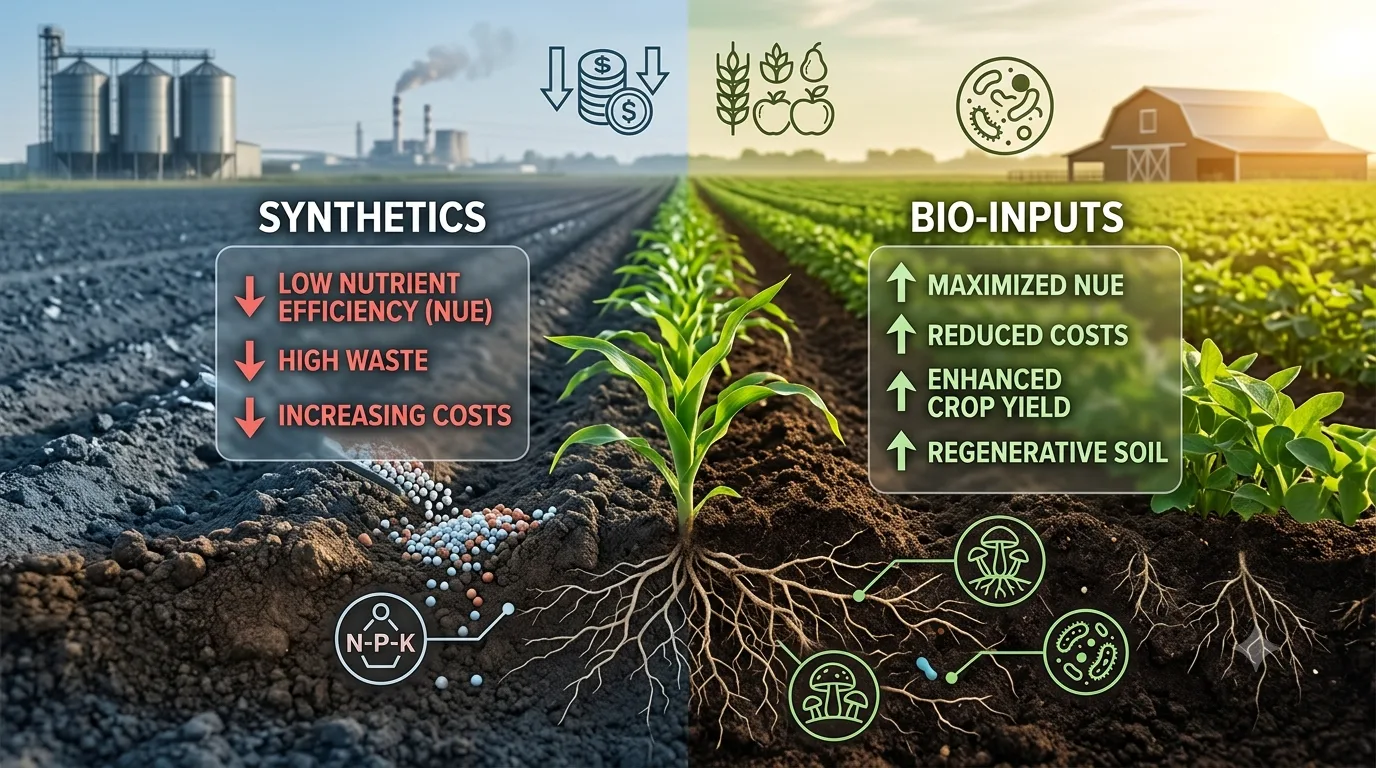
The soaring costs of synthetic agricultural inputs have left modern farmers trapped in a tight financial vice. Between supply chain volatility, fluctuating fossil fuel prices, and the compounding threat of soil degradation, maintaining profitability has never been more challenging. Fortunately, the emerging frontier of bio-inputs vs. synthetics offers a practical, data-backed solution: a pathway to cutting farming expenses without sacrificing final crop yield. Rather than choosing between chemical maximums and organic minimums, forward-thinking growers are successfully blending both to supercharge their fields.
The Chemical Squeeze: Why Synthetics Are Bankrupting the Soil
For over half a century, synthetic mineral fertilizers (such as urea, DAP, and MOP) served as the primary accelerator for global food production. They inject pure, concentrated doses of nitrogen, phosphorus, and potassium (NPK) directly into the soil. However, this immediate rush comes with a massive catch: long-term dependency and structural soil damage.
When synthetic nitrogen is applied in heavy, isolated doses, it forces a rapid spike in crop growth while ignoring the underlying soil ecosystem. Over time, this chemical-heavy approach depletes organic carbon, hardens the earth, and destroys the beneficial microbial networks necessary for natural nutrient cycling.
Even worse, the return on investment for synthetics is steadily plummeting due to poor Nutrient Use Efficiency (NUE). Agronomic research demonstrates that crops actively absorb only 30% to 40% of the nutrients supplied through conventional chemical fertilizers. The remaining 60% to 70% is completely wasted, lost to atmospheric volatilization, or washed away via surface runoff and groundwater leaching. For the modern grower, that represents an unacceptable waste of operating capital.
Decoding the Power Shift: Bio-Inputs vs. Synthetics
To scale back on chemical spending without triggering a disastrous dip in crop performance, it helps to understand how these two methods differ at a fundamental, functional level.
FeatureSynthetic Mineral FertilizersBiological Inputs (Bio-Inputs)Primary FunctionDelivers raw, immediately soluble plant macronutrients (NPK).Optimizes natural biological processes, soil health, and plant stress defenses.Nutrient Delivery MethodFloods the soil solution with loose chemical ions.Unlocks fixed soil elements and mineralizes organic materials slowly.Soil Microcosm ImpactDecreases natural microbial diversity and hardens soil structure over time.Nurtures the rhizosphere, building up soil carbon and microbial populations.Environmental ResilienceIncreases vulnerability to extreme drought and sudden temperature shocks.Actively triggers systemic abiotic stress tolerance in the crop.Synthetic fertilizers act as a direct intravenous nutrient feed. In contrast, biological inputs, which include biofertilizers, plant growth-promoting rhizobacteria (PGPR), mycorrhizal fungi, and organic biostimulants, work by unlocking the nutrients already tied up inside your soil. They transform the dirt into an active, self-sustaining recycling machine.
The Science of NUE: Protecting Crop Yields with Bio-Inputs
The biggest fear keeping growers from reducing their synthetic fertilizer usage is a sudden, sharp drop in final yield. This fear is entirely justified if you simply cut back on chemicals without replacing their function. However, using bio-inputs provides an effective safety net by fundamentally shifting how a plant interacts with its environment.
The secret lies in boosting the plant's Nutrient Use Efficiency (NUE). A significant portion of the phosphorus applied via synthetic fertilizers binds to iron, aluminum, or calcium particles in the earth, forming insoluble compounds that plant roots cannot pull in. This creates a massive bank of "locked" phosphorus sitting completely dormant in the soil.
By introducing phosphate-solubilizing bacteria and mycorrhizal fungi, you release organic acids that break those chemical bonds. This makes the trapped phosphorus instantly bioavailable. Similarly, nitrogen-fixing bacteria (like Azotobacter or Rhizobium) continuously pull free nitrogen out of the air and convert it directly into plant-absorbable ammonium right at the root zone.
Furthermore, biostimulants like seaweed extracts and amino acids trigger enhanced lateral root development. A larger, more complex root network searches a wider volume of soil, ensuring that every ounce of applied synthetic fertilizer is captured rather than wasted. This increased efficiency allows you to safely lower your total synthetic applications by 20% to 30% while maintaining identical harvest volumes.
The Hybrid Model Blueprint: Cutting Costs Safely
Completely abandoning synthetic inputs overnight is a recipe for operational failure. The most profitable path forward is a hybrid framework that strategically phases down chemicals while building up biological activity.
Phase 1: Pre-Plant Soil Optimization
Before seeds go into the ground, apply humic and fulvic acids alongside carbon-rich organic matter. Humic substances act as natural binders, holding onto synthetic nitrogen ions and preventing them from washing away during early rains.
Phase 2: Inoculated Seed Treatments
Coat your seeds with PGPR and mycorrhizal inoculants before planting. Establishing these beneficial biological relationships early ensures that the crop develops early-stage root vigor and uniform germination, laying a strong foundation to resist climate stress.
Phase 3: The 20% Synthetic Reduction & Side-Dress
When applying your first round of seasonal synthetic nitrogen, reduce the volume by 20% and blend the remaining fertilizer with a high-quality microbial biofertilizer. The microbes compensate for the missing chemical volume by unlocking existing soil reserves and capturing atmospheric nitrogen.
Phase 4: Foliar Biostimulants for Stress Management
During critical reproductive stages, switch to foliar sprays containing seaweed extracts or protein hydrolysates. These organic compounds protect the plant from heat and drought stress, maintaining steady photosynthesis even during harsh weather fluctuations.
The Financial Return of Soil Stewardship
Embracing bio-inputs is a sound financial choice that directly improves farm profitability. While top-tier biological treatments require an initial investment, those upfront expenses are quickly offset by the reduction in high-priced synthetic inputs.
Additionally, restoring your soil's natural microbial balance improves its water retention capacity. Soil rich in organic matter and beneficial fungi acts like a sponge, holding moisture around the root zone for longer periods. This reduces seasonal irrigation costs and provides reliable crop protection against unexpected dry spells. By paying less for synthetic inputs, using less water, and harvesting clean, high-quality crops, growers can secure much healthier financial margins.
Frequently Asked Questions
1. Can bio-inputs completely replace synthetic fertilizers?
No, bio-inputs are designed to complement synthetics by maximizing nutrient efficiency, though they cannot entirely replace chemical macronutrients in high-yield setups.
2. How exactly do bio-inputs lower overall farming costs?
They increase your crop's nutrient use efficiency, allowing you to reduce expensive synthetic fertilizer applications by up to 30% without losing yield.
3. Will my crop yield drop during the first year of using biologicals?
No, as long as you use a hybrid model that tapers off synthetics gradually rather than stopping all chemical applications cold turkey.
4. What are the best biological inputs for a farm facing severe drought?
Mycorrhizal fungi and seaweed extracts are outstanding options because they expand root systems and trigger natural drought-defense mechanisms.
5. Do biological soil inputs expire or go bad over time?
Yes, because bio-inputs contain live, active microbial cultures, they have strict shelf lives and specific storage temperature requirements.
6. Can I mix biological inputs directly into a tank with chemical pesticides?
Some biologicals are compatible, but mixing live microbes directly with harsh synthetic fungicides can neutralize the beneficial organisms.
7. How long does it take to see noticeable improvements in soil health?
While foliar biostimulants provide visual plant upgrades within weeks, structurally rebuilding deep soil health typically takes two to three seasons.
8. Are bio-inputs safe to use around local livestock and pollinators?
Yes, high-quality, certified biological inputs are entirely non-toxic and safe for pollinators, livestock, and surrounding ecosystems.
9. Which specific crops benefit the most from biostimulant applications?
While high-value fruits and vegetables see excellent quality improvements, large-scale row crops like corn and wheat get the biggest cost-saving benefits.
10. How do I determine the current biological activity levels in my soil?
You can order a comprehensive biological soil test from a specialized lab to measure microbial respiration, active carbon, and fungal-to-bacterial ratios.