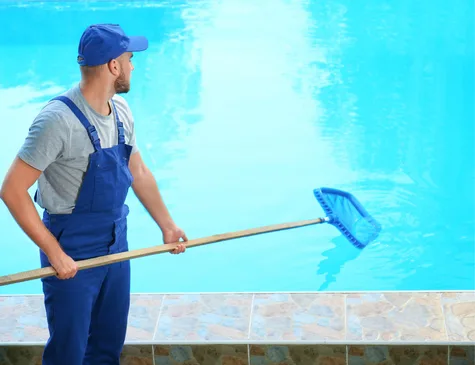
There is a particular irony in having a beautiful garden surrounding a backyard pool. The same trees that provide shade and privacy during a hot Australian summer shed leaves, bark, seeds, and fine organic debris directly into the water below, and over time that natural material creates one of the most common and consistently underestimated sources of strain on a pool's filtration system. Most pool owners focus their maintenance attention on chemicals and water balance, and while those things absolutely matter, the physical load that leaves and dirt place on a filter is just as significant for the long-term health and efficiency of the system. When a filter is working harder than it should be to process a constant influx of organic debris, everything else in the pool suffers, from water clarity through to pump longevity and chemical effectiveness.
What Happens Inside Your Filter When Debris Loads Are High
To understand why leaves and dirt cause problems it helps to understand what a pool filter is actually designed to handle under normal operating conditions. A filter is sized and specified based on the expected volume of water it needs to process and the typical level of contamination from bather load and environmental exposure under average conditions. When the debris load entering the pool significantly exceeds what the filter was sized for, the filter media becomes saturated with organic material far faster than the maintenance schedule accounts for. In a sand filter this manifests as rapidly rising pressure and reduced flow rate as the sand bed becomes packed with debris particles. In a cartridge filter the pleated media becomes clogged with fine organic matter that is difficult to remove with a simple rinse. In both cases the filter is forced to work against increasing resistance, and the pump motor bears the additional load of pushing water through a progressively more restricted system.
How Leaf and Dirt Buildup Affects Your Entire Pool System
The consequences of consistently high debris loads extend well beyond the filter itself, and this is something professional Pool Cleaning Parkdale technicians see regularly when attending pools surrounded by established gardens or deciduous trees. As leaves decompose in the water they release tannins and organic compounds that place additional demand on chlorine, consuming the sanitiser faster than it would be used under normal conditions and leaving less free chlorine available to actually disinfect the water. The decomposition process also drives pH downward over time, creating an acidic water environment that is corrosive to pool surfaces, equipment seals, and metal fittings. Fine particles of dirt and decomposed organic matter that pass through or bypass the filter contribute to persistent water cloudiness that doesn't respond well to chemical treatment alone. Pump baskets that fill rapidly with leaf debris restrict water flow to the pump impeller, causing cavitation and accelerated wear on the motor if they aren't cleared frequently enough.
What Our Parkdale Customers Are Saying About Same Day Pool Cleaning
"We have several large gum trees around our pool and by midsummer the filter was needing backwashing almost every second day and the water was staying murky no matter what chemicals we added. We'd been managing it ourselves but it was becoming a full-time job. We brought in Same Day Pool Cleaning and the difference was immediate. They did a thorough clean of the entire system including the filter, pump basket, and pool surfaces, rebalanced the water chemistry properly, and set us up with a realistic maintenance schedule that accounted for the leaf load from our trees. The water has been noticeably clearer and the filter pressure has stayed in the normal range between visits. Genuinely relieved to have professionals handling it now instead of spending our weekends fighting the pool."
— Joanne and Paul M., Parkdale
⭐⭐⭐⭐⭐
The Cumulative Effect of Organic Matter on Water Chemistry
One of the less obvious consequences of high leaf and dirt loads in a pool is the cumulative effect on water chemistry over time. Each leaf that enters the pool and begins breaking down releases organic compounds into the water that interact with chlorine and other chemicals in ways that gradually shift the overall balance of the water. Phosphates, which are released by decomposing organic matter, act as a nutrient source for algae and accelerate algae growth even in pools where chlorine levels appear adequate. Tannins released by certain tree species, particularly eucalyptus and other native Australian trees common in suburban gardens, can stain pool surfaces and water a brownish yellow colour that is difficult to reverse once it has become established. The combined effect of these chemical changes is a pool that requires increasingly large amounts of chemical treatment to maintain water quality, with diminishing returns as the underlying organic load isn't being adequately controlled at the source.
Practical Steps for Managing Leaf and Dirt Loads
There are several practical measures that help reduce the debris load entering a pool and ease the strain on the filter between professional maintenance visits. A pool cover used consistently when the pool isn't in active use is the single most effective way to keep leaves and airborne dirt out of the water, particularly during periods of high wind or heavy leaf fall. Positioning a robotic pool cleaner to run regularly helps collect debris from the pool floor before it has a chance to decompose and release organic compounds into the water. Emptying pump and skimmer baskets frequently during high debris periods prevents blockages that restrict water flow to the pump. Trimming back overhanging branches where practical reduces the volume of leaf material falling directly into the pool, though this is obviously limited by the size and position of established trees.
Conclusion: Protecting Your Parkdale Pool Filter With Same Day Pool Cleaning
Leaves and dirt are among the most consistent and damaging contributors to pool filtration problems, and their impact goes well beyond the visible inconvenience of debris floating on the surface. The organic load they introduce into the water affects chemical balance, accelerates chlorine consumption, promotes algae growth, and forces the filter and pump to work significantly harder than they were designed to under normal operating conditions. Managing this effectively requires a combination of physical debris removal, consistent filter maintenance, and regular water chemistry adjustment that accounts for the specific environment your pool sits in. Same Day Pool Cleaning can take on the full scope of that maintenance for your Parkdale pool, keeping the filter operating efficiently, the water chemistry properly balanced, and the debris load under control so your pool stays genuinely clean and clear throughout the season without becoming the exhausting weekend project it can so easily turn into.