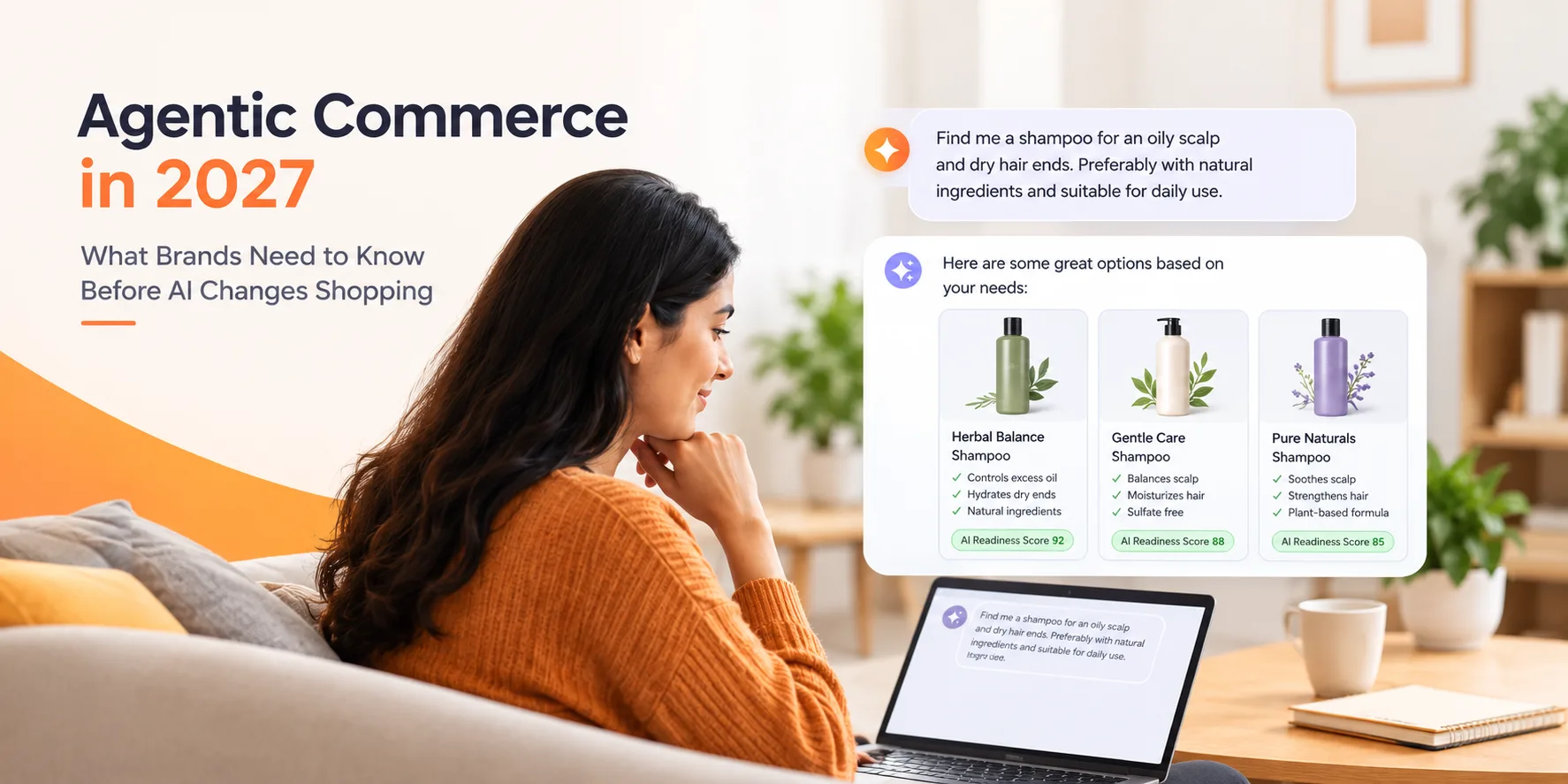
For years online shopping has followed a familiar path. Shoppers search, scan result, open product pages, compare options, and decide. Brands have optimized product pages, keywords, categories, and listings to stay visible throughout that journey. AI agents now shape how products get discovered too.
AI is beginning to change that journey. Instead of making shoppers do all the searching and comparing themselves, AI shopping assistants can help interpret what they want, narrow down options, answer questions, and guide them toward products that fit their needs. Amazon's Alexa for Shopping is part of this shift, bringing conversational AI closer to the actual shopping experience.
Shopping Is Moving From Search to Conversation
With traditional ecommerce search, shoppers usually start with a product or category. They might search for "running shoes," "anti-dandruff shampoo," or "laptop for college." The search engine then returns a collection of products, leaving the shopper to decide which ones are relevant.
AI shopping changes the interaction because shoppers can explain what they actually need. Someone might say, "I need a lightweight moisturizer for oily skin that I can use every morning," rather than searching for a generic moisturizer.
That difference matters for brands. The AI now has to understand the shopper's intent and connect that intent with product information. A product does not simply need to match a keyword. Its data needs to provide enough context for an AI system to understand where the product fits.
Alexa for Shopping Makes Discovery More Agent-Driven
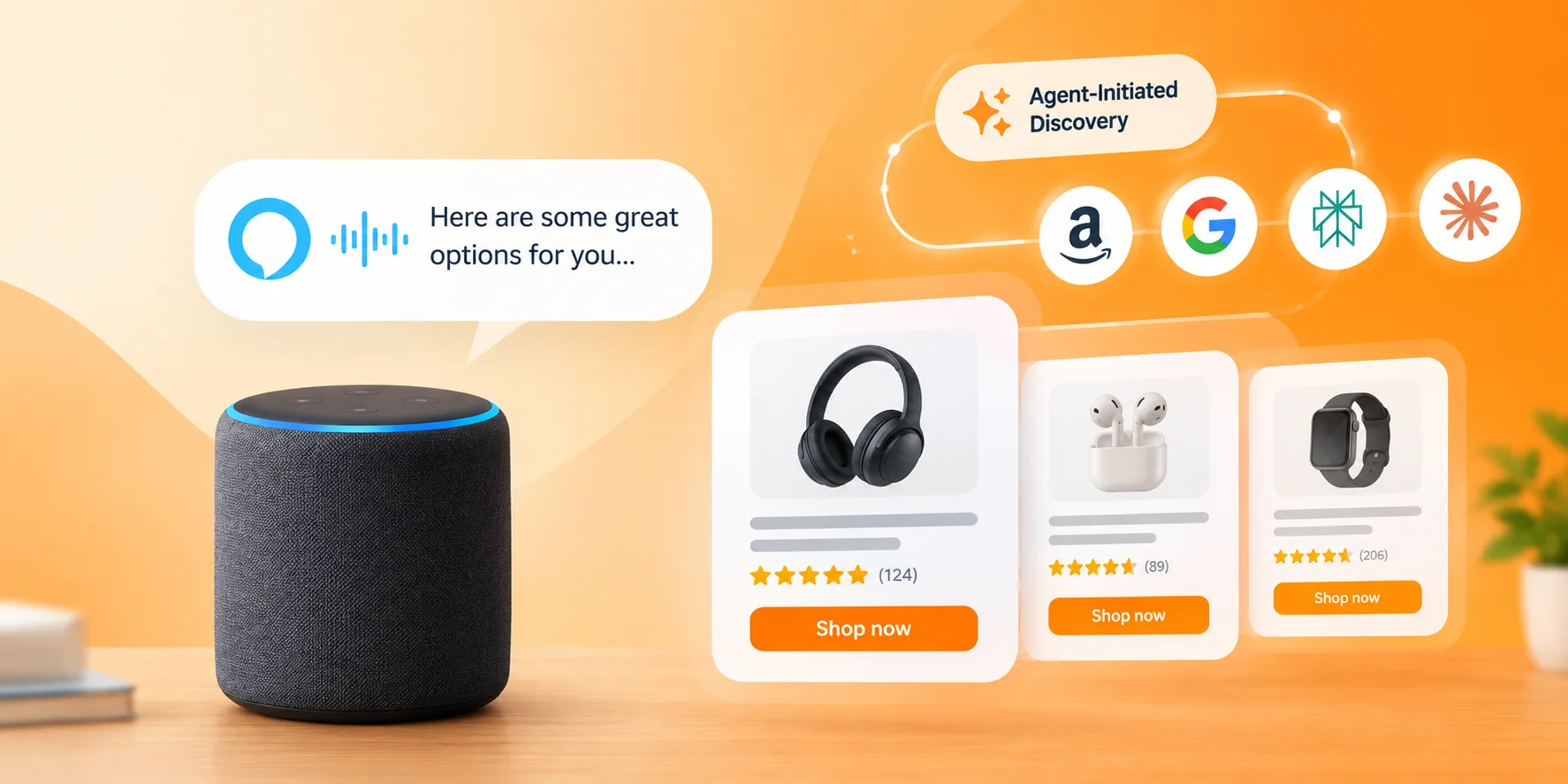
Amazon has positioned Alexa for Shopping as an AI-powered shopping assistant that can help customers research products, compare options, discover deals, and complete shopping tasks through a more conversational experience.
This creates a different kind of discovery journey. The shopper may still make the final decision, but AI can increasingly influence which products enter the conversation in the first place.
That is the important shift for brands. Visibility is no longer only about getting a product to appear in a search result. It is also about making sure the product has enough clear and useful information for an AI system to understand, evaluate, and potentially include when responding to a shopper's request.
Your Product Can Be Available Without Being Easy for AI to Understand
Being listed on a marketplace does not automatically mean an AI shopping assistant will understand everything about the product.
Consider a product description that says, "Advanced formula designed to deliver superior care." A human may recognize that as marketing language, but it provides very little useful information about the actual product.
Now imagine the same product clearly explains its ingredients, intended use, skin type, size, benefits, usage instructions, compatibility, and important exclusions. That information gives both shoppers and AI systems much more context.
This is why product information is becoming an important part of AI visibility. The more clearly a product communicates what it is, what it does, and who it is designed for, the easier it becomes for an AI system to interpret its relevance.
AI Shopping Depends on More Than Keywords
Traditional ecommerce SEO has often focused on keywords, rankings, crawlability, indexation, and other signals that help shoppers find a product through search.
AI shopping introduces another consideration. An AI system needs to understand the meaning behind the product information, not simply find matching words.
A shopper may ask, "Which shampoo is suitable for dry hair and doesn't contain sulfates?" If the product page clearly communicates the relevant ingredients, hair type, benefits, and usage information, the AI has useful information to work with.
If those details are missing or buried inside vague marketing copy, the product becomes harder to evaluate against the shopper's specific request.
Agent-Initiated Discovery Changes the Competition
In traditional search, shoppers often see many products and decide which ones deserve their attention. With an AI shopping assistant, the system may help narrow the choices before the shopper evaluates them.
That means brands are increasingly competing for inclusion in an AI-generated product conversation. A product may be relevant to a shopper's needs, but the AI still needs sufficient information to understand that relevance.
This does not mean product data is the only factor that determines whether a product is recommended. Pricing, availability, reviews, customer preferences, product relevance, and other signals can also influence shopping experiences.
However, incomplete or unclear product information can make it harder for an AI system to accurately understand what a product offers.
Product Data Becomes More Important
This is where brands need to start looking at product content differently. Product information should not only persuade a human shopper; it should also clearly communicate the facts that an AI shopping assistant may need when answering product questions.
Important details can include ingredients, materials, dimensions, sizes, compatibility, intended use, product benefits, suitable users, limitations, variants, and usage instructions. The exact attributes will naturally vary by category.
The goal is not to add information simply for the sake of making a product page longer. The goal is to make important product information complete, accurate, consistent, and easy to interpret.
Long-Tail Shopper Questions Matter More
AI shopping also makes conversational and long-tail queries increasingly important. Shoppers are not always going to search using short product keywords. They can describe their situation, preferences, constraints, and expectations in a single question.
For example, instead of searching for "face wash," someone might ask, "What face wash can I use every day if I have oily and sensitive skin?" That question contains several pieces of intent that the AI needs to understand.
Brands should therefore examine the questions shoppers could realistically ask about their products. Those questions can reveal product attributes that are missing, unclear, or difficult to find within the current content.
Reviews and Other Signals Still Matter
AI visibility is not simply a content optimization exercise. Shopping assistants can consider multiple sources of information when helping customers evaluate products.
Amazon has described Alexa for Shopping as using product knowledge together with information such as customer preferences, shopping activity, conversations, and information from across the web. Reviews, pricing, availability, and other product signals can also contribute to the shopping experience.
That means brands should think about AI visibility as a broader product information challenge. Your product description, structured attributes, reviews, marketplace information, and other sources should communicate a consistent picture of the product.
Where ACO Fits In
This is where Agentic Commerce Optimization, or ACO, becomes relevant. Traditional ecommerce SEO helps improve a product's ability to be discovered through search, while ACO focuses on making product information easier for AI systems and shopping agents to understand and use.
An ACO approach can look at whether important product information is available, whether product attributes are complete, and whether the content provides enough context to answer realistic shopper questions.
It also encourages brands to think about product discovery from the perspective of an AI shopping agent. Instead of asking only, "Can someone find this product?" brands can also ask, "Can an AI understand this product well enough to know when it is relevant?"
What Brands Can Do Now
Brands do not need to completely rebuild their ecommerce strategy for AI shopping. A practical starting point is to review important SKUs and examine the information an AI shopping assistant would need to understand them.
Look at your best-selling products and check whether the key attributes are clearly available. Review whether important details are buried inside promotional copy, missing entirely, inconsistent across listings, or presented in ways that make them difficult to interpret.
Then test the products using realistic shopper questions. Ask questions about use cases, ingredients, compatibility, comparisons, benefits, limitations, and specific customer needs. The exercise can quickly reveal where your product information is strong and where important context is missing.
The Next Stage of Ecommerce Visibility
Alexa for Shopping is an example of a broader change taking place in ecommerce. The shopping experience is becoming more conversational, and AI is taking on a larger role in helping people research, compare, and discover products.
For brands, this means visibility can no longer be viewed only through the traditional lens of rankings and clicks. Product information increasingly needs to work for both people and the AI systems helping them make purchasing decisions.
The question is becoming less about whether your product exists online and more about whether AI can clearly understand what makes that product relevant to a particular shopper.
That is the opportunity behind Agentic Commerce Optimization. By making product information more complete, structured, accurate, and useful, brands can prepare their product data for an ecommerce environment where AI does more of the discovery work.
The future of product discovery may not begin with a search result. It may begin with an AI assistant understanding what the shopper needs and deciding which products are worth bringing into the conversation.