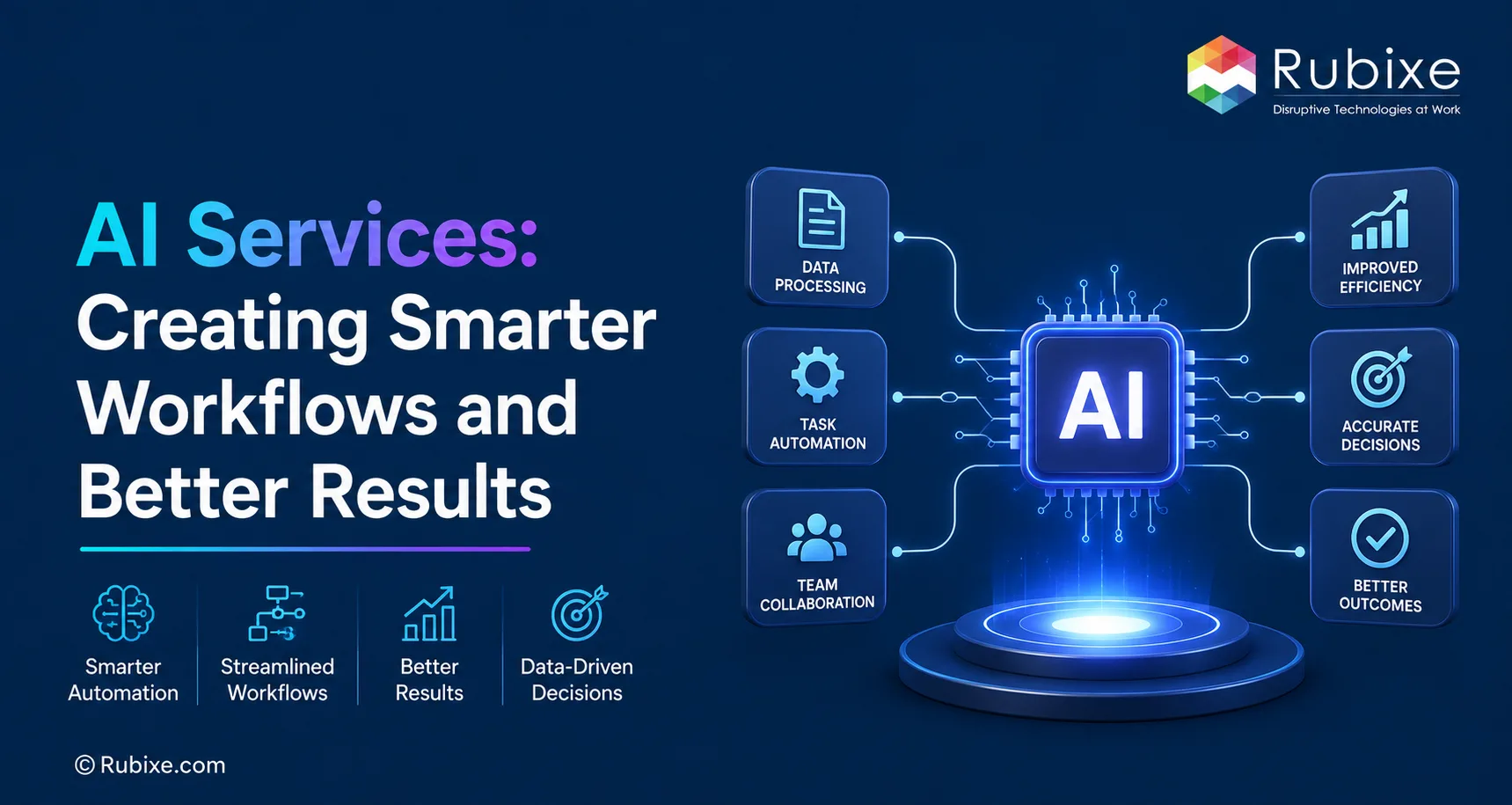
I have noticed that most conversations about "adopting AI" still stay stuck at the idea stage, while the businesses actually seeing results have moved past the buzzword and started applying it to specific, everyday workflows.
That practical shift is where AI Services earn their value, not as a single flashy feature, but as the layer that quietly makes existing operations faster and more accurate.
Understanding What This Covers
This term describes the full range of solutions businesses use to bring artificial intelligence into their operations, from automating repetitive tasks and analyzing data patterns to powering chatbots, predictive tools, and custom-built models trained on a company's own information. It's less about one product and more about a toolkit applied wherever manual effort is slowing things down.
Why Smarter Workflows Matter More Than Ever
A few pressures are pushing businesses to prioritize this now:
- Teams spend significant time on repetitive tasks that could be automated, pulling attention away from higher-value work
- Data is being generated faster than most teams can manually analyze or act on
- Customers expect quick, accurate responses that manual processes often can't keep pace with
- Competitors already using intelligent automation are making decisions and adjustments faster
- The cost of implementing AI tools has dropped enough that this is no longer limited to large enterprises
Businesses that delay adopting these tools aren't avoiding risk, they're quietly accumulating an efficiency gap that gets harder to close the longer it's left unaddressed.
Core Areas Where These Solutions Add Value
A well-rounded approach to this typically spans a few key areas:
- Workflow automation that removes repetitive manual tasks from daily operations
- Predictive analytics that help teams anticipate outcomes instead of just reacting to them
- Natural language tools that power chatbots, support systems, and content generation
- Custom model development trained on a company's own operational and customer data
- Integration support that connects new AI tools with the systems a business already relies on
Manual Workflows vs AI-Powered Workflows
Manual WorkflowsAI-Powered WorkflowsRepetitive tasks handled by handRepetitive tasks automated end-to-endDecisions based on past reportsDecisions supported by real-time predictionsResponse times limited by staff availabilityFaster, consistent response through automationInsights require manual analysisInsights surfaced automatically from existing dataEfficiency stays flat over timeEfficiency improves as more data is processedThis comparison is usually the clearest way to show a team why "we'll get to it eventually" ends up costing more the longer it's postponed.
How Businesses Are Putting This Into Practice
Companies adopting AI-powered business solutions are applying them across a range of practical use cases:
- Automating data entry, reporting, and reconciliation tasks that previously consumed hours of staff time
- Using predictive tools to forecast demand instead of relying on static spreadsheets
- Deploying intelligent chat and support tools that handle routine queries without human intervention
- Building recommendation systems that personalize what customers see based on real behavior
- Surfacing operational insights automatically, rather than waiting on manual reporting cycles
Firms like Rubixe, working specifically in applied AI solutions, tend to approach this by identifying which workflows create the fastest, most measurable improvement first, rather than trying to automate everything at once.
Why the Right Partner Makes the Difference
Not every provider offering custom AI solutions actually builds around a company's real data and workflows. Some simply deploy generic, pre-built tools that look impressive in a demo but don't reflect how the business actually operates day to day. A stronger partner starts with the specific bottlenecks a company is facing and builds toward measurable outcomes from there.
This is where working with a team like Rubixe tends to make a real difference. Instead of a one-size-fits-all package, the focus stays on identifying where intelligent automation and prediction genuinely improve results, and building solutions around the workflows a business already runs.
Practical Steps Before Getting Started
A few checks help businesses choose the right approach and partner:
- Map out which workflows currently take the most manual time and effort
- Ask potential partners for examples of similar workflow automation they've delivered
- Confirm whether solutions are custom-built around your data or repurposed generic tools
- Ask how success will be measured, time saved and accuracy improved, not just technical features
- Start with one or two high-impact areas rather than attempting a company-wide rollout at once
Frequently Asked Questions
Q: Are these solutions only useful for large companies with big budgets?
No, smaller businesses often see faster, more noticeable returns since their workflows are usually simpler to automate.
Q: How long does it take to see measurable improvement?
Most businesses see early results within a few weeks to a couple of months once a specific workflow is targeted.
Q: Do we need a large internal tech team to use these tools?
No, working with an experienced partner typically removes the need for extensive in-house technical expertise.
Q: What's the most common mistake companies make when getting started?
Trying to automate everything at once instead of starting with the workflows that offer the clearest, fastest impact.
Q: How do we choose the right partner for this?
Look for a team like Rubixe that builds solutions around your actual data and workflows rather than offering a generic, pre-packaged tool.
Smarter workflows don't come from adopting AI as a general idea, they come from applying it precisely where manual effort is slowing a business down.
Companies that invest in the right AI Services now, built around their real operations, are the ones seeing consistently better results while competitors stay stuck doing things the slow way