Somebody on your team is going to ask for the Ghibli filter. Fine. Let them have it. But before anyone signs anything, here's my take: the style menu is the least important thing about AI photobooth software.
I've watched event teams spend two weeks comparing avatar looks and ten minutes asking how long a guest waits for the result. That's backwards. A gorgeous output that takes 40 seconds builds a queue, and a queue kills an activation faster than any ugly filter ever could.
Good AI photobooth software should disappear into the event. Guests shouldn't think about the tool at all, only about the picture of themselves that just appeared.
Wait time is the whole product
Picture what a guest actually does. They walk up, take a selfie, and then they stand there. Every second of standing is a second they could wander off. Quenth's average output lands in about 8 seconds (8.2, to be exact, across every style), which is quick enough to serve hundreds of people without a line forming.
Compare that with the old prop-and-printer setup: one operator, one print at a time, one very tired person by 3pm. Whatever a brochure promises about its AI photobooth software, the queue tells the truth.
So ask every vendor for the average, not the best case. Then ask what it looks like at 2,000 guests. With AI photobooth software built properly, the number should hold at 50 people or 5,000, and since Quenth has already generated over a million outputs, that figure isn't a lab number.
No hardware, no 7am phone calls
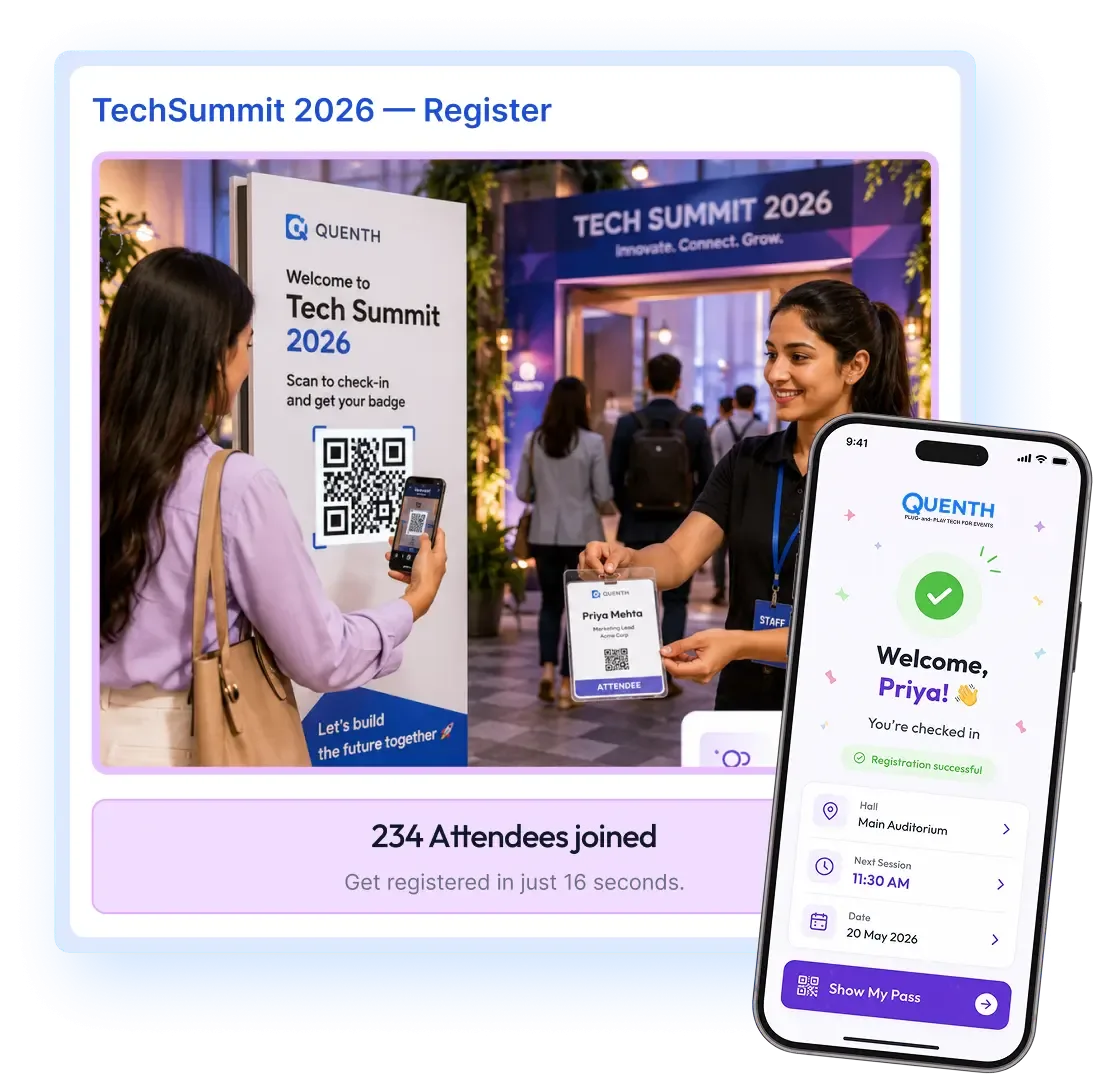
The best thing about a modern AI photo booth is what you don't ship. No kiosk crate, no app download, no technician hiding behind a curtain. A QR code sits on a standee, the guest scans it, and the whole thing runs in a browser on a tablet, a laptop, or the phone already in their hand.
Sounds small. It isn't. Load-in starts at 7am, the venue wifi is moody, and your AV lead has forty other fires to put out. Fewer moving parts means fewer panicked calls. One corporate events lead reported setup in under 2 hours for a 3,000-person conference, with registration, AI headshots, polls and a mosaic wall all running through one platform.
Every output also arrives wearing your logo, colors and event frame. Nobody has to edit anything after the fact.
Pick the style for the room
Okay, the menu does matter a little. More than ten ready-made templates ship out of the box, covering avatars, Ghibli art, action figures, caricatures, professional headshots and background swaps. You can also write your own prompts.
The trick is matching style to what the guest is doing there. Conferences want headshots, because senior people will queue for a decent LinkedIn photo and nobody queues for a cartoon. Mall activations lean on avatars and dress-up, since those get shared. Weddings go Ghibli or caricature. Product launches? Dress your guests as your product's world.
At an exhibition, an avatar booth is visible from 20 metres away, so it pulls in people who had no plan to visit your stand. That's a free audience.
Get the match right and sharing handles itself. Quenth reports a 68% social share rate, and it comes from exactly this kind of fit.
Whichever AI photobooth software you choose, test the exact styles you plan to use on real faces of different ages, skin tones and lighting before the event, not on the vendor's hand-picked demo shots.
Who owns the data?
Here's where I'd push back on the standard pitch. A booth that only makes pretty pictures is entertainment, full stop. Fun, but nothing you can report upstairs.
Put lead capture in front of it and the picture changes. The guest submits a name, a company and a phone number before they see their output, and suddenly every selfie is a contact your sales team can call. Gate a mall activation behind a 30-second form and a single day can produce 2,000 leads. The output still lands in email or WhatsApp before the guest has left the activation space, so the exchange feels fair.
That's the version of AI photobooth software worth paying for.
Before you book
Two questions. How fast, at real crowd size? And where does the data land? If a vendor fumbles either one, keep shopping.
One more check while you're at it. Ask whether it runs without a dedicated device, whether outputs come branded, and whether the same platform can also drive a wall or a registration flow. Buying one tool that does four jobs beats juggling five vendors.
Then book a demo of Quenth's AI photobooth software, stand at the back, and time it on your own phone. Eight seconds is either true or it isn't.