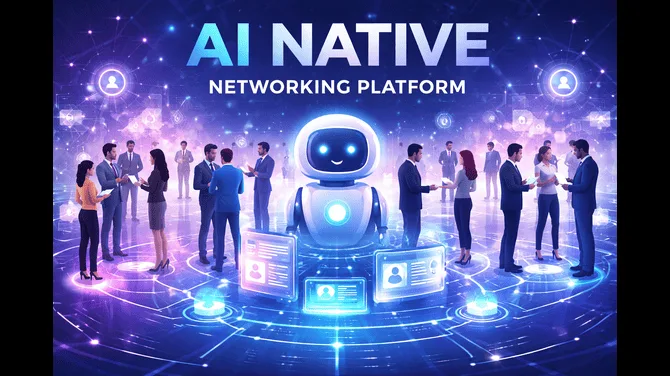
As digital transformation continues to redefine industries worldwide, organizations are under increasing pressure to build intelligent, agile, and resilient IT infrastructures. Traditional networking models, while reliable in the past, often struggle to keep pace with today's rapidly evolving business environments, cloud-first strategies, and growing cybersecurity threats. This is where AI-Native Networking Platforms are reshaping the future of enterprise connectivity.
By combining artificial intelligence, machine learning, automation, and advanced analytics, AI-native networking platforms enable organizations to manage increasingly complex networks with minimal human intervention. These platforms are transforming network operations from reactive troubleshooting to predictive and autonomous management, allowing enterprises to improve performance, reduce operational costs, strengthen security, and accelerate innovation.
Click here for more information : https://qksgroup.com/market-research/market-forecast-ai-native-networking-platform-2026-2030-worldwide-8770
What Are AI-Native Networking Platforms?
An AI-Native Networking Platform is an intelligent networking solution built with artificial intelligence at its core rather than adding AI capabilities as an afterthought. These platforms continuously collect telemetry data from network devices, analyze network behavior in real time, detect anomalies, predict failures, automate issue resolution, and optimize network performance.
Unlike conventional network management systems that depend heavily on manual configuration and monitoring, AI-native platforms use machine learning algorithms to continuously learn from network activity and improve decision-making over time.
Why Enterprises Are Investing in AI-Native Networking Platforms
Modern enterprises manage thousands of connected devices, multiple cloud environments, remote employees, branch offices, and increasingly sophisticated cyber threats. Manual network administration is no longer sustainable.
AI-native networking platforms help organizations overcome these challenges by delivering:
Intelligent Automation
Routine network tasks including provisioning, configuration, policy enforcement, firmware updates, and troubleshooting can be automated, reducing operational complexity and minimizing human error.
Improved Network Visibility
AI-powered analytics provide complete visibility across cloud, campus, branch, data center, and edge environments. IT teams gain actionable insights into application performance, bandwidth utilization, and device health.
Predictive Maintenance
Instead of reacting after failures occur, AI models identify performance degradation and predict potential outages before they impact users.
Faster Issue Resolution
AI-powered root cause analysis dramatically reduces Mean Time to Detect (MTTD) and Mean Time to Repair (MTTR), improving overall network availability.
Key Technologies Driving AI-Native Networking
Several emerging technologies are accelerating the adoption of AI-native networking platforms.
Artificial Intelligence
AI enables intelligent decision-making across network operations by analyzing massive volumes of operational data.
Machine Learning
Machine learning algorithms continuously improve traffic optimization, anomaly detection, capacity planning, and predictive maintenance.
Cloud-Native Architecture
Modern networking platforms leverage cloud-native infrastructure for scalability, flexibility, centralized management, and continuous updates.
Real-Time Analytics
Streaming telemetry enables continuous monitoring of network health, user experience, device performance, and application delivery.
Industry Applications of AI-Native Networking Platforms
Banking and Financial Services
Banks require highly secure, low-latency networks for digital banking, payment processing, fraud detection, and regulatory compliance. AI-native networking ensures uninterrupted service availability while strengthening cybersecurity.
Click here for market share : https://qksgroup.com/market-research/market-share-ai-native-networking-platform-2025-worldwide-8769
Healthcare
Hospitals rely on connected medical devices, telemedicine platforms, electronic health records, and AI diagnostics. Intelligent networking improves reliability while ensuring secure patient data transmission.
Retail
Retail organizations use AI-native networking to support omnichannel operations, digital payments, inventory management, smart stores, and personalized customer experiences.
Telecommunications
Telecom operators leverage AI to automate network optimization, manage 5G deployments, predict infrastructure failures, and improve service quality.
Business Benefits of AI-Native Networking Platforms
Organizations adopting AI-native networking experience measurable business outcomes, including:
- Reduced network downtime
- Improved employee productivity
- Better user experience
- Faster digital transformation
- Lower IT operational expenses
These benefits allow enterprises to focus more on innovation rather than routine infrastructure maintenance.
Emerging Trends in AI-Native Networking
Several trends are shaping the future of intelligent networking.
Autonomous Networks: Self-driving networks capable of automated optimization and self-healing are becoming increasingly practical.
Generative AI for IT Operations: Generative AI assistants simplify network troubleshooting through conversational interfaces and intelligent recommendations.
Zero Trust Integration: AI-native networking increasingly supports Zero Trust security architectures by continuously validating users and devices.
Multi-Cloud Network Management: Organizations require unified visibility across multiple cloud providers, making AI-driven orchestration increasingly important.
Future Outlook
The future of enterprise networking is becoming increasingly autonomous, intelligent, and software-driven. As AI technologies mature, networking platforms will evolve beyond monitoring and automation toward fully self-managing infrastructures capable of making real-time decisions without human intervention.
Organizations investing in AI-native networking today are positioning themselves for future innovations including advanced edge computing, 6G connectivity, intelligent IoT ecosystems, digital twins, and highly adaptive enterprise environments. Businesses that embrace AI-powered networking will gain competitive advantages through enhanced agility, operational efficiency, improved customer experiences, and stronger cyber resilience.
Conclusion
AI-native networking platforms have become a strategic investment for enterprises navigating today's digital-first economy. By integrating artificial intelligence, automation, machine learning, and real-time analytics into network operations, organizations can build resilient, scalable, and secure infrastructures that support long-term growth.