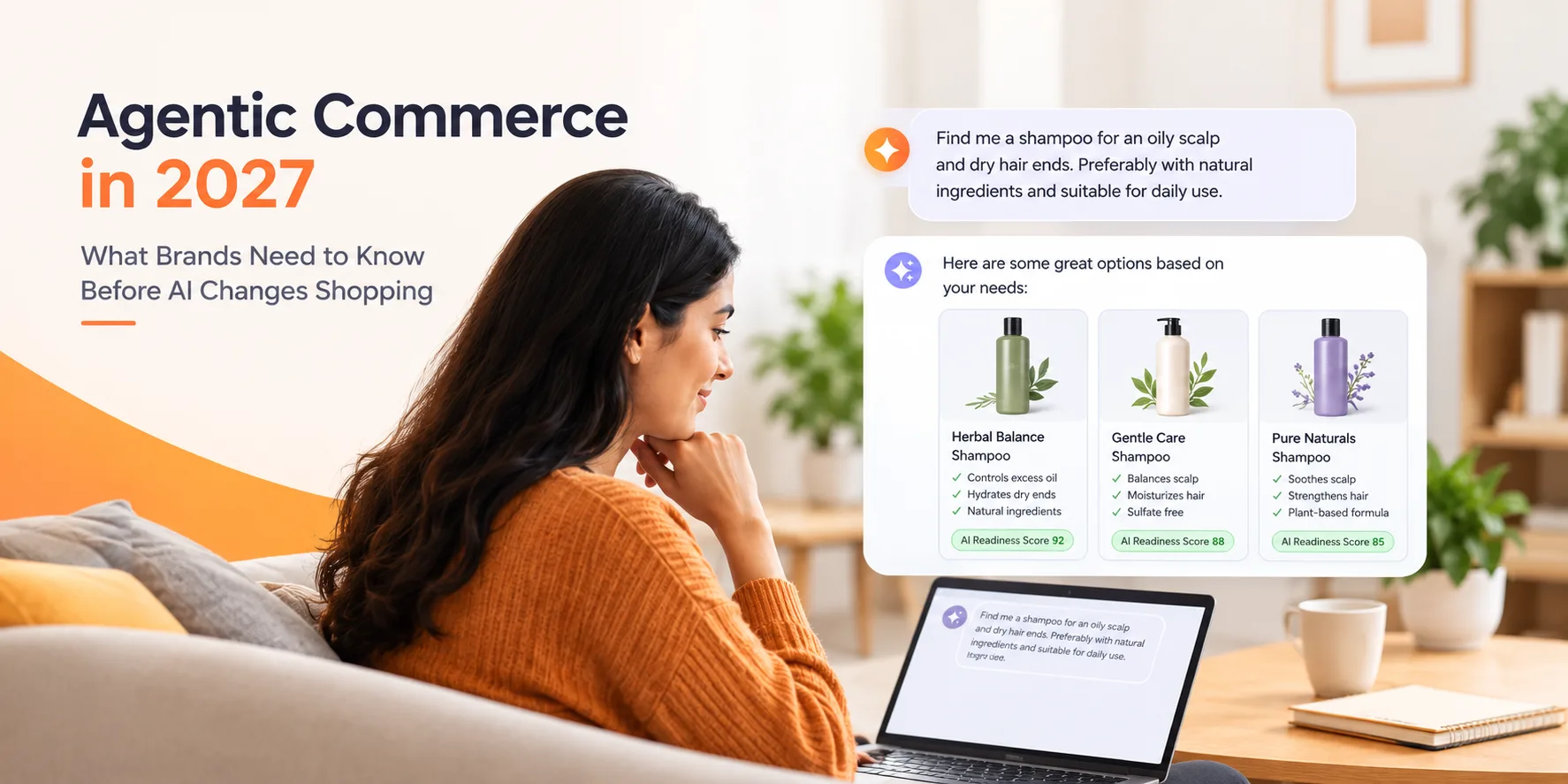
Your product is online.
It's indexed by search engines, listed on marketplaces, and visible on your website. AI tools can find it when they scan the web. Yet when shoppers ask ChatGPT, Google AI, Perplexity, or other AI shopping assistants for recommendations, your product doesn't appear.
Why?
The answer is simple: knowing a product exists and recommending it are two very different things.
Discovery Does Not Equal Recommendation
Many brands assume that if AI can find their product, it will naturally recommend it. Unfortunately, that isn't how AI-powered shopping works.
AI shopping agents don't simply search for products. They evaluate them.
When a shopper asks, "What's the best shampoo for dandruff?" or "Which wireless earbuds offer the best battery life under $100?", AI compares multiple options and selects products that best match the request.
If your product lacks the information needed for that evaluation, it may never make the shortlist.
AI Needs More Than Marketing Copy
Traditional product pages are often written for human readers. They focus on catchy headlines, brand messaging, and promotional language.
AI, however, looks for facts.
It wants to understand what the product does, who it's for, how it compares to alternatives, what features it offers, and whether it solves a specific problem.
A product page that says "Premium quality with outstanding performance" sounds impressive to a customer. But it tells AI very little.
Detailed specifications, benefits, use cases, ingredients, dimensions, compatibility information, and FAQs provide the context AI needs to make recommendations.
Missing Product Data Creates Blind Spots
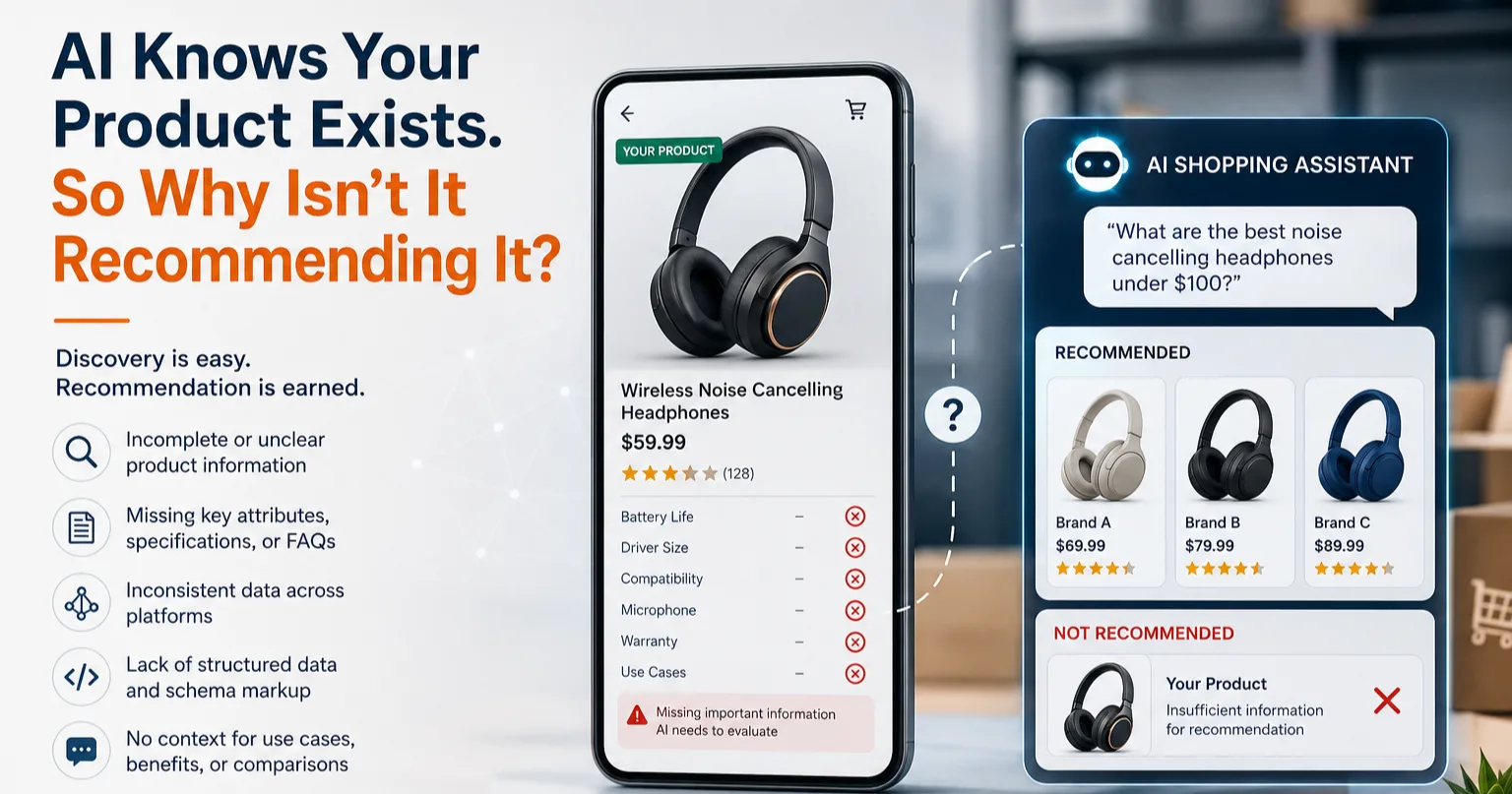
One of the biggest reasons products fail to get recommended is incomplete product information.
Many brands leave out critical details because they assume customers already know them or can find them elsewhere.
AI doesn't make those assumptions.
When key attributes are missing, AI has less confidence in matching the product to a shopper's request. As a result, it may recommend a competitor with more complete information.
In AI-powered commerce, the product with the best data often beats the product with the best marketing.
Consistency Matters More Than Ever
AI systems gather information from multiple sources, including brand websites, marketplaces, review platforms, and product feeds.
If product details differ across these sources, AI may struggle to determine which information is accurate.
For example, different specifications, pricing, ingredients, or product descriptions can reduce trust and create uncertainty.
Consistent, accurate information across all channels helps AI understand and confidently recommend your products.
Structured Content Improves AI Understanding
AI performs best when information is organized and easy to interpret.
Structured product content helps AI identify important details quickly and accurately.
This includes:
- Detailed product attributes
- Schema markup
- FAQs
- Customer reviews
- Comparison information
- Clear feature lists
- Category-specific specifications
The easier it is for AI to understand your product, the more likely it is to include it in recommendations.
The Rise of Agentic Commerce Optimization (ACO)
As AI becomes a primary shopping assistant, brands need a new optimization strategy.
This is where Agentic Commerce Optimization (ACO) comes in.
ACO focuses on making product information understandable, accessible, and recommendation-ready for AI shopping agents. It helps brands identify content gaps, improve structured data, enhance product attributes, and increase recommendation potential across AI-powered shopping experiences.
The goal is not just visibility. The goal is selection.
The Future Belongs to AI-Ready Products
The shift to AI-powered shopping is already underway.
Consumers are increasingly relying on AI to narrow choices, compare products, and make purchasing decisions. In this environment, simply being online is no longer enough.
AI may know your product exists, but that doesn't guarantee it understands your product well enough to recommend it.
Brands that invest in complete, structured, and AI-friendly product content will have a significant advantage. Those that don't risk becoming invisible at the exact moment a shopper asks AI for a recommendation.
The question is no longer whether AI can find your product.
The real question is whether AI has enough confidence to recommend it.