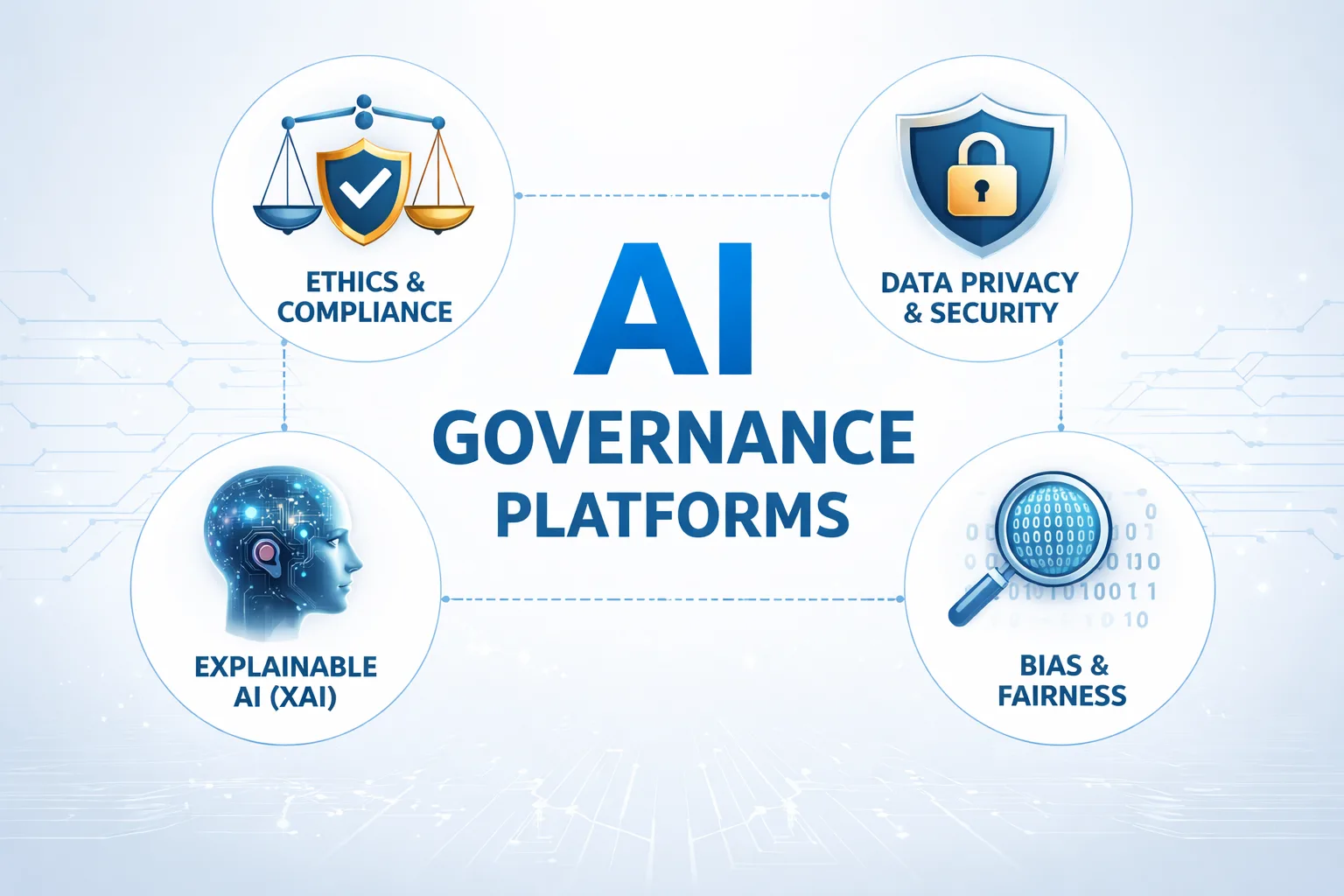
The global AI Governance market is expected to witness robust growth through 2028 as organizations increasingly prioritize the ethical, transparent, and responsible use of artificial intelligence. The rapid adoption of AI across industries is creating new opportunities for businesses while also introducing concerns related to data privacy, algorithmic bias, security, compliance, and accountability. As a result, organizations are investing in AI governance solutions and frameworks to manage AI-related risks and build greater trust in intelligent systems.
Click here for more information : https://qksgroup.com/market-research/market-forecast-ai-governance-platforms-2026-2030-worldwide-6030
Growing Need for AI Governance
The growing use of AI in critical business processes has made governance an essential component of enterprise AI strategies. Organizations are increasingly looking for structured approaches to monitor AI models, manage data, assess risks, and ensure that AI-driven decisions align with business values and regulatory requirements.
AI governance enables enterprises to establish policies, controls, and accountability mechanisms throughout the AI lifecycle. From model development and training to deployment and ongoing monitoring, governance frameworks help organizations identify potential risks and maintain transparency in AI operations.
Regulatory Pressure Accelerates Market Growth
One of the major factors driving the AI Governance market is the rapidly evolving regulatory landscape. Governments and regulatory bodies worldwide are introducing guidelines and legislation aimed at ensuring the safe, fair, and responsible development and deployment of AI technologies.
Organizations operating across multiple regions must increasingly address requirements related to explainability, privacy, risk management, transparency, and accountability. This is encouraging enterprises to integrate AI governance capabilities into existing risk management, compliance, and data governance frameworks.
As AI regulations continue to evolve, businesses are expected to increase investments in governance platforms that can help them identify regulatory gaps, document AI processes, assess model risks, and demonstrate compliance.
Key Trends Shaping the AI Governance Market
Several trends are influencing the development of the global AI Governance market. The adoption of AI ethics guidelines is increasing as organizations seek to establish principles for responsible AI development and usage. Enterprises are also strengthening data governance practices to improve data quality, privacy, security, and traceability across AI initiatives.
Another important trend is the integration of AI governance with broader enterprise risk management and compliance platforms. This integration allows organizations to centralize risk assessment, policy enforcement, monitoring, and reporting rather than managing AI risks through disconnected processes.
The emergence of generative AI and increasingly autonomous AI systems is further increasing the need for effective governance. Organizations must address additional concerns surrounding inaccurate outputs, intellectual property, data leakage, model transparency, and the responsible use of AI-generated content.
Addressing AI Bias, Privacy, and Security Risks
AI systems can introduce significant risks when they are trained on biased, incomplete, or inappropriate data. Algorithmic bias can potentially result in discriminatory outcomes, while inadequate controls can expose sensitive information and create privacy risks.
AI governance solutions help organizations establish mechanisms for bias detection, model monitoring, risk assessment, data protection, and accountability. These capabilities enable enterprises to identify issues earlier and implement corrective measures throughout the AI lifecycle.
Click here for market share report : https://qksgroup.com/market-research/market-share-ai-governance-platforms-2025-worldwide-6040
By embedding governance into AI development and deployment processes, organizations can move toward more reliable and trustworthy AI while reducing operational, regulatory, and reputational risks.
Building Trust in Artificial Intelligence
Trust is becoming a critical factor in enterprise AI adoption. Businesses, employees, customers, and regulators increasingly expect organizations to demonstrate how AI systems make decisions and how associated risks are managed.
Comprehensive AI governance frameworks can provide greater visibility into AI models, datasets, decision-making processes, and compliance controls. This transparency can help organizations establish confidence in AI systems while supporting responsible innovation.
As enterprises expand their AI initiatives, governance is expected to shift from being a compliance-focused activity to becoming a strategic capability that supports sustainable AI adoption.
Future Outlook for the AI Governance Market
The global AI Governance market is expected to maintain strong growth as AI adoption expands and regulatory expectations become more sophisticated. Organizations will increasingly seek integrated solutions that combine AI risk management, data governance, compliance, model monitoring, ethics, and security capabilities.
The convergence of AI governance with enterprise risk and compliance frameworks will create new opportunities for technology vendors. Vendors that can provide scalable, transparent, and adaptable governance capabilities will be better positioned to address the evolving requirements of enterprises.
Conclusion
The global AI Governance market is entering a period of accelerated expansion driven by regulatory mandates, enterprise AI adoption, and the growing emphasis on responsible AI. Organizations across industries recognize that effective governance is essential for ensuring transparency, fairness, accountability, and compliance while unlocking the full potential of artificial intelligence. As the AI ecosystem continues to evolve through 2028, AI governance will become a foundational pillar of digital transformation, enabling enterprises to innovate confidently, mitigate risks proactively, and deliver trustworthy AI solutions that create sustainable business value.