Are you searching for an AI course near me to develop future-ready skills and explore new career opportunities? Artificial Intelligence (AI) is changing how businesses operate, analyse information, create content, and solve everyday problems. From automated customer support to intelligent data analysis, AI is becoming an important part of many industries.
Learning AI can help you understand how intelligent technologies work and how they can be used in practical situations. Whether you are a student, fresher, working professional, or business owner, developing AI skills can help you adapt to changing workplace requirements.
Artifact Geeks offers learning opportunities for people interested in exploring artificial intelligence and modern technology. With the right learning approach, you can build a foundation in AI concepts, understand useful AI tools, and discover how this technology can support your professional goals.
Why Choose an AI Course Near Me?
Searching for an AI course near me is a convenient way to explore training options that match your location, schedule, and learning objectives. A structured course can help you move from basic concepts to practical applications without feeling overwhelmed by technical terminology.
Artificial Intelligence covers several areas, including machine learning, generative AI, natural language processing, and intelligent automation. Understanding these areas can help you recognise how AI is used in different business and technology applications.
A suitable training program can help you:
- Understand the fundamentals of artificial intelligence.
- Explore modern AI tools and their applications.
- Develop problem-solving and analytical skills.
- Learn how AI can improve productivity and workflows.
- Build practical projects to demonstrate your knowledge.
- Prepare for further learning in AI-related fields.
The most effective learning approach combines theoretical knowledge with hands-on practice.
What Will You Learn in an AI Course?
1. Fundamentals of Artificial Intelligence
The first step is understanding what artificial intelligence is and how it differs from traditional software. AI systems can perform tasks such as recognising patterns, processing language, making predictions, and generating content.
You can explore common AI applications in business, healthcare, finance, marketing, customer service, and software development.
Learning these fundamentals provides a foundation for understanding more advanced AI technologies.
2. Generative AI and AI Tools
Generative AI can create new content, including text, images, summaries, and other outputs, based on user instructions and learned patterns.
Learning about generative AI helps you understand how to use AI assistants for brainstorming, research, content planning, document preparation, and everyday productivity tasks.
You can also explore the importance of reviewing AI-generated information, checking accuracy, and using these tools responsibly.
3. Prompt Engineering
Prompt engineering involves writing clear and specific instructions to guide an AI system toward a useful result.
For example, instead of asking an AI tool to write something about a business, you can specify the target audience, tone, purpose, format, and key information.
Learning this skill can help you produce more relevant outputs and use AI tools more effectively for writing, research, planning, and problem-solving.
4. Machine Learning
Machine learning is a branch of AI that enables computer systems to identify patterns in data and make predictions or decisions based on those patterns.
A technical AI course may introduce supervised learning, unsupervised learning, model training, testing, and evaluation.
Understanding these concepts can help you explore how AI systems make predictions and how their performance is assessed.
5. Python for Artificial Intelligence
Python is widely used in AI development because of its readable syntax and extensive collection of libraries.
For technical AI learning, Python fundamentals may include variables, data types, loops, functions, and data structures. More advanced topics can include data preparation, model development, and machine learning libraries.
If your goal is to build AI applications or machine learning models, programming knowledge can be especially useful.
6. AI for Business and Productivity
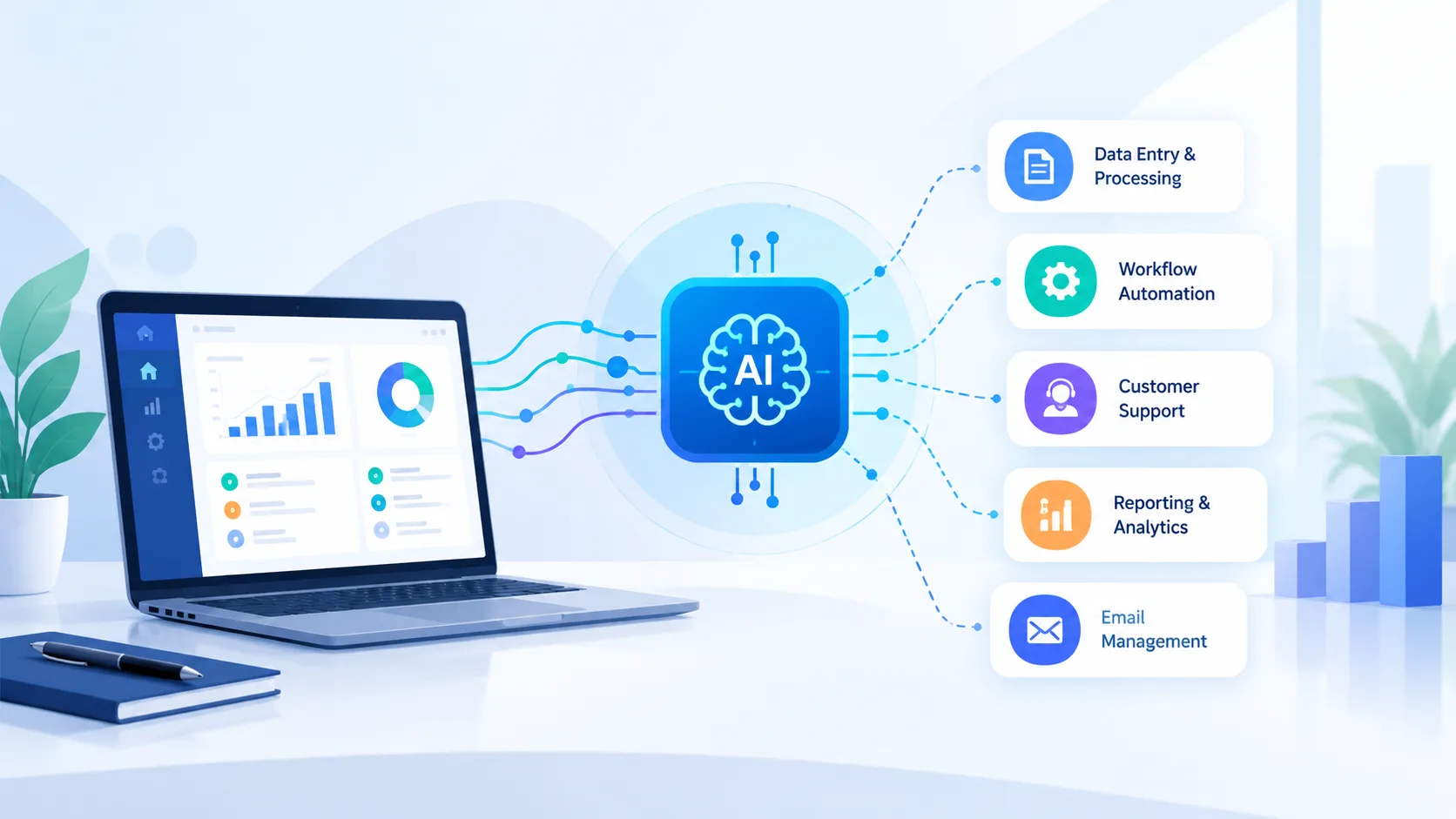
AI is not limited to software development. Businesses also use AI tools to support research, prepare reports, organise information, analyse data, and improve repetitive workflows.
Learning practical AI applications can help you identify tasks that may benefit from automation while understanding the importance of human review, data privacy, and responsible use.
Why Consider Artifact Geeks for AI Learning?
When choosing an AI course near me, it is important to understand what the program teaches and whether it matches your goals.
Artifact Geeks provides technology-focused learning opportunities for people interested in developing modern digital skills. Learners exploring AI can focus on understanding emerging technologies, discovering practical applications, and building their knowledge step by step.
Before selecting a program, consider whether you want to learn AI tools for everyday productivity or study technical subjects such as Python, machine learning, and model development. These learning paths have different requirements, so checking the syllabus and practical exercises is important.
A course that matches your current skill level can make learning more manageable and help you establish a clear direction for further development.
Who Can Learn Artificial Intelligence?
AI learning can benefit people from different educational and professional backgrounds.
- Students: Understand emerging technologies and explore future career paths.
- Freshers: Develop foundational knowledge and practical skills for entry-level opportunities.
- Working professionals: Discover ways to use AI tools to improve productivity.
- Digital marketers: Explore AI-assisted content planning, research, and campaign analysis.
- Business owners: Learn how AI may support customer communication and routine operations.
- Aspiring developers: Build a foundation for studying machine learning and AI application development.
Some AI tools can be explored without programming experience. However, building machine learning models generally requires additional knowledge of programming, mathematics, and data handling.
Career Opportunities After Learning AI
Artificial Intelligence offers several possible learning and career directions. The opportunities available to you will depend on the depth of your training, technical knowledge, and practical experience.
Potential career paths include:
- AI Application Developer
- Machine Learning Engineer
- Data Analyst with AI Skills
- AI Automation Specialist
- Junior Python Developer
- AI Research Assistant
- Generative AI Application Developer
Technical roles often require more advanced preparation than basic AI tool usage. Building projects, learning programming, understanding data, and practising problem-solving can help you develop the necessary skills.
Completing a course does not guarantee employment, so focus on gaining practical experience and developing a portfolio that demonstrates your abilities.
How to Choose the Right AI Course
Before enrolling in an AI course near me, consider these factors.
Understand the syllabus: Check whether the course focuses on AI tools, generative AI, machine learning, programming, or a combination of these subjects.
Check the difficulty level: Beginners may prefer an introduction to AI before moving into technical concepts.
Look for practical exercises: Projects and guided activities can help you understand how AI works in real situations.
Consider the learning format: Choose online or classroom learning according to your schedule and preferences.
Review instructor support: Access to guidance and feedback can help you overcome difficulties.
Set realistic expectations: AI is a broad field, and developing advanced skills requires consistent learning and practice.
Selecting a course based on your goals rather than trends alone can help you make better use of your time.
Frequently Asked Questions (FAQs)
1. What is an AI course near me?
An AI course near me is a training program available locally or online that teaches artificial intelligence concepts, AI tools, machine learning, or practical AI applications.
2. Can beginners learn AI without coding?
Yes. Beginners can start by learning AI fundamentals, generative AI tools, and prompt engineering without programming. Technical AI development usually requires additional coding knowledge.
3. What can I learn in an AI course at Artifact Geeks?
Artifact Geeks offers technology-focused learning opportunities. Check the relevant program details to understand the specific AI topics, tools, and practical activities included.
4. Is Python necessary for learning artificial intelligence?
Python is not necessary for every AI-related task. However, it is particularly useful for machine learning, data processing, and developing AI applications.
5. How long does it take to learn AI?
The learning period depends on your goals. Basic AI tools may take less time to understand, while machine learning and AI development require more extensive study and practical experience.
6. What jobs can I pursue after learning AI?
Possible career directions include AI application development, machine learning, data analysis, and automation. The requirements vary by role, and technical positions often require programming and project experience.
7. Is an AI course suitable for working professionals?
Yes. Working professionals can learn how AI tools support research, reporting, content creation, and productivity. Technical training can also help professionals explore AI development.
8. How can I get started with AI learning?
Start by identifying your goals, learning the fundamentals, practising with suitable AI tools, and gradually progressing to more advanced topics. If you want to build AI systems, consider learning Python and machine learning concepts.
Conclusion
Searching for an AI course near me can be the first step toward understanding one of today's important technology fields. From generative AI and prompt engineering to Python and machine learning, there are several ways to develop useful AI skills.
Artifact Geeks provides learning opportunities for people interested in technology and digital skill development. By choosing a suitable learning path, practising consistently, and building practical projects, you can strengthen your understanding of artificial intelligence and prepare for future learning and career opportunities.